

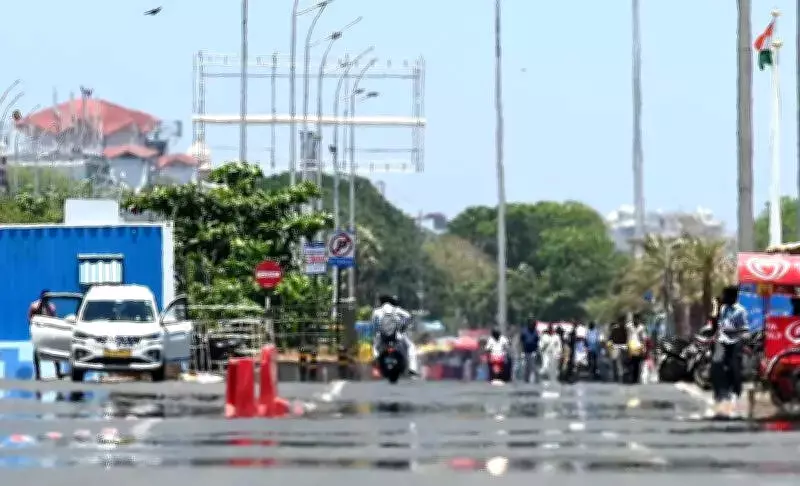
Chennai's Urban Heat Islands: Dense Areas Become Persistent Hotspots, Study Reveals
A comprehensive study has uncovered that Chennai's summers are intensifying with significant temperature disparities across different neighborhoods. Research indicates that densely constructed areas including Anna Nagar, Koyambedu, Ambattur, Airport, and Madhavaram have emerged as persistent heat hotspots. Conversely, green zones and coastal regions such as Guindy National Park, the Adyar River, and the Bay of Bengal coastline serve as crucial cooling buffers, offering rare relief from the escalating heat.
Stark Temperature Differences Even at Night
During peak summer nights, land surface temperatures (LST) throughout Chennai vary dramatically, ranging from 25°C to nearly 30°C. Built-up pockets consistently record the highest values, while vegetated areas and water bodies maintain cooler temperatures around 23.5°C. This contrast underscores the severe impact of urban development on local climate conditions.
Root Causes in Land Use Patterns
The primary reason for these temperature variations lies in land use. Hotspot neighborhoods are dominated by dense concrete, asphalt, and impervious surfaces that absorb heat throughout the day and release it slowly after sunset. With minimal vegetation and high built-up density, these areas retain more heat, intensifying the city's surface urban heat island (SUHI) effect.

Summer SUHI values remain significant, ranging from 0.45°C to 1.4°C, demonstrating that Chennai stays warmer than its rural surroundings even after dark. The study, conducted by researchers from NIT Trichy, analyzed extensive satellite data spanning from 2001 to 2022, providing a robust long-term perspective.
Expert Insights on Thermal Stress
Aneesh Mathew, the corresponding author of the study, emphasized the findings. "Built-up areas frequently exceed 29°C, especially during the pre-monsoon and summer periods. In contrast, vegetated regions and water bodies exhibit lower LST due to evaporative cooling and heat absorption by water," he stated. "The findings highlight the growing thermal stress in Chennai and underline the urgent need for climate-responsive urban planning."
Winter Brings No Respite
Winter offers no relief from the heat island phenomenon. The effect is actually stronger at night during winter, often exceeding 2°C, indicating even greater heat retention despite lower seasonal temperatures. Night-time LST during winter remains between 22°C and 25°C, with dense urban areas consistently warmer, exacerbating discomfort year-round.
Broader Warming Trends Across Tamil Nadu
Across Tamil Nadu, night-time LST has risen by 1.61°C over the past two decades, pointing to a broader warming trend layered over rapid urban expansion. This regional data underscores that Chennai's heat issues are part of a larger environmental challenge affecting the entire state.
Structural Problems and Solutions
At its core, the problem is structural:
- Shrinking green cover reduces natural cooling mechanisms.
- Expanding built surfaces increase heat absorption and retention.
- Rising anthropogenic heat from vehicles and buildings diminishes the city's ability to cool, especially after sunset.
To mitigate heat stress, researchers advocate for:
- Increasing urban green cover through parks and tree planting initiatives.
- Protecting existing water bodies from encroachment and pollution.
- Implementing urban planning strategies that facilitate heat dissipation rather than accumulation, ensuring the city does not remain hot long after sunset.
This study serves as a critical wake-up call for policymakers and urban planners to address the escalating thermal challenges facing Chennai, promoting sustainable development practices for a cooler, more livable urban environment.






