

China's Hydropower Ambitions Reshape Planet and Energy Future
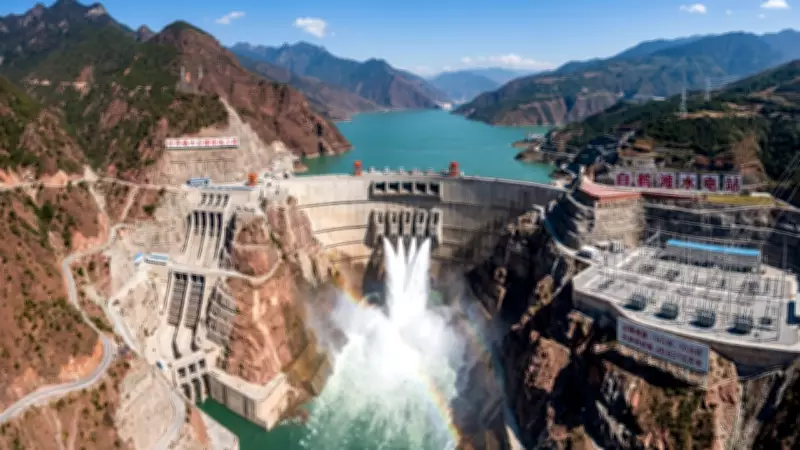
China's reputation for monumental infrastructure projects extends powerfully into the realm of hydroelectric power. The nation's existing Three Gorges Dam, already the world's largest hydroelectric station, continues to captivate global attention not merely for its scale but for its profound, unintended planetary consequences. Scientific research indicates this massive structure is influencing the very rotation of the Earth. Undeterred, China is advancing an even more ambitious $165 billion hydropower initiative, setting the stage for significant global implications.
The Three Gorges Dam and Its Planetary Impact
The Three Gorges Dam stands as a staggering testament to human engineering, generating a colossal 22,500 megawatts of energy annually—sufficient to power millions of households. However, the immense reservoir created by this dam has led to remarkable scientific findings. According to NASA researchers, the redistribution of such a vast mass of water has altered the Earth's moment of inertia, effectively slowing the planet's rotation.
A pivotal research paper titled 'Examining the Influence of Large-Scale Hydroelectric Projects on Earth's Rotation, Polarity Shifts, and Magnetic Reversals' substantiates this phenomenon. The study concludes that the dam's water storage extends the length of an Earth day by approximately 0.06 microseconds. As the paper explains, "redistribution of mass... affects the rotational dynamics of the earth." Scientists emphasize that while this rotational slowdown is measurable, it has no discernible impact on weather patterns or daily life.

China's New $165 Billion Hydropower Colossus
Building on this legacy, China is now developing another monumental hydropower project within the Brahmaputra river basin. With an estimated cost of $165 billion, this future facility is projected to surpass the Three Gorges Dam in output, potentially becoming the world's largest single source of renewable energy upon completion.
The strategic motivations behind this venture are clear and multifaceted:
- Reducing Fossil Fuel Dependence: The project aims to drastically cut China's reliance on coal and other non-renewable energy sources.
- Enhancing Energy Security: It seeks to bolster national energy independence and stability.
- Asserting Global Leadership: China intends to solidify its position as the foremost innovator and developer in the renewable energy sector.
Hydropower offers a key advantage over other renewables like solar and wind: it provides a consistent, reliable base load of electricity. However, mega-dams come with substantial drawbacks, including:
- Severe environmental degradation and ecosystem destruction.
- Large-scale displacement of local communities and populations.
- Heightened geopolitical tensions, particularly with downstream nations reliant on the river's flow.
Environmental and Scientific Ramifications of Mega-Dams
Beyond energy production, structures like the Three Gorges Dam demonstrate humanity's growing capacity to manipulate fundamental planetary characteristics. Recent studies reveal that global water storage in massive reservoirs has contributed to shifts in the position of Earth's geographic poles, a process known as 'True Polar Wander.'
It is crucial to contextualize these human-induced effects. The influence of dams on Earth's rotation and pole position remains supplementary to powerful natural forces, such as the gravitational pull of the moon. Nevertheless, these infrastructures symbolize a critical juncture where technological advancement intersects directly with planetary physics.
The forthcoming $165 billion hydropower project in China is not merely an engineering milestone. It represents a future where human ingenuity will increasingly engage with and alter the physical systems of our planet, demanding careful consideration of both its promises and perils.






