As the costs of solar panels, wind turbines, and battery storage plummet globally, a swift transition to renewable energy is no longer just an environmental imperative but the most economical path forward. A landmark study from the University of Oxford reveals that shifting the world to clean energy by 2050 could save the global economy a staggering $12 trillion (€10.2 trillion) in energy system costs compared to sticking with fossil fuels. This saving comes while producing more energy overall and expanding electricity access worldwide.
From Australian Drought to Wind Farm Revenue: A Farmer's Pragmatic Shift
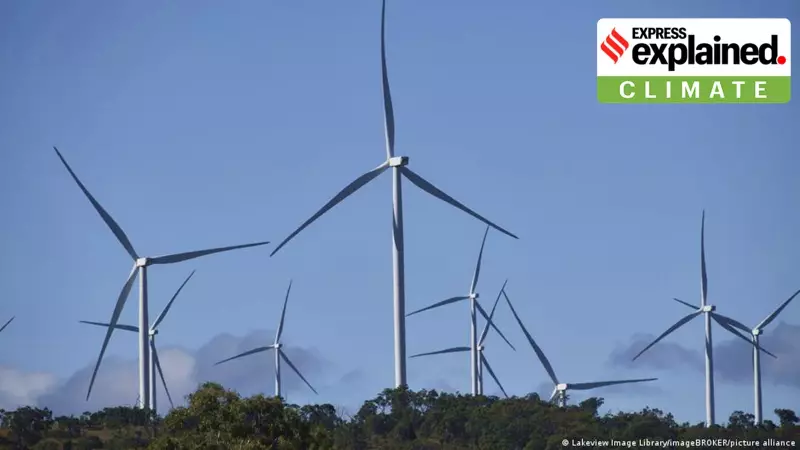
The human and economic face of this transition is visible in places like southeast Queensland, Australia. Farmer Brent Finlay, who witnessed his land's ecosystem collapse during a year-long drought five years ago, now hosts 45 skyscraper-tall wind turbines on his property. Part of the massive MacIntyre Wind Farm, these turbines will soon power 700,000 homes.
For Finlay, the decision was not purely environmental. "It's additional revenue… an investment for future generations on this farm," he stated, highlighting how intensifying weather extremes are making traditional farming more precarious. He represents a growing trend of landowners who lease land for renewable projects, securing steady income while helping power local communities.

The 'Learning Curve' Driving Down Costs: Solar, Wind, and Batteries
The core reason a fast transition saves more money is a principle known as Wright's Law. It states that the cost of a technology falls as its cumulative production increases. This phenomenon has dramatically driven down prices for renewables over the past decade.
The cost of solar panels has dropped by around 90% in ten years, largely due to expanded manufacturing. "Solar power is the cheapest form of energy in history," says economist Gernot Wagner from Columbia Business School. Similarly, wind power prices have fallen by about 70% since 2014, and battery storage costs have declined by 85% compared to the 2010s.
Energy strategist Kingsmill Bond from Ember explains that small, modular technologies like solar panels benefit from innovation across millions of units, unlike monolithic fossil fuel systems.
Fossil Fuels: The Hidden Costs and Price Volatility
In contrast, fossil fuels are finite commodities whose prices are subject to geopolitics, supply shocks, and speculation. Once a solar or wind farm is built, the 'fuel'—sun and wind—is free and immune to global market shocks. The 2022 energy crisis in Europe, where electricity prices soared after Russia's invasion of Ukraine, is a stark example of this volatility.
Furthermore, economists point to massive hidden costs in the fossil fuel system. This includes extraction and transport expenses and enormous "rents"—extra profits charged by resource-controlling nations. The World Bank estimates these global fossil fuel rents amount to as much as $2.5 trillion annually.
"We're pouring thousands of billions of dollars into the pockets of the petrostates... It's that money that's up for grabs that we don't have to spend anymore," Bond notes.
Investment is Reallocation, Not Additional Spending
Contrary to popular belief, the transition does not necessarily require spending more money overall. Most investment can be reallocated from funds that would have been used to maintain and expand fossil fuel infrastructure—building new pipelines, upgrading refineries, or paying for fuel imports.
"Basically, you invest to put up the clean energy system and that will save you the money that you're currently spending on buying fossil fuels," Bond clarifies. The assets built—solar farms, wind projects, and grid upgrades—then deliver energy at far lower long-term operating costs for decades.
The International Renewable Energy Agency (IRENA) confirmed that in 2024, generating electricity from solar was almost half as expensive as the cheapest fossil alternative, with wind power being even less costly. As renewable capacity expands, this price advantage is only expected to grow, making the economic case for a rapid transition clearer than ever.