

Clean Water Arrives at Ludhiana's Buddha Dariya Ahead of Baisakhi
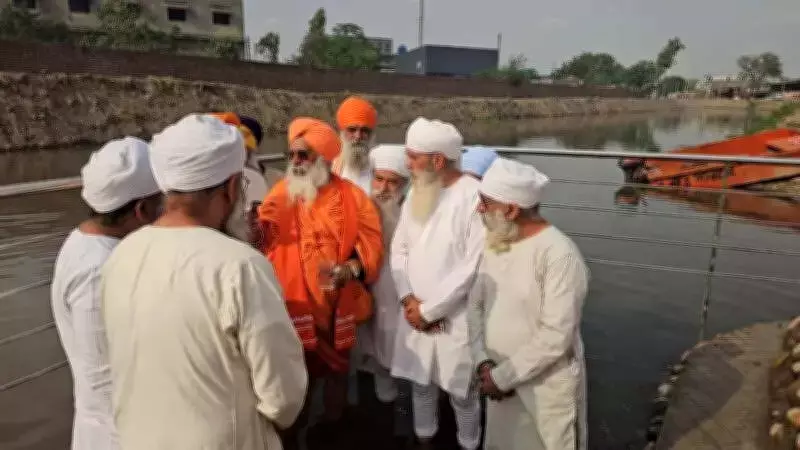
In a landmark environmental achievement just three days before Baisakhi, Rajya Sabha member and renowned environmentalist Balbir Singh Seechewal has declared that clean water has successfully reached the boundary of Ludhiana city at Sangat Ghat. This development represents a significant victory in the ongoing battle against water pollution in the region.
A Symbolic Demonstration of Progress
To underscore the success of the restoration efforts, Seechewal personally demonstrated the improved water quality by drinking a handful from the river. He reported a Total Dissolved Solids (TDS) level of 202, indicating that the water is now sufficiently clean for bathing purposes. This milestone comes after two years of dedicated voluntary service, or kar seva, aimed at transforming what was once a heavily polluted drain into a vibrant green water body.
Seechewal emphasized that this clean water arrival serves as a major gift to the people of Punjab, revitalizing not only the environment but also local cultural practices. He urged residents to treat the river as their own heritage and actively participate in its maintenance and preservation.

Cultural Revival and Historical Significance
The restoration of the Buddha Dariya has sparked a resurgence in cultural activities along its banks. For the first time, a Baisakhi fair was held at Sangat Ghat near the Central Jail, featuring devotional kirtan and poetry recitals. This event followed the bhog of Sri Akhand Path at Gurdwara Gau Ghat, a site of profound historical importance.
Gurdwara Gau Ghat is where Sri Guru Nanak Dev Ji visited in 1515 AD, and local legend holds that Guru Sahib blessed the city, causing the Sutlej River to shift its course and flow as the 'Buddha' Dariya. Seechewal highlighted that the river's very name is considered a blessing, and its continued flow is seen as a manifestation of divine grace, underscoring the spiritual and cultural dimensions of this environmental success.
Persistent Challenges and Future Optimism
Despite the celebratory news, Seechewal cautioned that critical challenges remain in the fight to fully restore the Buddha Dariya. He pointed out that four treatment plants are still discharging water into the river, a practice that should not be occurring under legal standards. Additionally, while efforts have reduced waste inflow—with 27 tippers now lifting dung daily to prevent over 500 tonnes of waste from the Tajpur and Haibowal dairy complexes—approximately 100 tonnes of waste from 79 rural dairies continues to pose a threat, requiring ongoing vigilance.
The environmentalist expressed hope that two upcoming Compressed Biogas (CBG) plants will further enhance water quality, contributing to a more sustainable solution. He also noted that existing treatment plants with capacities of 15, 40, 50, and 250 million liters per day (MLD) are failing to meet required standards, indicating a need for improved infrastructure and compliance.
Seechewal suggested that if dairy owners voluntarily install meters and adopt responsible water usage practices, the river's condition could see significant additional improvements. As restoration work continues, he remains optimistic that the clean water currently present at Sangat Ghat will soon extend to Walipur Kalan, completing the transformative journey of the Buddha Dariya and setting a powerful example for environmental conservation across India.






