

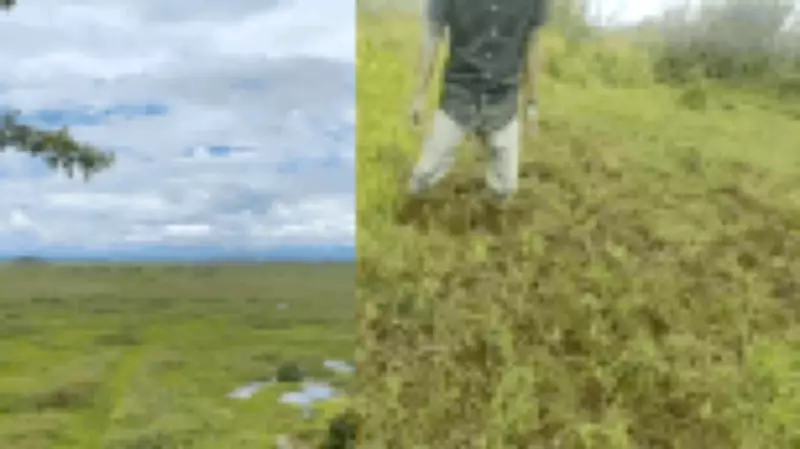
The World's Only Floating National Park: A Delicate Ecosystem in Manipur
Nestled in the southern expanse of Loktak Lake in Manipur lies Keibul Lamjao National Park, a unique ecological wonder recognized globally as the only floating national park. This remarkable landscape features phumdis—buoyant mats of vegetation, soil, and organic matter that create a living, swaying ground beneath visitors' feet. Within this ethereal floating kingdom roams the Sangai, Manipur's celebrated "dancing deer," whose graceful movements across the phumdis symbolize both beauty and fragility.
From Near Extinction to Remarkable Recovery
By 1954, the Sangai deer was considered extinct due to extensive hunting and habitat degradation, disappearing from public consciousness for nearly two decades. A dramatic turning point occurred during aerial surveys between 1974 and 1975, when environmentalist E.P. Gee rediscovered approximately fourteen individuals surviving in Keibul Lamjao's floating marshes. This rediscovery sparked renewed conservation efforts that transformed the species' fate.
Following this discovery, the Manipur government and Government of India declared the area a national park in 1977 under the Wildlife Protection Act 1972. Principal Chief Conservator of Forests Anurag Bajpai emphasized the importance of this legal protection, stating that "notification as a national park was essential to enhance the conservation strategy." The population has shown remarkable growth from just 14 individuals in 1975 to 155 in 1995, reaching approximately 260 by 2016.

The Unique Floating Habitat: Phumdis
The park's defining feature is its floating ecosystem of phumdis, which serve as habitat, grazing ground, and breeding site for the Sangai. These complex living structures form over hundreds or even thousands of years through the accumulation of aquatic vegetation, soil, and nutrients. Bajpai describes their formation as "a slow, natural process" requiring "years together, even thousands of years, for the biomass to become thick enough."
Equally crucial is the natural cycle where phumdis descend to the lake bottom to collect nutrients before resurfacing. However, this essential process has been disrupted by the Loktak Hydroelectric Project, which maintains artificially stable water levels. "For the sustainability of phumdi, we want pulsating water levels," Bajpai notes, identifying this as a key ecological challenge.
Active Conservation and Habitat Management
Since the park's establishment, conservation efforts have focused on comprehensive habitat management and wildlife protection. Forest Department initiatives include transporting phumdis from other lake areas to increase stability and area, regular vegetation monitoring to ensure adequate food resources, and implementing fire management strategies during dry seasons.
Bajpai likens conservation to maintaining a home: "When you stay at your home, you clean it, repair it, improve it. Similarly, for an animal, its habitat must be maintained." The challenges extend beyond habitat management, with other species creating ecological competition—hog deer compete for food while wild boars and pythons threaten fawns.
Community Involvement and Alternative Livelihoods
Local community participation has become increasingly vital to conservation success. Historically, communities depended on park resources for livelihoods, creating ecosystem pressure. Recent efforts have promoted alternative livelihood options including ecotourism development in nearby areas like Chingmei and Chingthi, hospitality training, photography, handloom weaving, and natural dye production—with significant women's participation.
While encroachment has largely been controlled, occasional resource collection by locals continues. Bajpai acknowledges this reality but emphasizes strict law enforcement alongside community-oriented approaches. The 2018 census recorded around 250 individuals, with a recent February census after an eight-year gap showing encouraging preliminary results.

Climate Change Threatens Future Habitat
A concerning study by researchers from the National Institute of Technology Manipur, published in Environmental Monitoring and Assessment, projects that suitable Sangai habitat could shrink drastically by 2050–2070 due to climate change. The research indicates habitat will become largely confined to the park's central core, with monsoon rainfall and temperature variations identified as key influencing factors.
The limited availability of "hardground"—just three small hillocks and a narrow 100–200 meter strip called Thangbral-yangbi—poses particular vulnerability. During monsoon seasons, rising water levels submerge phumdis, forcing deer to crowd onto these scarce stable surfaces. Researchers warn that without urgent conservation measures including ex-situ conservation, alternative habitat identification, and stricter human activity regulation, the Sangai's natural habitat could degrade beyond recovery.
Cultural Significance and Future Challenges
The Sangai's cultural connection with Manipur's people remains a strong conservation pillar. Bajpai notes this cultural linkage helps sensitize communities and foster cooperation, with special emphasis on engaging children as "the best campaigners" for awareness spreading.
Despite conservation achievements, significant challenges persist. The Sangai exists as a single isolated population worldwide, making it highly vulnerable to diseases, natural disasters, and genetic issues like inbreeding. Efforts are underway to identify alternative habitats such as Pumlen Pat and Yawa Lamjao for translocation, establish a conservation breeding center near the park, and create multiple populations to reduce extinction risk.
Keibul Lamjao National Park stands as both an ecological marvel and conservation testament. Its floating phumdis create a unique habitat while the Sangai's recovery reflects decades of dedicated work. However, the park's fragility demands continuous vigilance, adaptive management, and sustained community involvement to ensure the future of this floating national park and its iconic dancing deer.





