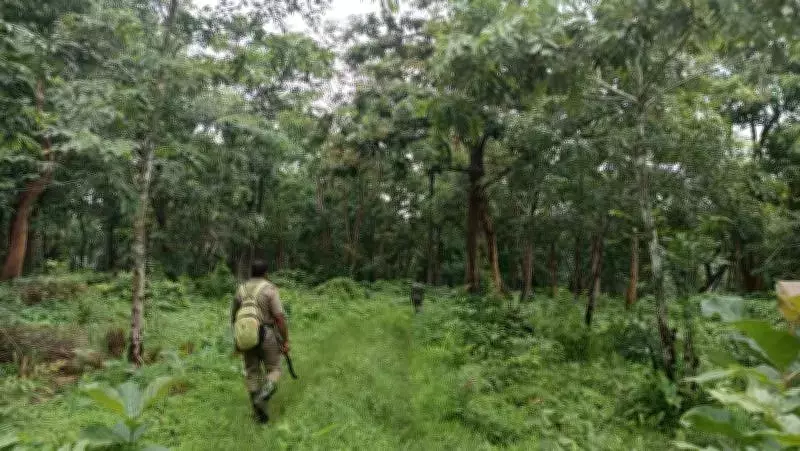
Climate-Driven Transformation Reshapes Tamil Nadu's Forest Ecosystems
A groundbreaking study published in the prestigious journal Nature has revealed alarming ecological transformations occurring across Tamil Nadu's Eastern and Western Ghats. The research, conducted over a comprehensive three-year period from 2021 to 2024, documents how rising temperatures, unpredictable rainfall patterns, and elevation-specific microclimates are fundamentally altering forest habitats throughout these critical mountain ranges.
Systemic Reorganization of Forest Types
Contrary to simple deforestation, the study identifies a profound systemic reorganization of forest ecosystems driven by persistent climatic pressures. Professor Emeritus A. Ramachandran from Anna University's Centre for Climate Change and Disaster Management, who served as lead author, emphasized that this transformation is evident across extensive areas of both hill ranges.
The research demonstrates that climate stressors are pushing both evergreen and deciduous forests toward thorn-dominated vegetation, representing a significant ecological shift rather than mere tree cover reduction. This transition has substantial implications for biodiversity, carbon storage, and ecosystem resilience.

Quantifying the Forest Transformation
The study provides precise measurements of this ecological conversion:
- Western Ghats: Approximately 249 square kilometers of evergreen forest and 720 square kilometers of deciduous forest have disappeared during the study period. Simultaneously, thorny forest cover expanded by nearly 969 square kilometers.
- Eastern Ghats: A comparable pattern emerged, with 54 square kilometers of evergreen forests and 716 square kilometers of deciduous forests being replaced by thorny vegetation.
Professor Ramachandran described this expansion of thorn forests as evidence of a fundamental restructuring of forest types under sustained climatic pressure.
Multiple Stressors Driving Ecological Change
The research identifies several interconnected stressors operating simultaneously:
- Heat stress and altered rainfall patterns reducing overall biodiversity
- Disruption of natural carbon storage and cycling processes
- Increased vulnerability to invasive species and wildfires
- Declining regeneration of broad-leaf species enabling thorny plant intrusion
These combined processes gradually weaken moist and deciduous forest systems, creating opportunities for hardier thorny vegetation to establish dominance.
Ecological Consequences and Wildlife Impacts
The transformation carries severe implications for regional wildlife and ecosystems:
- Mega herbivores: Elephants may struggle to find adequate forage if thorn forests replace richer vegetation at mid and higher elevations
- Bird populations: Reduction of riparian forests could limit fruit-bearing tree growth, forcing frugivorous birds to seek alternative feeding, breeding, and roosting sites
- Small mammals: Drying of high-altitude wetlands may push these animals to search for new water sources
- Biodiversity loss: The shift from diverse forest systems to thorn-dominated vegetation represents a significant reduction in habitat complexity and species richness
Potential Mitigation Strategies
Despite these concerning trends, the researchers outlined several measures that could potentially slow or even reverse these changes:
- Systematic removal of invasive species that accelerate ecological transformation
- Strengthening of comprehensive fire management systems
- Conservation of soil and water through traditional methods including contour walls, check dams, and percolation ponds
- Promotion of multi-layered afforestation using native tree species to restore ecological balance
The study emphasizes that timely intervention through these conservation strategies could help preserve the remaining forest ecosystems and potentially facilitate recovery of degraded areas.

This research provides crucial evidence of how climate change is actively reshaping India's critical forest ecosystems, highlighting the urgent need for adaptive conservation approaches that address both climatic pressures and their ecological consequences.