

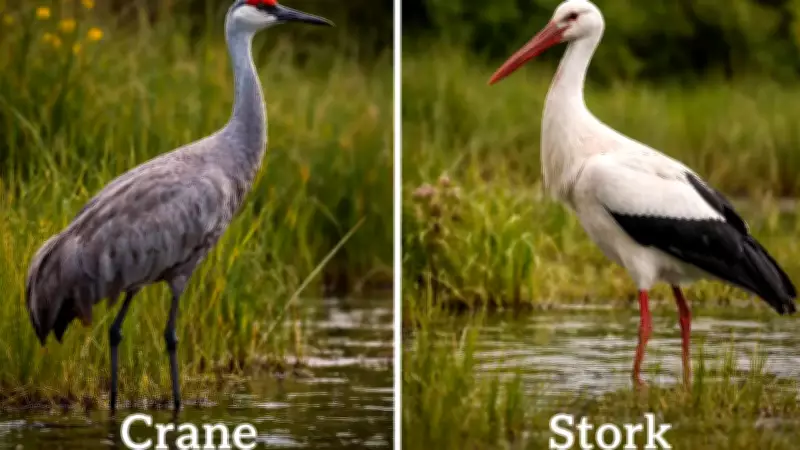
Crane vs Stork: Understanding the Key Differences
At first glance, cranes and storks may appear strikingly similar, often leading to confusion among bird enthusiasts and casual observers alike. Both species share common habitats, such as wetlands and grasslands, and possess long legs and necks, making them easily mistaken for one another. However, a closer examination reveals that these birds are distinct in numerous ways, from their biological classification to their behavior and diet.
Classification and Species Differences
The most fundamental distinction between cranes and storks lies in their scientific classification. Cranes belong to the Gruidae family, while storks are part of the Ciconiidae family. According to research-based data available on ScienceDirect, these families are entirely separate, indicating that their similarities are superficial rather than evolutionary. There are approximately 15 species of cranes worldwide and around 20 species of storks, each adapted to different environments through unique evolutionary processes.
Size and Physical Characteristics
In terms of size, cranes are generally larger birds, with some species exceeding four feet in height. They are characterized by their elegant figures, long necks, long legs, and slender beaks, giving them a graceful appearance. In contrast, storks, though often smaller in stature, appear more robust due to their strong necks, powerful bills, and large wings. This physical difference makes storks look sturdier compared to the more delicate build of cranes.

Feeding Habits and Diet
Another key difference is their diet. Cranes are omnivores, consuming a varied diet that includes grains, seeds, and small animals. This adaptability allows them to thrive in diverse habitats. On the other hand, storks are primarily carnivores, feeding on fish, frogs, insects, and other small creatures. These dietary preferences significantly influence their habitats, with storks often found near water bodies like rivers and lakes, while cranes inhabit wetlands and grasslands.
Behavior and Communication
Cranes are known for their sociable nature and vocal abilities. They produce powerful calls and engage in elaborate courtship rituals, such as leaping and wing-beating, to attract mates. In contrast, storks are generally quiet birds. Instead of vocalizing, they communicate by clapping their bills, especially during the nesting season. This behavioral contrast highlights how cranes are more vocal and interactive compared to the reserved storks.
Flight and Habitat Preferences
While both birds exhibit similar head and leg positioning during flight, their flight techniques differ. Cranes are often observed flying in groups with continuous wing movements during migration, showcasing their social and coordinated travel patterns. Storks, however, are adept at utilizing thermal currents to soar high in the sky, conserving energy during long-distance journeys. Habitat-wise, cranes prefer wetlands and grasslands, whereas storks are typically found in warm climates near water sources.
Key Takeaways to Remember
Despite their superficial similarities, cranes and storks are unique species with distinct traits. Cranes are larger, more vocal, and omnivorous, while storks are robust, quieter, and carnivorous. Recognizing these differences not only aids in accurate identification but also fosters an appreciation for the diversity within bird species. By understanding their classification, physical features, diet, and behavior, one can easily distinguish between these two fascinating birds.






