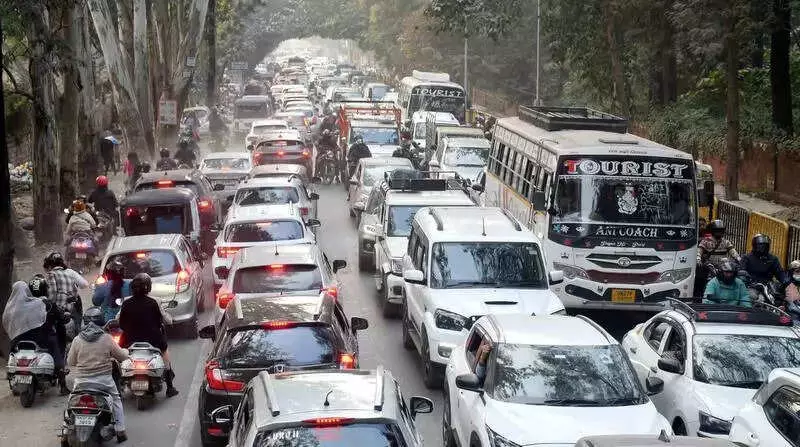
Dehradun welcomed the new year shrouded in a thick blanket of severe air pollution, with its Air Quality Index (AQI) hitting a worrying 316 on Thursday, January 1. According to data from the Central Pollution Control Board (CPCB), this placed the city firmly in the 'very poor' category, making it one of the most polluted urban centres in the country for the day.
A National Comparison of Poor Air
The alarming reading put Dehradun's air quality close to the notoriously polluted national capital, Delhi, which recorded an AQI of 380 on the same day. The air in the Doon valley was significantly worse than in several other major metros, including Mumbai (AQI 90), Bengaluru (AQI 121), and Kolkata (AQI 263). This highlights a severe and localized environmental crisis in the region.
Data indicates that the situation had been building up. On Wednesday, December 31, concentrations of the dangerous fine particulate matter, PM2.5, had soared to 329 micrograms per cubic metre. While there was a slight dip on New Year's Day, the air quality remained firmly in the 'very poor' bracket, offering no real respite to residents. The high pollutant load also led to visibly reduced clarity across many parts of the city.

Causes: Celebrations, Weather, and Waste Burning
Officials from the Uttarakhand Pollution Control Board (UKPCB) pointed to multiple factors behind the dangerous spike. Ankur Kansal, an environment engineer with the UKPCB, stated that increased vehicular movement during New Year celebrations was a key contributor.
He further explained a critical meteorological factor: "The state did not see any rain in December, therefore, vertical mixing did not occur, leading to minimal dispersal of pollutants." Kansal elaborated that vertical mixing is a natural process where air rises and mixes in the atmosphere, helping to dilute and disperse pollutants. The absence of rain and the presence of temperature inversions created a stable layer of air that acted like a lid, trapping pollutants close to the ground.
Experts also flagged another major man-made problem: waste burning. A UKPCB official noted that apart from burning biomass, the combustion of solid waste like plastics, tyres, and household garbage—often used for bonfires or as a cheap disposal method—adds significantly to Dehradun's toxic air.
Health Risks and Official Response
Health experts have issued stern warnings about the serious risks posed by such high levels of PM2.5. These fine particles, which consist of soot, dust, and smoke, are small enough to penetrate deep into the lungs and even enter the bloodstream. Prolonged exposure can cause inflammation, exacerbate respiratory illnesses like asthma, and increase the risk of cardiovascular diseases.
The deteriorating trend was clear in the data. Dehradun's air quality began worsening after December 25, staying in the 'poor' category. A brief improvement to 'moderate' (AQI 154) was seen on December 27, but pollution surged again the very next day, reaching an AQI of 233 before peaking on New Year's Day.
In response to the ongoing crisis, the issue was addressed at the sixth state steering committee meeting of the National Clean Air Programme, recently held in Dehradun. During the meeting, Chief Secretary Anand Bardhan directed officials from the UKPCB and other stakeholders to closely monitor and enforce pollution control measures to improve the state's air quality.