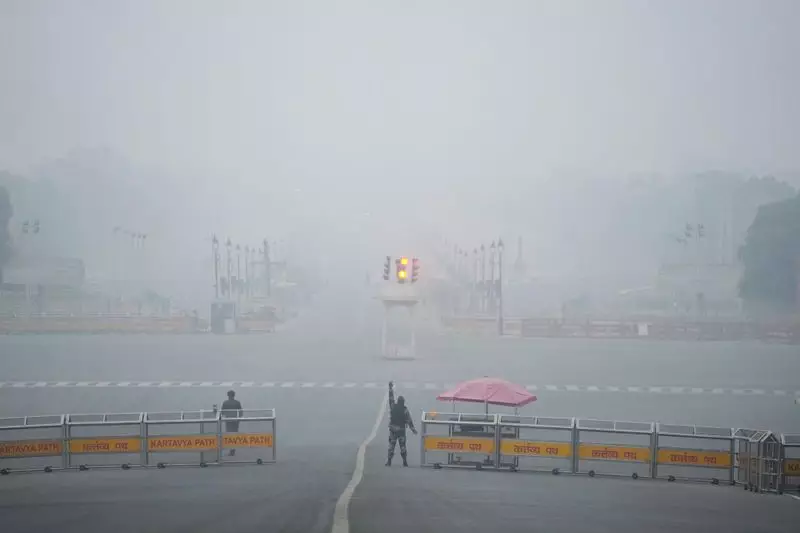
Residents of the national capital woke up to another chilly morning on Tuesday as cold wave conditions continued to hold sway over the city. The air quality, a persistent concern for Delhiites, remained firmly in the 'very poor' category, adding to the winter woes.
Weather Conditions and Temperature Dip
The minimum temperature was recorded at 6.4 degrees Celsius, which is one degree below the season's average. The primary weather station, Safdarjung, reported this reading. The maximum temperature, however, offered little respite, settling at a cool 19.6 degrees Celsius. The India Meteorological Department (IMD) has forecast that similar cold and dry conditions are likely to persist over the next few days.
Visibility in the early hours was moderately affected, with the Palam observatory noting visibility at 800 meters at 5:30 am. This was a slight improvement from the 600 meters recorded at 8:30 pm the previous night. The relative humidity oscillated between 100% and 53% throughout the day, contributing to the cold feel.

Air Quality Stagnates in 'Very Poor' Zone
The city's battle with pollution saw no significant relief. The overall Air Quality Index (AQI) was registered at 346, which falls under the 'very poor' classification according to the Central Pollution Control Board (CPCB). This level of pollution can lead to respiratory illness on prolonged exposure.
Breaking down the data from various monitoring stations paints a grim picture of widespread pollution:
- Anand Vihar recorded a severe AQI of 404.
- Bawana and Dwarka Sector-8 both reported AQIs in the 'very poor' range at 365 and 364 respectively.
- Other areas like ITO (349), Jahangirpuri (361), and RK Puram (353) also languished in the same category.
The concentration of PM2.5, fine particulate matter that poses significant health risks, remained the primary pollutant across most stations. This underscores the ongoing challenges in managing vehicular emissions, industrial pollution, and other local factors, especially during the winter when meteorological conditions trap pollutants closer to the ground.
Outlook and Health Implications
With the IMD predicting continued cold and dry weather, a rapid improvement in air quality is unlikely in the immediate future. The combination of low temperatures and poor air quality creates a double challenge for public health, particularly affecting the elderly, children, and those with pre-existing respiratory and cardiovascular conditions.
Authorities continue to monitor the situation, but the recurring nature of this annual crisis highlights the need for sustained, year-round measures to tackle the root causes of pollution. For now, Delhi remains wrapped in a cold, hazy blanket, with residents advised to take necessary precautions when venturing outdoors.