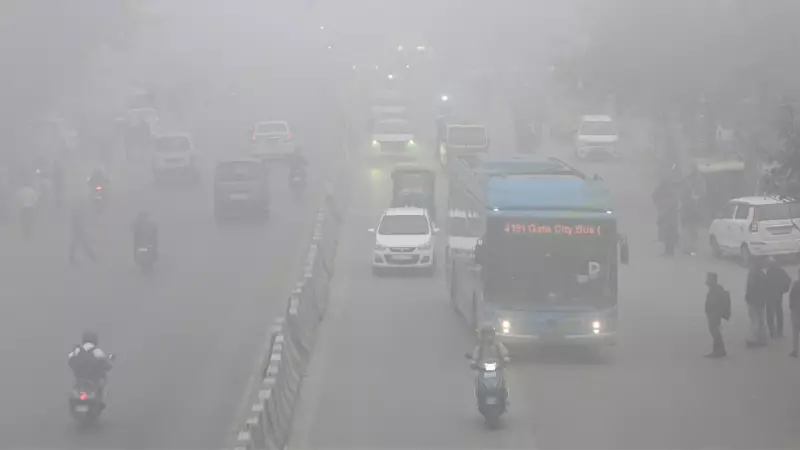
New Delhi woke up to a blanket of very dense fog on Tuesday morning, severely hampering visibility and throwing road and air traffic into disarray. The hazardous conditions were compounded by alarmingly poor air quality, with the city's average Air Quality Index (AQI) recorded at 390, firmly in the 'very poor' category.
IMD's Fog Warnings and Forecast
The India Meteorological Department (IMD) had been actively warning citizens about the impending conditions. It issued an orange alert for dense fog across the capital. Earlier, on Monday night, the weather body escalated warnings by issuing a red alert for a very dense fog situation valid until 1:30 am on Tuesday.
The IMD's forecast indicates that these challenging conditions are likely to persist. "Very dense to dense fog condition is likely to continue during night and morning hours over Punjab, Haryana, Chandigarh, and west Uttar Pradesh till December 31, and east UP till January 1, and will reduce thereafter," the department stated. For Delhi, moderate to dense fog is forecast for both Tuesday and Wednesday.

Causes and Expert Analysis
Weather experts have pinpointed a combination of meteorological factors behind the persistent fog. Mahesh Palawat, Vice-Chairman of Skymet Weather, explained that while fog intensity saw a marginal drop, moderate to dense fog will continue at least till January 1. "Travel will be risky on highways from late night up to 10 am," he cautioned.
The primary reasons cited include light winds, high humidity, low temperatures, and clear skies. These conditions allow moisture to condense and form fog, which then traps pollutants close to the ground. On Monday, Delhi recorded a minimum temperature of 8.3°C, two degrees above normal, with a maximum of 20.3°C.
Air Quality Crisis and Polluted Hotspots
The foggy conditions have tragically worsened Delhi's air pollution crisis. The AQI, which was 390 on Tuesday morning, deteriorated further to 401 by 4 pm, entering the 'severe' zone. Several localities emerged as extreme pollution hotspots, with readings soaring:
- Wazirpur: AQI 462
- Jahangirpuri: AQI 460
- Rohini: AQI 456
- Anand Vihar: AQI 455
With the fog expected to linger, authorities predict that the AQI will remain in the 'very poor' to 'severe' categories over the next few days. January 1 is likely to see a return to severe levels. The only slight relief may come from a prediction of light rain on New Year's Day, which could temporarily settle the dust and pollutants.
Residents are advised to limit outdoor activities, especially during morning hours, and use N95 masks when going out. Commuters are urged to exercise extreme caution on roads and highways due to significantly reduced visibility. The IMD predicts a slight rise in minimum temperatures from January 1, with maximums likely to stay above normal for the next three days.