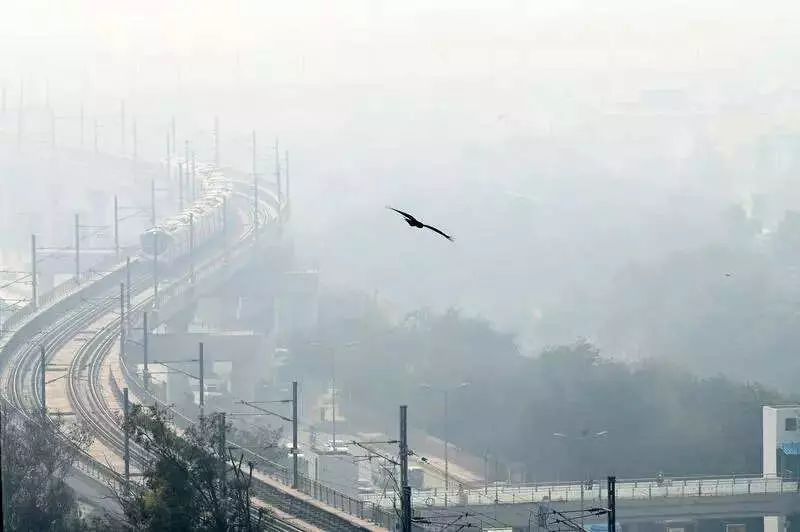
New Delhi witnessed a significant escalation in pollution control measures on Friday. The Commission for Air Quality Management (CAQM) activated Stage-III of the Graded Response Action Plan (GRAP) across the entire National Capital Region. This decisive step aims to prevent a further decline in air quality as pollutants accumulate under calm wind conditions.
Pollution Triggers Strict Vehicle and Construction Bans
The immediate implementation of Stage-III GRAP introduces a nine-point action plan. Authorities have imposed a complete ban on construction and demolition work throughout Delhi-NCR. In a major move to curb emissions, the plying of BS-IV diesel and BS-III petrol vehicles is now prohibited in the region.
Specific Vehicle Restrictions Under New Rules
The order details several key restrictions on road traffic:

- BS-III petrol and BS-IV diesel light motor vehicles cannot operate in Delhi, Gurgaon, Faridabad, Ghaziabad, and Gautam Buddha Nagar. Exceptions are made for vehicles used by persons with disabilities.
- Delhi-registered diesel-operated medium goods vehicles meeting BS-IV standards or below are restricted, unless they transport essential commodities.
- BS-IV diesel-operated light commercial vehicles registered outside Delhi are barred from entering the city.
The measures from Stage-I and Stage-II of GRAP remain fully in force alongside these new restrictions.
Air Quality Deteriorates with Forecast of Severe Conditions
The average Air Quality Index (AQI) for Delhi stood at 354 at 4 PM on Friday. This marks a rise from 343 recorded on Thursday. The CAQM cited forecasts from the India Meteorological Department (IMD) and the Indian Institute of Tropical Meteorology (IITM) to justify the preemptive action.
"Weather predictions indicate slow wind speeds and a stable atmosphere," stated the CAQM. "These unfavourable meteorological conditions will likely prevent the dispersal of pollutants. Delhi's average AQI is expected to cross the 400 mark and enter the severe category in the coming days."
Cold Wave Breaks but Chilly Conditions Persist
Meanwhile, the five-day streak of cold wave conditions ended on Friday. However, residents continued to experience a sharp chill. The minimum temperature settled at 4.3 degrees Celsius, which is three notches below the seasonal normal.
On Thursday, the city had recorded a minimum of 2.9 degrees Celsius. This was the lowest January temperature in three years. The maximum temperature on Friday was 22.5 degrees Celsius, also three degrees below normal. This showed a slight increase from Thursday's high of 19.5 degrees.
Dense Fog and Weather Outlook
Dense fog enveloped the capital in the morning. Visibility dropped to 150 metres at Palam at 7:30 AM and at Safdarjung at 8:00 AM. Fortunately, flight operations at the airports reported no major disruptions.
The IMD has forecast maximum and minimum temperatures for Saturday to range between 21-23 degrees Celsius and 6-8 degrees Celsius respectively. A yellow alert has been issued, warning of dense fog in isolated pockets of the city.
The combined actions under GRAP represent a robust governmental response to the twin challenges of winter pollution and public health. Authorities are closely monitoring the situation as Delhi navigates this period of environmental stress.