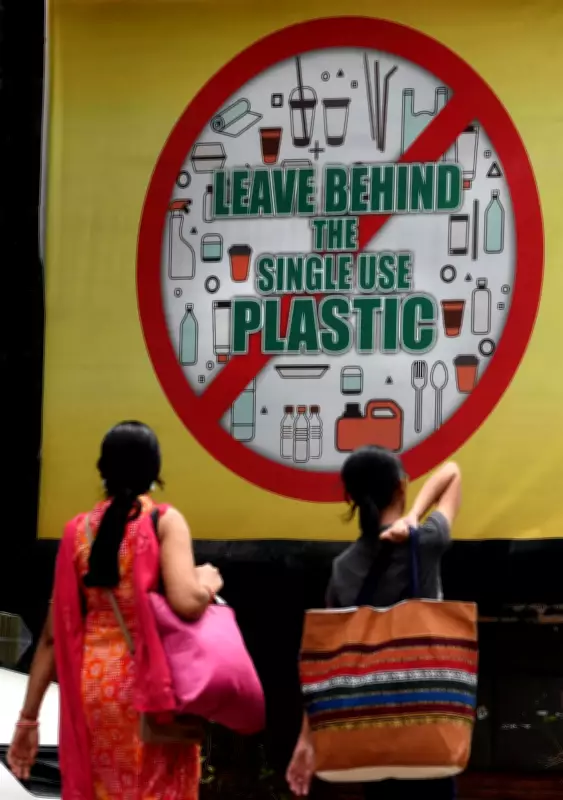
Delhi's Plastic Ban Shows Alarming 86% Non-Compliance Rate
New Delhi continues to grapple with significant violations of the nationwide single-use plastic (SUP) ban, three years after its implementation. A comprehensive new study has exposed widespread non-compliance across the capital city, raising serious questions about enforcement effectiveness and public behavior change.
Study Reveals Stark Ground Reality
According to a report titled Revisiting Single Use Plastic Ban by environmental organization Toxics Link, banned plastic products were found in a staggering 86% of surveyed locations throughout Delhi. The research, conducted between April and August 2025 across 140 diverse sites, presents a troubling picture of the ban's actual impact on daily commerce.
From bustling street markets and transportation hubs to religious sites and commercial areas, prohibited SUP items including carry bags, plastic cutlery, cups, and straws remain deeply entrenched in everyday transactions. The findings reflect a broader national trend, with an average non-compliance rate of 84% across four major Indian cities: Bhubaneshwar, Guwahati, Mumbai, and Delhi.

Policy Intent Versus Practical Reality
The Centre's SUP ban, announced on July 1, 2022, prohibited the manufacture, sale, and use of 19 specific low-utility, high-litter plastic items. This policy initiative aimed to address severe environmental and health consequences of plastic pollution, including microplastic contamination and ecosystem damage. However, the Delhi findings strongly suggest that policy intent has not successfully translated into practical implementation.
"The continued presence of banned plastic items in the majority of locations suggests that enforcement remains inconsistent," stated Ravi Agarwal, Director of Toxics Link.
Sharp Divide Between Organized and Informal Sectors
Compliance patterns in Delhi reveal a dramatic sectoral divide. Organized retail spaces such as shopping malls demonstrated near-total adherence to the ban regulations. In stark contrast, the informal sector—including street vendors, food stalls, juice sellers, and weekly markets—recorded nearly 100% non-compliance.
This significant disparity highlights a structural enforcement gap, as smaller vendors often operate beyond the consistent reach of regulatory checks and monitoring mechanisms. The persistence of banned SUP items cannot be attributed to a lack of available alternatives. Numerous substitutes exist in many locations, including paper cups and plates, newspaper wrappers, wooden cutlery, steel utensils, aluminum foil containers, bagasse plates, cloth bags, and thicker reusable plastic bags above 120 microns.
Cost Concerns and Consumer Demand Drive Continued Use
Despite available alternatives, adoption remains limited. Vendors consistently cited higher costs and strong consumer demand for plastic carry bags as major barriers to compliance. A significant proportion of vendors reported that customers still expect free plastic bags, reinforcing continued use of banned items.
"Vendor reluctance to transition away from single-use plastics is partly influenced by customer preferences," explained Satish Sinha, Associate Director at Toxics Link. "Customers also perceive disposable plates and cutlery to be more hygienic than reusable items. Our survey found that this perception, along with the cost advantage of SUPs, continues to drive their use."
Supply Chain Issues Undermine Enforcement Efforts
Another critical challenge identified in the study is the continued production and supply of banned plastic items. Despite periodic enforcement drives, these prohibited products remain easily accessible throughout Delhi, pointing to significant gaps in manufacturing oversight and distribution control.
The report emphasizes that without addressing the supply chain at its source, enforcement efforts at the retail level will continue to have limited impact. Experts argue that Delhi's situation reflects the urgent need for a fundamental shift from policy formulation to practical implementation.

Call for Comprehensive Action Strategy
Environmental advocates stress that stronger monitoring mechanisms, stricter penalties for violations, and targeted interventions in high-violation sectors are essential components of any effective solution. Equally important is sustained public awareness campaigns to change consumer behavior and preferences regarding plastic use.
The study concludes that a multi-pronged approach addressing both supply and demand factors, along with improved enforcement coordination, is necessary to achieve the intended environmental benefits of India's single-use plastic ban. As Delhi continues to struggle with implementation three years into the policy, the findings serve as a crucial wake-up call for authorities nationwide.