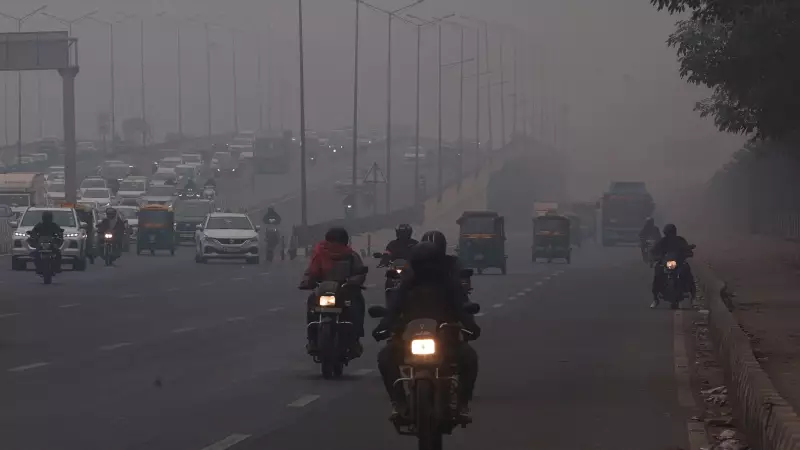
Delhi residents bundled up against an intense chill on New Year's Day 2026, as the capital recorded its coldest day in over five years. The maximum temperature, a key indicator of daytime cold, plummeted to a bone-chilling 14.2 degrees Celsius, marking the lowest daytime reading since the end of 2019.
Record-Breaking Chill Grips the Capital
According to data from the India Meteorological Department (IMD), the recorded maximum of 14.2 degrees Celsius was a significant 6.2 degrees below the seasonal normal. The night was not much warmer, with the minimum temperature settling at 6.4 degrees Celsius, which is 0.4 degrees below normal. The last time Delhi experienced a colder day in the month of December or January was on December 31, 2019, when the city saw a high of just 9.4 degrees Celsius.
Yellow Alert Issued, Colder Days Ahead
The weather office has issued a yellow alert for Delhi, forecasting light to very light rain on Thursday. The forecast also predicts continued cold day conditions in isolated areas. Commuters are likely to face disruptions as moderate to dense fog is expected at many locations, with particularly thick fog in isolated pockets during the morning hours.

Mahesh Palawat, Vice President of Meteorology and Climate Change at Skymet Weather, provided insight into the upcoming weather pattern. He mentioned a slight chance of very light, isolated rain over Delhi-NCR due to an induced cyclonic circulation over Punjab and Haryana. "If it occurs, this could be the season’s first spell of rain," Palawat told PTI.
More concerning is his prediction for the coming days. From January 3, coldwave conditions are likely to develop as the minimum temperature could drop below the 5-degree Celsius mark. This sharp dip is expected to be driven by cold northerly winds blowing in from the Himalayan region towards the plains, including the national capital.
Air Quality and Visibility Worsen
While the cold tightened its grip, air pollution showed little sign of relenting. The Air Quality Index (AQI) across Delhi-NCR stubbornly remained in the 'Very Poor' category on Wednesday. Delhi's overall AQI was recorded at 373, a slight improvement from 388 the previous day. Neighbouring areas fared no better:
- Gurgaon recorded an AQI of 328 (up from 294 on Tuesday).
- Noida's AQI was 382, improving from 400.
All these readings fall squarely within the 'Very Poor' band. The Air Quality and Weather Bulletin from the Indian Institute of Tropical Meteorology (IITM) indicates that the AQI is likely to persist in the 'Very Poor' category from December 31 to January 3. The outlook for the subsequent six days also points towards continued 'Very Poor' air quality.
The dense fog significantly reduced visibility, causing potential hazards for early morning travelers. At the Safdarjung observatory, visibility dropped to as low as 50 metres between 6:30 am and 7:30 am, improving only marginally to 100 metres by 8 am. Similarly, Palam recorded visibility of just 50 metres from 4 am to 7:30 am, which improved to 150 metres by 8 am.
As Delhi steps into the new year, the dual challenges of severe cold and hazardous pollution levels are set to test the resilience of its citizens, with forecasts suggesting conditions may worsen before they improve.