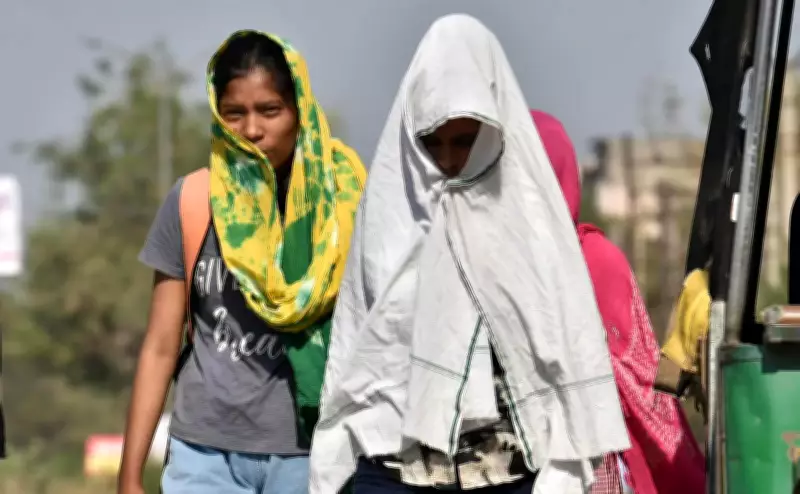
New Delhi: The city sweltered under the highest maximum temperature of the season on Monday, with several areas recording temperatures above 44°C. The India Meteorological Department (IMD) has forecast extreme heat to continue, issuing a yellow alert for heatwave conditions in Delhi over the next four days, from Tuesday to Friday, as the mercury is expected to climb further.
Temperature Records and Heatwave Criteria
According to the IMD, maximum temperatures during this period are likely to touch the 45°C mark. On Monday, the Lodhi Road observatory recorded a maximum temperature of 43.8°C, which was 4.8 degrees above normal and met the heatwave criterion. However, meteorologists noted that at least two consecutive days of such conditions are required for an official heatwave declaration. “If similar conditions persist on Tuesday, Monday will be considered an isolated heatwave day as well,” an IMD official said. As per IMD norms, a heatwave is declared when the maximum temperature touches 45°C or more, or when it exceeds 40°C with a departure of at least 4.5 degrees above normal.
Key Observations from Monday
Safdarjung, the city’s base station, recorded a maximum temperature of 43.4°C — 3 degrees above normal and the hottest day of the season so far — against 41.9°C a day earlier. On April 25, the city recorded 42.8°C, which now stands as the second-highest temperature this season. Among the warmest locations on Monday were Ridge at 44.6°C and Ayanagar at 44.4°C, followed by Mungeshpur at 43.9°C and Palam at 43.5°C. The minimum temperature was recorded at 26.3°C, normal for the season, slightly higher than Sunday’s 25.9°C.

Forecast for the Coming Days
The IMD stated that maximum temperatures are likely to rise by about 2°C over the next two days. It forecasts maximum temperatures of 43-45°C on Tuesday and Wednesday and 42-44°C on Thursday and Friday, leading to isolated heatwave conditions.
Air Quality Status
Meanwhile, air quality remained in the moderate category, with an AQI of 173 on Monday, marginally lower than 174 a day earlier. PM10, or coarse particulate matter largely comprising dust, remained the dominant pollutant.
About the Author: Kushagra Dixit writes on environmental issues, wildlife conservation, climate change, agriculture, human rights, and scientific research. His investigative coverage encompasses river contamination with emphasis on the Yamuna, air pollution, urban waste and their collective effects on public wellbeing.