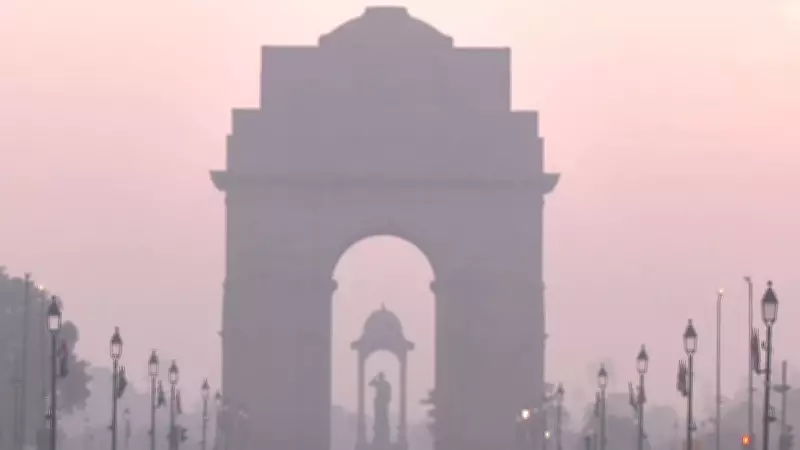
Delhi's Comprehensive 2026 Action Plan to Tackle Air Pollution
The Commission for Air Quality Management (CAQM) has unveiled a detailed State Action Plan for 2026, targeting a significant reduction in air pollution across the National Capital Region (NCR). The plan aims to cut PM2.5 levels by 15% and PM10 levels by 20% in Delhi, with measurable targets across multiple sectors including transport, waste management, road dust control, and enforcement.
Strengthening Air Quality Monitoring Infrastructure
A key component of the CAQM's strategy involves significantly enhancing air quality monitoring capabilities. The number of Continuous Ambient Air Quality Monitoring Stations (CAAQMS) in Delhi will be increased from 40 to 46 by January 2026. Audits of existing monitoring stations have already been initiated, while online continuous emission monitoring systems are being expanded across industrial units to ensure better compliance and data accuracy.
Pollution control boards are also being strengthened, with most sanctioned positions already filled to improve regulatory oversight. This comes as Delhi continues to lag behind its targets under the National Clean Air Programme (NCAP), having achieved only a 16% reduction in PM10 levels against a target of 22%.

Transport and Mobility Interventions Take Center Stage
Transport and mobility interventions account for a major share of the proposed actions in the 2026 plan. The strategy details significant expansion of the Delhi Metro and Namo Bharat (RRTS) network across operational, under-construction, and planned corridors to reduce vehicular emissions.
City bus services are set to be augmented to bridge a critical gap of more than 5,700 buses in Delhi, while last-mile connectivity will be strengthened through increased deployment of e-buses, e-autos, e-rickshaws, and feeder services. Electric mobility represents another crucial focus area, with Delhi's EV policy slated for revision by March 2026 to accelerate adoption.
The city is projected to require over 36,000 EV charging points, against fewer than 9,000 available as of December 2025. Quarterly targets have been established to close this substantial infrastructure gap, with battery-swapping infrastructure also proposed for scaling up to support the transition to electric vehicles.
Addressing Non-Transport Pollution Sources
The action plan comprehensively addresses major non-transport pollution sources that contribute significantly to Delhi's air quality challenges. Legacy waste remediation targets have been firmly established for key landfill sites, with Okhla scheduled for clearance by July 2026, Bhalswa by December 2026, and Ghazipur by December 2027.
Municipal solid waste processing capacity will be augmented through new bio-CNG and biogas plants, while construction and demolition waste management will be strengthened through additional processing facilities and higher utilization of recycled materials. These measures aim to tackle pollution sources that have historically been difficult to manage effectively.
Funding and Implementation Framework
According to the city's annual plan, Delhi has received Rs 81.34 crore from the 15th Finance Commission so far, including Rs 38.67 crore between August and October 2025. Of this allocated amount, Rs 26 crore has already been utilized, representing approximately 32% fund utilization, with additional expenditures currently under various stages of procurement and execution.
The air quality targets have been established against the average pollution levels of the previous five years and are supported by sector-wise timelines to ensure accountability and measurable progress. The plan also includes city-wide strategies developed for Noida, Greater Noida, Gurugram, Faridabad, and Alwar, recognizing that air pollution requires regional coordination beyond Delhi's boundaries.
Current Pollution Context and Challenges
The urgency of these measures is underscored by Delhi's current air quality situation. As per recent analysis by the Centre for Research on Energy and Clean Air (CREA), Delhi ranked as the second most polluted city in the country for January with PM2.5 levels reaching 169 µg/m³, surpassed only by Ghaziabad at 184 µg/m³.

These levels dramatically exceed the WHO 24-hour air quality guideline limits of 15 µg/m³ for PM2.5 and 45 µg/m³ for PM10, highlighting the severe public health challenge facing the capital region. The comprehensive 2026 action plan represents a multi-pronged approach to addressing this persistent environmental crisis through coordinated policy interventions across multiple sectors.