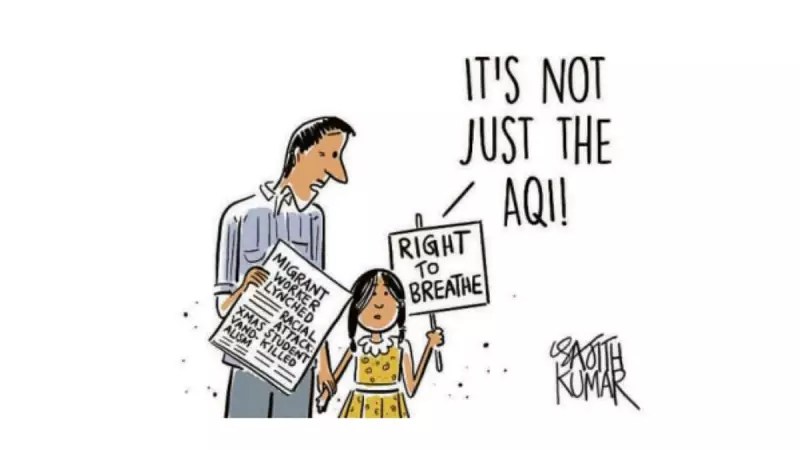
The editorial cartoon from Deccan Herald presents a stark visual commentary on the severe air pollution crisis gripping India's capital. It moves beyond the simplistic focus on daily Air Quality Index (AQI) numbers to critique the systemic and political failures that have allowed this public health emergency to become a perennial nightmare for Delhi's residents.
The Cartoon's Stark Message: A Symptom of Deeper Failures
The illustration powerfully suggests that the hazardous air choking Delhi is not merely a seasonal meteorological phenomenon. It is portrayed as a direct consequence of policy paralysis, lack of long-term vision, and inadequate enforcement of existing environmental norms. The cartoon implies that authorities are often seen as merely monitoring the disaster through AQI readings rather than implementing the robust, multi-pronged strategy required to actually clean the air.
This resonates with the public sentiment of frustration, where the annual cycle of smog, emergency meetings, and temporary fixes leads to no substantial improvement year after year. The visual critique underscores that the problem is man-made and thus requires decisive human intervention at the highest levels of governance.

Beyond the AQI Number: Understanding the Full Scope
While the AQI provides a crucial daily snapshot, the cartoon urges viewers to look at the larger picture. The sources of pollution are complex and interlinked: vehicular emissions, industrial pollution, construction dust, and the burning of agricultural stubble in neighboring states all contribute to the toxic cocktail. A truly effective solution must address all these sectors simultaneously with coordinated action between state governments and central agencies.
Furthermore, the health implications are catastrophic and extend far beyond a bad air day. Doctors consistently warn of rising cases of asthma, chronic obstructive pulmonary disease (COPD), lung cancer, and cardiovascular issues linked to prolonged exposure to PM2.5 and other pollutants. The economic cost in terms of healthcare expenditure and lost productivity is immense.
The Path Forward: From Awareness to Accountability
The editorial cartoon, in its sharp simplicity, serves as a call to action. It demands a shift from reactive measures to proactive, sustainable policy. This includes accelerating the transition to renewable energy, strengthening public transportation, enforcing stricter emission standards for industries and vehicles, and providing farmers with viable alternatives to stubble burning.
Ultimately, the message is clear: Clean air is a fundamental right, not a privilege. Managing Delhi's air pollution crisis requires moving beyond just tracking the AQI on apps and news bulletins. It demands political will, inter-state cooperation, technological investment, and a sustained public campaign to hold leaders accountable. The health of millions of citizens depends on this holistic approach becoming a reality, not just a subject for editorial commentary.