A startling new analysis by the Centre for Science and Environment (CSE) has revealed that Delhi's toxic winter air worsened significantly in December 2025, even after the season of stubble burning had subsided. The report, released on January 1, 2026, shows that average levels of deadly PM2.5 particles in December rose by nearly 30 per cent compared to months which witnessed active farm fires.
Beyond Stubble Burning: The Hidden Drivers of Smog
This finding directly challenges the widespread perception that crop residue burning is the sole, or even primary, driver of the capital's hazardous air. While the contribution from farm fires fell to negligible levels in December, the city continued to choke under 'Very Poor' to 'Severe' air quality categories. Daily PM2.5 concentrations fluctuated alarmingly between 107 and 393 µg/m³, with the Air Quality Index (AQI) frequently breaching the 300 mark and even touching 450.
The season's worst air was recorded on December 14, when the AQI surged to a staggering 461 – a peak higher than any observed during the stubble burning phase. The CSE study underscores that Delhi's pollution is a complex, sustained problem fueled by a trio of factors: local emissions, regional inflows, and the formation of secondary aerosols.

Local Sources and Regional Inflows: A Toxic Mix
Citing data from IITM's Decision Support System, the report reveals that in early December, local sources within Delhi were responsible for approximately 35 per cent of the total PM2.5 pollution. Within this, vehicles alone contributed nearly half of the local load. Other persistent sources include industry, household fuels, construction dust, and waste burning.
The remaining 65 per cent of the pollution was transported into the capital from towns across the National Capital Region (NCR) and beyond, highlighting the inescapably regional nature of the crisis. This regional escalation was evident as PM2.5 levels rose sharply in December across NCR cities despite the decline in farm fires:
- Noida: 38% increase
- Ballabhgarh: 32% increase
- Baghpat: 31% increase
- Delhi: 29% increase
The Invisible Threat: Secondary Particle Formation
A critical insight from the analysis points to the dangerous role of secondary particles. These are formed in the atmosphere through chemical reactions of precursor gases like Nitrogen Oxides (NOx), Sulphur Dioxide (SO₂), and Volatile Organic Compounds (VOCs). This secondary formation, combined with aged aerosols drifting into Delhi from the wider airshed, constituted nearly two-thirds of the PM2.5 load.
These invisible pollutants are finer, more toxic, and more persistent than primary particles, allowing them to penetrate deeper into the lungs and significantly worsen public health risks. Vehicles, industries, power plants, and household fuels are the hidden drivers emitting these precursor gases, sustaining pollution long after farm fires stop.
A Call for Comprehensive, Year-Round Action
In light of these findings, the think tank has issued an urgent call for a comprehensive clean air strategy that moves beyond episodic management of farm fires. Its recommendations target the root causes and demand coordinated, airshed-level action throughout the year.
Key recommendations include:

- Ambitious electrification of all vehicle segments, coupled with a scrappage policy for older vehicles and a major expansion of public transport with last-mile connectivity.
- Measures to restrain personal vehicle use through parking caps, congestion pricing, and taxes.
- A mandatory shift for industries to cleaner fuels and electrification of processes, with strict enforcement of emission standards for power plants.
- Complete elimination of waste burning through segregation, recycling, and remediation of legacy waste dumps.
- Stringent control of construction dust via recycling of debris and smart site monitoring.
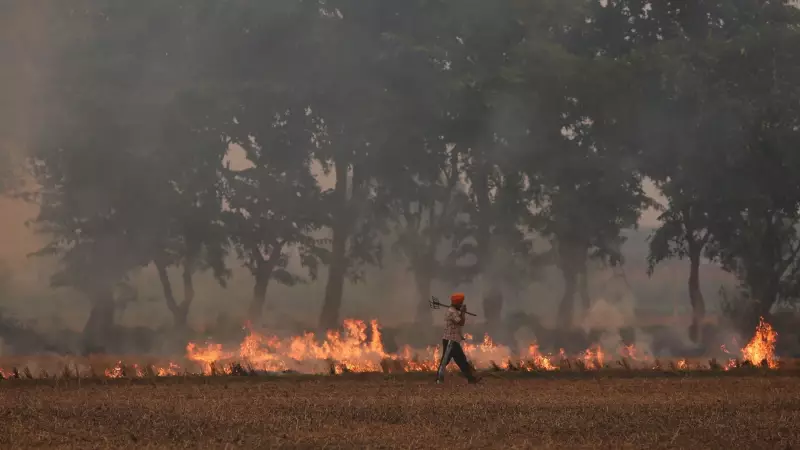
- Ensuring household access to clean fuels for cooking and heating, and supporting farmers to eliminate stubble burning through in-situ decomposition and bio-methanation.
The report concludes that only such a multi-pronged, sustained approach targeting both primary emissions and precursor gases can deliver lasting improvements to Delhi's air quality.