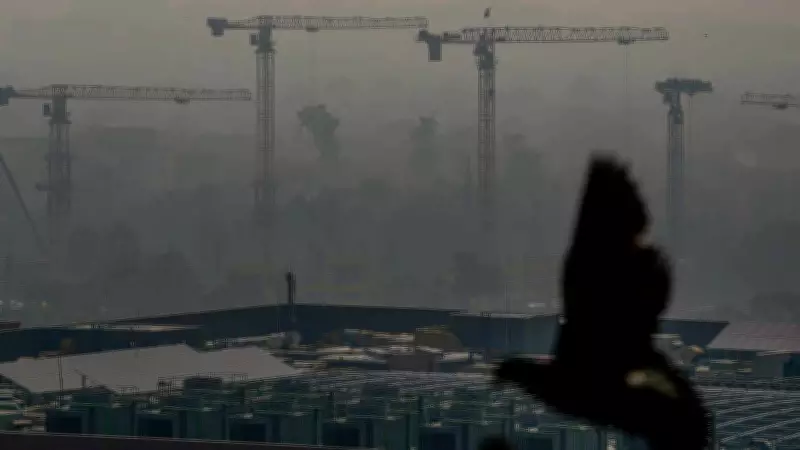
Delhi Sees Unseasonably Warm Nights and Deteriorating Air Quality in Early February
New Delhi is witnessing an early onset of warmer nights this February, with Safdarjung recording a minimum temperature of 13.2°C on Wednesday, February 11, 2026. This reading is three degrees above the seasonal normal of 10.2°C, marking one of the earliest such temperature spikes in at least the past two years. According to data from the India Meteorological Department (IMD), in both 2024 and 2025, the minimum temperature did not exceed 13°C during the first 11 days of February.
IMD Forecasts Warmer February with Rising Night Temperatures
The increase in night-time temperatures aligns with the IMD's broader forecast for a warmer February, predicting above-normal day and night temperatures and fewer cold wave days than usual. The IMD projects that the minimum temperature could rise to 15°C from February 15 to 17, a departure from historical patterns. Since 2011, IMD data indicate that minimum temperatures around 15°C are typically recorded towards the last week of February. Such early rises in night temperatures during February have been rare, with 2017 being an exception when the minimum temperature touched 15.5°C early in the month.
The early rise in night-time temperatures this month is attributed to approaching western disturbances, as stated by the IMD. These weather systems have limited night-time cooling and reduced the incursion of cooler air due to the absence of cold, northwesterly winds. On Wednesday, the wind direction was predominantly southwest, with clear skies and weak winds up to 8 kmph.

Air Quality Slips to 'Very Poor' Category in Delhi and NCR
Simultaneously, Delhi's air quality has deteriorated, slipping back to the 'Very Poor' category (AQI 301 to 400) from the 'Poor' category (AQI 201 to 300) for the first time in the last week. The Capital's average Air Quality Index (AQI) stood at 305 on Wednesday, up from 271 on Tuesday. Delhi had previously logged an AQI of 339 on February 4.
Similar trends were observed in the National Capital Region (NCR):
- Noida recorded an AQI of 311, placing it in the 'Very Poor' category on Wednesday, compared to 261 a day earlier.
- Gurgaon's AQI was 297, remaining in the 'Poor' category on Wednesday.
According to forecasts from the Indian Institute of Tropical Meteorology (IITM), air quality is likely to remain in the 'Poor' category over the coming days. The IMD noted that no major cold day or cold wave spell was reported during the first week of February due to continued Western Disturbance activity across north and central India.
Weather Outlook: Continued Warmth and Upcoming Disturbances
The IMD has indicated that cold wave and dense fog conditions are unlikely over any part of the country in the coming days from February 13 to 19. In Delhi, maximum and minimum temperatures are expected to remain above normal over the next seven days. Two fresh Western Disturbances are anticipated in quick succession from February 13 to 16, which may bring partly cloudy to generally cloudy skies and lead to a further increase in night temperatures.
This combination of early warm nights and poor air quality highlights ongoing environmental challenges in the region, with implications for public health and daily life.