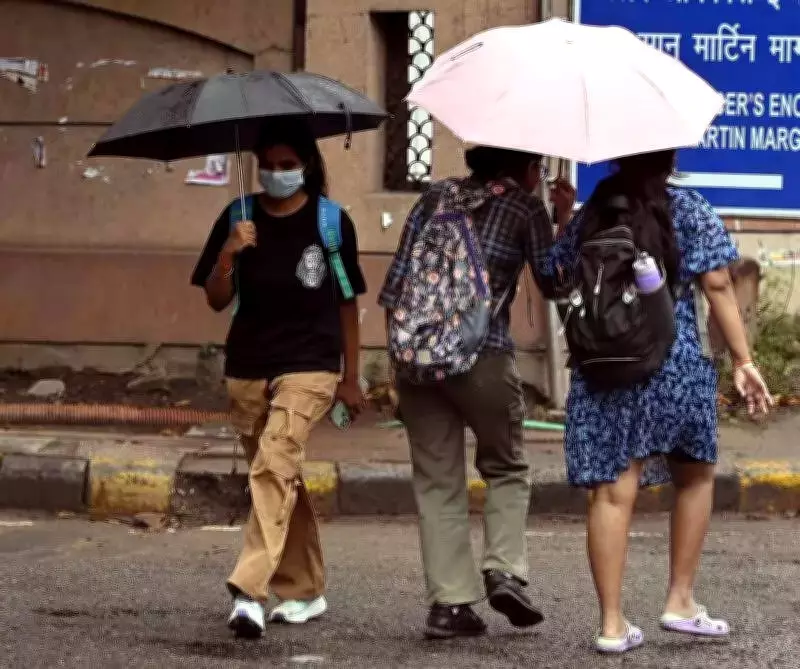
Delhi Experiences Unseasonal Winter Chill with Record Rainfall and Improved Air Quality
The national capital continued to bask in unexpected winter-like conditions on Friday, as persistent rainfall and overcast skies drove the maximum temperature down to a surprising 21.7 degrees Celsius. This reading stands a remarkable 10 notches below the seasonal normal and represents the lowest maximum temperature recorded in March for six years.
Significant Weather Shift Brings Relief from Heat
This dramatic cooling marks a stark contrast to conditions just last week, when Delhi residents were sweltering with temperatures reaching 36 degrees Celsius at Safdarjung. Earlier this month, on March 8, the mercury had climbed to a scorching 38.9 degrees Celsius at the Ridge observatory, which was 10 degrees above normal. The temperature at Safdarjung on March 11 remained high at 36.8 degrees Celsius.
The sudden meteorological change began just three days ago on March 18, when moisture-laden winds combined with high temperatures led to the formation of convective clouds. These clouds then collided with an active western disturbance, triggering the cooling process that brought intense rainfall starting Wednesday evening.

Rainfall Records and Temperature Extremes
With a net 16.2 mm of rainfall recorded until 8:30 AM on Friday, this March has now become the wettest in two years for Delhi. The base station at Safdarjung alone recorded 1.4 mm of rainfall between 8:30 AM and 5:30 PM on Friday. The maximum temperature of 21.7 degrees Celsius recorded on Friday represents a significant drop from 26.8 degrees Celsius recorded just a day earlier.
This temperature reading is particularly notable as it comes close to the record low maximum temperature for March set on March 8, 2020, which was recorded at 21.2 degrees Celsius. The lowest maximum temperature on Friday was recorded at Mayur Vihar, where the mercury dipped to 19.7 degrees Celsius. Meanwhile, the minimum temperature settled at 16 degrees Celsius, one notch below normal compared to 17.6 degrees Celsius recorded the previous day.
Air Quality Improvement and Future Forecast
The weather shift brought an unexpected environmental benefit as Delhi's air quality turned satisfactory for the first time this year. The Air Quality Index (AQI) reading of 93 represents the best air quality since October 8 last year, when it stood at 81.
As large swathes of North India experienced rain and thunderstorms, the cooling in Delhi persisted sufficiently to allow residents to turn off their air conditioners. However, this relief is expected to be temporary. According to the India Meteorological Department (IMD), the maximum temperature is likely to increase from Saturday, hovering around 26-28 degrees Celsius.
The IMD also forecasts another spell of rain on March 23. As per the center's early warning system, the AQI is also likely to become moderate as temperatures begin to rise again, indicating that the current period of improved air quality may be short-lived.
This unusual weather pattern has provided Delhi residents with a brief respite from both heat and pollution, though meteorologists expect normal seasonal conditions to resume gradually in the coming days.