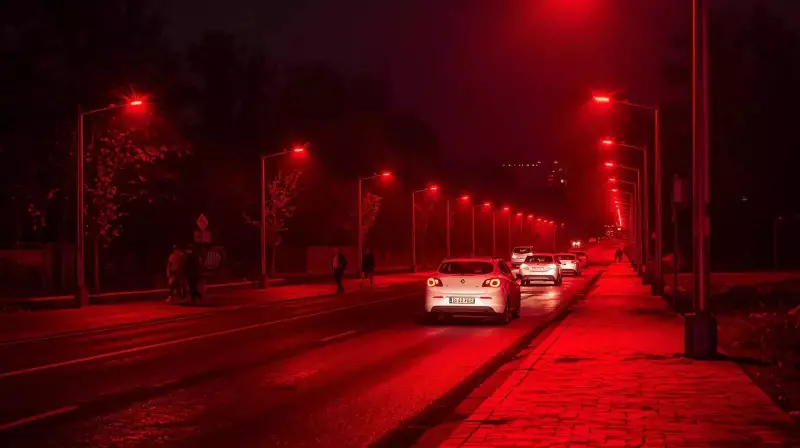
Denmark Tests Red Streetlights to Protect Bats in Copenhagen Suburb
Denmark is experimenting with a novel approach to street lighting. Instead of adjusting brightness, authorities are changing the color of the lights. In a suburb near Copenhagen, traditional white lamps are being swapped for red ones along specific roads.
The scale of this shift remains modest, but the intention is clear. Officials designed the project to minimize harm to wildlife while keeping streets functional for residents. Urban lighting has historically prioritized visibility and safety, often overlooking ecological impacts. This initiative represents a gradual reevaluation of that practice.
Red Lights Illuminate Bat Habitat in Gladsaxe
The project unfolds in Gladsaxe, on the outskirts of Copenhagen. Red-toned lighting now replaces standard streetlights along sections of Frederiksborgvej near Skovbrynet. Gladsaxe municipality issued a press release explaining the area hosts a local bat colony.

Rather than eliminating lights completely, the municipality selected a color that modifies how light interacts with wildlife. The change becomes visible only at night and only on designated road stretches. Bats played a crucial role in this lighting decision.
Research Guides Lighting Choices for Bat Conservation
Studies demonstrate that artificial lighting can disrupt bat movement, feeding, and navigation. Light containing short wavelengths, like blue, green, or white, typically has the strongest effect.
Research from the Netherlands indicates red light, with its longer wavelengths, interferes less with bat behavior. Experts also consider it more suitable for bats when they hunt insects. Local officials ruled out removing lighting entirely due to safety concerns. They chose red light as the least disruptive compromise.
Balancing Safety and Ecology in Road Design
While parts of the road now use red lighting, safety for drivers and cyclists stays a priority. At junctions and crossing points, warm white lights remain in use. These lights mount on higher masts to enhance visibility where needed most.
The lighting design varies along the route, adapting to how people and animals use different road sections. The aim avoids a one-size-fits-all approach. Engineers carefully balanced ecological concerns with public access.
Engineers and Designers Collaborate on Innovative Solution
Road engineer Jonas Jørgensen from Gladsaxe Municipality stated the goal was to limit disturbance without reducing accessibility. He noted complete darkness would be ideal for bats but unrealistic for a public road. The solution reflects a balance between environmental care and everyday use.
The lighting system developed with professional lighting designers. They view the project as an opportunity to challenge long-held assumptions about urban lighting. Philip Jelvard from Light Bureau said there would be an adjustment period for both people and bats. He added the red light carries symbolic weight, signaling the area is environmentally sensitive.
Sustainability Goals Drive Local Policy Changes
Gladsaxe became Denmark's first municipality to formally align its strategy with the United Nations Sustainable Development Goals. Biodiversity protection forms part of that framework. Mayor Trine Graese said the project shows how infrastructure can support both human needs and animal welfare. She described it as a practical example rather than a statement gesture.
A Small Change with Global Implications
Currently, the red streetlights remain limited to a specific route. No immediate plans exist to expand them across the city. Still, urban planners elsewhere are watching closely.
As cities rethink energy use, biodiversity loss, and nighttime design, Gladsaxe offers a quiet example. It does not promise a solution for every street. It simply tests whether light can be used with more restraint, and whether cities can learn to notice what has long been lit over.