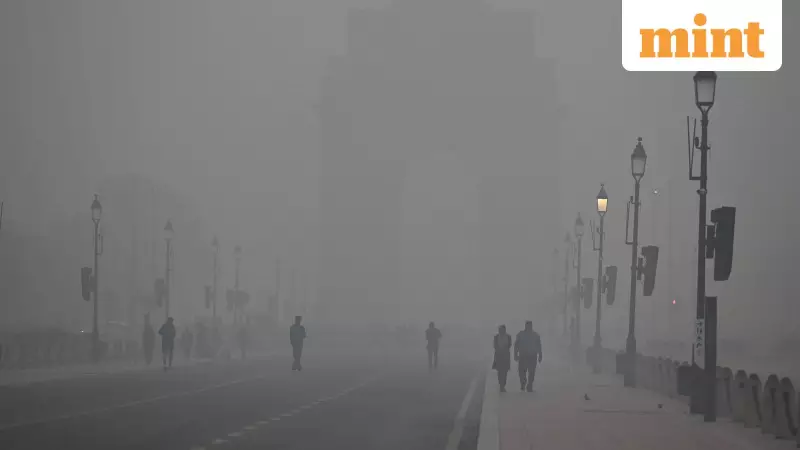
The India Meteorological Department (IMD) has issued a significant warning for large parts of northern, eastern, and northeastern India, forecasting a spell of dense fog, cold days, and cold wave conditions over the coming days. While authorities are urging caution for travel and public health, agricultural scientists highlight a silver lining: the prevailing cold weather is proving highly beneficial for the ongoing rabi sowing season.
Detailed Forecast: Fog and Cold Wave to Persist
According to the latest IMD bulletin, dense to very dense fog is very likely to persist during night and morning hours over several states. The forecast indicates that Bihar will experience these conditions till 26 December, Assam and Meghalaya till 27 December, Uttar Pradesh till 29 December, and Punjab, Haryana, and Chandigarh till 30 December.
Isolated pockets of dense fog are also predicted over Jammu and Kashmir, east Arunachal Pradesh, Himachal Pradesh, Uttarakhand, Odisha, Nagaland, Manipur, Mizoram, Tripura, Assam, and Meghalaya until 30 December. Additionally, parts of east Madhya Pradesh, Chhattisgarh, and Sub-Himalayan West Bengal may see dense fog till 27 December.

The IMD has also forecast cold day to severe cold day conditions at a few places over Bihar, Sub-Himalayan West Bengal, and Sikkim during 25-28 December, and at isolated pockets of Uttarakhand during 25-27 December. East Uttar Pradesh may experience cold day conditions on 25-26 December.
Cold wave conditions are expected over parts of Jharkhand, West Rajasthan, north Chhattisgarh, and over Punjab, Haryana, and Chandigarh during 26-30 December. Minimum temperatures are likely to fall by 2-3°C over Assam in the next two days and by 1-2°C over Chhattisgarh over the next three days.
Travel Disruptions and Public Health Advisory
In light of the significantly reduced visibility, authorities have advised extreme caution for road, rail, and air travel. The public has been urged to take adequate precautions against prolonged exposure to the cold to avoid health-related issues. The advisory stresses the importance of staying informed about local weather updates and following safety guidelines issued by transport authorities.
Agricultural Boost: Rabi Crops Thrive in Cold
Contrasting the travel woes, the meteorological conditions are providing a substantial boost to agriculture. Experts confirm that the current cold wave is conducive for rabi crops like wheat, barley, pulses, and oilseeds, and is unlikely to cause any adverse impact at this stage.
"The cold wave conditions in north and other parts of the country are currently conducive to rabi crops and we don't see any major impact," said Ratan Tiwari, director of the Indian Council of Agricultural Research-Indian Institute of Wheat and Barley Research (IIWBR) in Karnal.
The positive impact is already reflected in the sowing data. According to the Union Ministry of Agriculture & Farmers' Welfare, India’s rabi crop sowing for 2025–26 has shown a notable increase. As of 19 December, the total area sown reached 58.07 million hectares, which is 8 lakh hectares more than the 57.25 million hectares covered at the same time last year. This marks a 1.4% year-on-year increase.
The expansion is driven by increased acreage across key crops:
- Wheat coverage is higher by 1.29 lakh hectares.
- Rice area increased by 1.83 lakh hectares.
- Pulses coverage grew by 3.72 lakh hectares, with gram alone rising by 4.89 lakh hectares.
- Oilseeds area, led by rapeseed and mustard, expanded to 9.33 million hectares.
This robust sowing progress sets a positive tone for the rabi harvest, coming on the heels of a projected record kharif output. The first advance estimates released on 26 November projected total foodgrain production at 173.33 million tonnes, an increase of 3.87 million tonnes over the previous year.

While residents in affected regions brace for challenging travel conditions and biting cold, the farming community views this weather pattern as a vital contributor to a potentially bountiful season, highlighting the diverse impacts of winter weather across different sectors of Indian life.