Turkmenistan's Door to Hell: A Fiery Phenomenon in the Desert
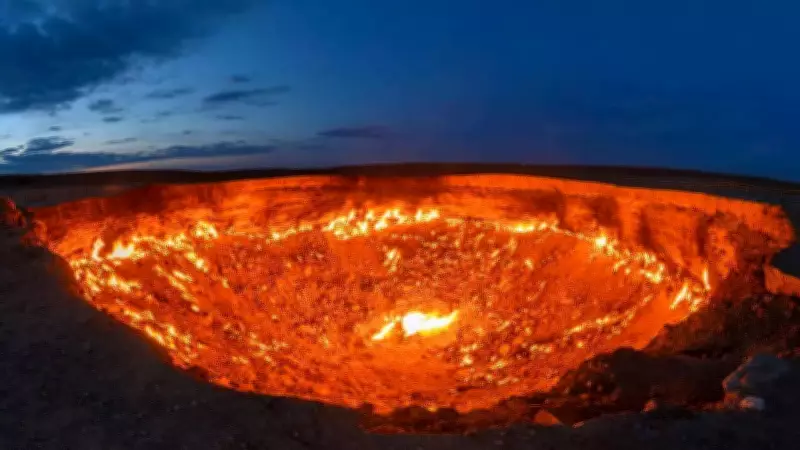
In the heart of Turkmenistan's vast Karakum Desert lies a sight that seems plucked from a dystopian fantasy: the Door to Hell. This enormous, perpetually burning crater has been ablaze for over five decades, creating a surreal and intimidating landscape that captivates adventurers and scientists alike.
The Origins of the Inferno
The Door to Hell was born from a Soviet-era drilling mishap in 1971. Reports indicate that a natural gas rig collapsed, creating a massive crater. To prevent the spread of toxic gases, authorities decided to set the escaping methane alight, expecting the fire to burn out quickly. However, the flames have roared continuously ever since, defying expectations and transforming the site into a natural wonder of destruction and beauty.
George Kourounis: The First Descent into the Abyss
Adventurer George Kourounis made history by becoming the first person to descend into this fiery pit. His journey was not merely a daredevil stunt but a meticulously planned expedition fraught with challenges. "It's one of the most closed countries in the world," Kourounis reportedly said, highlighting the two years of arduous paperwork, permits, and waiting required to gain access to Turkmenistan around 2013.

The crater itself is a staggering 76 meters wide and 30 meters deep, with roaring flames that illuminate the desert day and night. Thousands of smaller flames dance along the edges, while two massive central blazes likely mark the original drilling site. The heat is so intense that it could melt ordinary clothing, forcing Kourounis to wear a specialized aluminium-like heat suit that made him feel "a bit like a baked potato," as he humorously noted.
Scientific Discoveries in the Flames
Despite the hellish conditions, Kourounis and his team made a groundbreaking discovery: the presence of extremophile bacteria in the soil. These microorganisms thrive in the extreme heat and methane-rich environment, offering a glimpse into how life might survive in similarly harsh conditions on other planets. Microbiologist Dr. Stefan Green reportedly found that these bacteria are enriched by the crater's unique ecosystem, suggesting that life can adapt to even the most unforgiving environments.
The crater's orange glow and fiery walls create an almost Martian atmosphere, leading some observers to compare it to the surface of Mars. Yet, it is teeming with life, from the bacteria in the soil to the camel spiders that inhabit the edges. These nocturnal hunters, sometimes called wind scorpions, use the crater's heat to attract prey and can survive in the gas-rich surroundings, adding another layer to the site's bizarre ecology.
The Changing Face of the Door to Hell
After 54 years of relentless burning, scientists have observed that the flames are slowly beginning to die down. This gradual reduction hints at the finite nature of the gas reserves that fuel the inferno, raising questions about the crater's future. For now, however, the Door to Hell remains a terrifyingly beautiful spectacle, a testament to both human error and nature's resilience.
Kourounis's descent was not just an adventure; it was a scientific mission that could provide crucial insights into astrobiology and the limits of life on Earth. Studying these extremophiles may help explain how organisms survive in environments with high heat, methane, and low nutrients, potentially informing the search for life beyond our planet.
The Door to Hell stands as a unique natural laboratory, where fire, heat, and life intersect in unexpected ways. As the flames eventually subside, the secrets buried in its orange soil may continue to reveal new wonders, reminding us of the enduring mysteries hidden in Earth's most extreme corners.