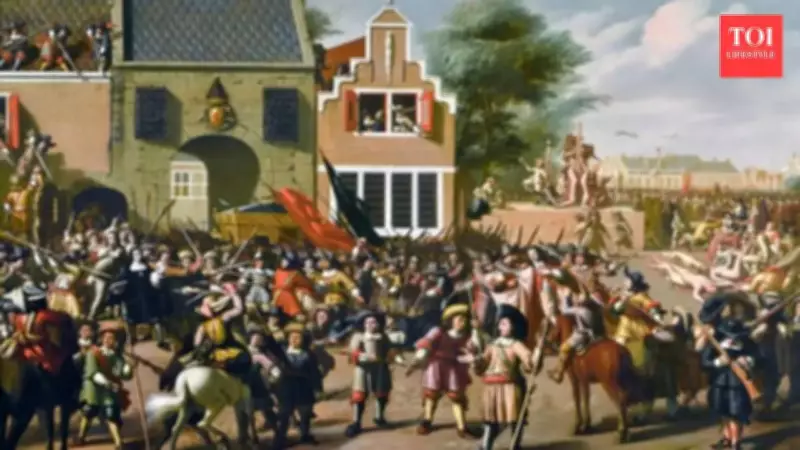
History contains moments so shocking they seem almost unbelievable. Imagine an enraged populace not only murdering their former leader but consuming his flesh and selling his remains as keepsakes. While this might sound like a grotesque fiction, Dutch historical records confirm this horrifying event actually occurred during one of Europe's most turbulent periods.
The Dutch Golden Age's Darkest Hour
The year was 1672, a period that would become infamously known as the 'Rampjaar' or Disaster Year in the Netherlands. This marked the violent end to what had been the prosperous Dutch Golden Age - an era celebrated for Rembrandt's masterpieces, groundbreaking scientific inventions like the microscope, and the lucrative spice trade dominance of the Dutch East India Company. The republic faced simultaneous invasions from France, England, Münster, and Cologne, bringing the nation to the brink of collapse.
A Grisly Public Execution
Amid this national crisis, public fury reached a boiling point against recently ousted statesman Johan de Witt and his brother Cornelis. An angry mob descended upon the brothers, hanging them upside down before committing unspeakable acts of violence. The rioters removed their organs, consumed parts of their corpses, and even sold their fingers and tongues as morbid souvenirs to bystanders.

The Power of Misinformation Campaigns
What could drive citizens to such extreme brutality against their former leader? The answer lies in one of history's most effective misinformation campaigns. For years, satirists, pamphleteers, and political activists had circulated relentless propaganda portraying the de Witt brothers as corrupt, immoral elitists who had conspired with the Dutch Republic's enemies.
False accusations claimed Johan de Witt had deliberately provoked war with England, resulting in what propagandists described as "all the bloodshed, killing and injuring, the crippled and mutilated people, including widows and orphans" - atrocities they alleged he used to maintain power.
The Path to Violence
The smear campaign achieved devastating results. In June 1672, Johan de Witt survived an assassination attempt when he was assaulted and stabbed. Two months later, he resigned from his position as the republic's leader. Shortly afterward, authorities arrested his brother Cornelis on treason charges.
The final act unfolded when Johan visited his imprisoned brother. Guards and soldiers mysteriously disappeared, allowing the mob to storm the prison, drag both brothers into the street, and carry out their horrific public execution. While King William III was suspected of orchestrating the murders, these allegations were never conclusively proven.
Historical Lessons for Modern Society
This disturbing episode serves as more than just a gruesome historical footnote. It stands as a powerful reminder that what populations accept as "revelations" or truth are sometimes carefully manipulated segments of information strategically deployed to achieve political objectives.
The 1672 Dutch mob violence demonstrates how effectively misinformation can weaponize public sentiment, turning citizens against their leaders with fabricated narratives. In an age where information spreads faster than ever before, this historical tragedy underscores the enduring danger of propaganda and the importance of critical thinking in evaluating political claims.