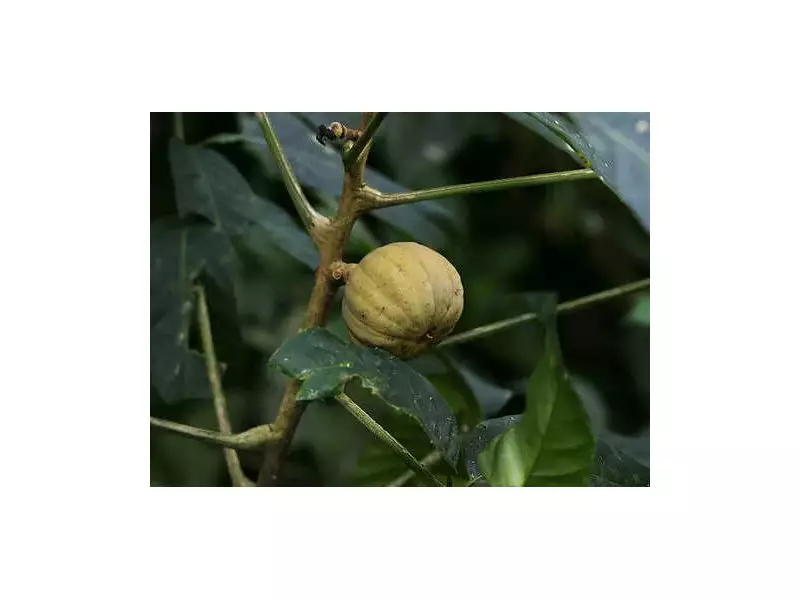
The Dynamite Tree: Nature's Explosive Seed Launcher
Deep within the tropical forests of Central and South America, a seemingly ordinary tree conceals one of nature's most dramatic survival strategies. Scientists call it Hura crepitans, but locals know it better as the dynamite tree. This name comes not from folklore but from the very real explosive power of its fruit.
When Fruit Turns into a Projectile Launcher
When the fruit of the sandbox tree reaches full maturity, it does not simply drop to the ground. Instead, it undergoes a violent explosion. The blast propels seeds outward at staggering speeds of up to 150 miles per hour. This rapid dispersal scatters seeds across a wide area, often startling animals and humans nearby with its loud cracking sound.
Researchers have documented this phenomenon extensively. They note that the process involves explosive dehiscence, where the fruit pod splits apart suddenly rather than opening gradually. As the fruit dries, internal pressure builds until it discharges abruptly. This release creates a gunshot-like noise and sends seeds flying in all directions.

Calculations show seeds can travel distances exceeding 60 feet from the parent tree. The sheer force and speed justify the tree's explosive nickname. It is a literal description of its behavior, not mere exaggeration.
The Science Behind the Explosion
Externally, the fruit appears solid and calm, resembling a segmented pumpkin. Inside, however, tension mounts steadily. During maturation, different tissue layers lose water at varying rates. Because plant cell walls are rigid, this uneven drying generates significant stress.
Fibers within the fruit resist shrinking, causing slight warping and storing elastic energy. Over time, pressure increases until the seams holding segments together weaken. When they finally fail, the release occurs in milliseconds. The fruit shatters violently, launching seeds at extreme velocities across hundreds of feet.
More Than Just Explosive Fruit
The dangers of the sandbox tree extend beyond its fruit. Its trunk is densely covered with sharp, pointed spines, earning it nicknames like monkey no climb. Additionally, the tree produces toxic sap that can cause skin irritation, serious illness if ingested, and severe eye damage upon contact.
These features make the tree hazardous to approach, especially when fruit is ripe. Local communities have long learned to maintain a safe distance. The explosion itself serves not as defense but as an efficient seed dispersal mechanism. By flinging seeds far away, the tree reduces competition among its own seedlings, ensuring better survival rates.
Scientific Fascination and Broader Implications
Scientists continue to study the sandbox tree with great interest. It achieves one of the fastest movements in nature without muscles or nerves. The mechanics of its fruit offer valuable insights into how living tissues accumulate and release energy.
These findings extend beyond botany, influencing material science and engineering design. Researchers explore applications in developing new materials that mimic this natural energy storage and release. Yet, in its forest habitat, the tree remains unchanged. It stands silent and motionless for long periods before suddenly erupting with noise and activity, then returning to stillness.
The dynamite tree exemplifies nature's ingenuity, using physics and biology to ensure its propagation in competitive tropical ecosystems.