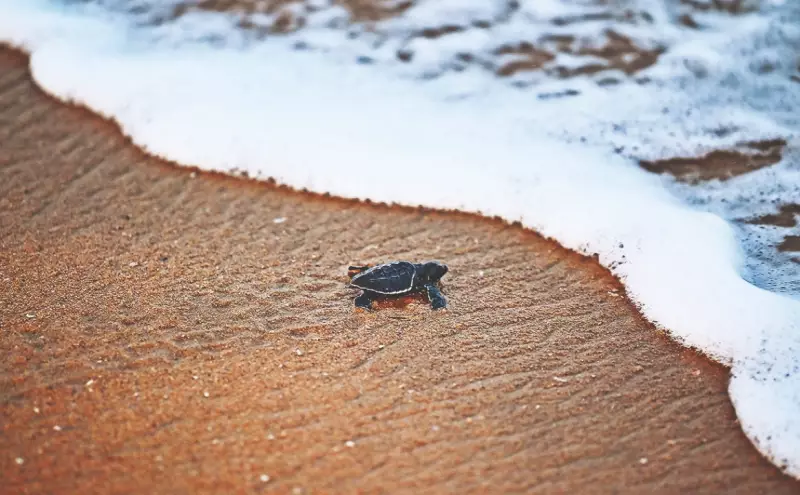
The new nesting season for the endangered Olive Ridley turtles along Goa's coastline has commenced, marked by an earlier-than-expected arrival. The first official nesting event for the 2025-26 season was documented at the pristine Galgibaga beach earlier this week, setting a hopeful tone for conservationists.
An Early Start at Galgibaga
In a significant development for marine conservation, a female Olive Ridley turtle chose the sands of Galgibaga beach to lay her clutch of 109 eggs. Following the natural process, the turtle safely returned to the Arabian Sea. Acting swiftly to protect the vulnerable eggs from potential threats, staff from the state forest department carefully excavated and transferred them to a secure turtle rehabilitation centre for controlled incubation. The incubation period is expected to last approximately 60 days.
This year's first nesting at Galgibaga was recorded on December 30, which is notably earlier compared to the previous season, where the first nest was documented on January 2. This shift indicates a potential change in nesting patterns.

Statewide Nesting Activity Gains Momentum
The early activity is not confined to Galgibaga. Forest officials have confirmed that nesting has begun ahead of schedule at Morjim beach as well, with two separate nesting events already reported. Furthermore, the season is progressing in South Goa at Agonda beach, another critical nesting site, where a substantial 441 eggs have been recorded so far.
When tallied, the current season's total across Goa's beaches has reached an impressive 780 Olive Ridley turtle eggs. Officials from the South marine range rehabilitation centre have pointed to favourable climatic conditions as a likely catalyst for this early and promising activity. They anticipate that beaches like Galgibaga and Agonda, which are officially designated turtle nesting sites, could witness more such events in the coming weeks.
An Appeal for Public Cooperation
While the early numbers are encouraging, forest department officials have reiterated a crucial appeal to both locals and tourists. They urge the public to immediately report any sightings of turtle nesting activity or tracks on the beaches. The officials highlighted that increased human presence and interference on the beaches continue to be a primary concern for the successful breeding of these protected species. Community vigilance is essential to ensure the safe hatching and return of the hatchlings to the sea.
The proactive measures by the forest department, combined with supportive weather, are fostering optimism for a robust nesting season. However, the ultimate success hinges on a collective effort to minimize disturbances at these sensitive ecological sites.