Earthquakes Serve as Nature's Hidden Gold Factories
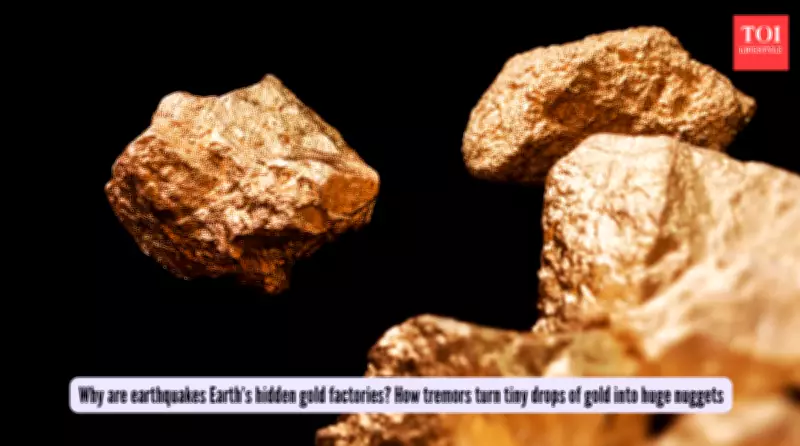
Deep beneath the Earth's surface, where tectonic plates collide and mountains rise, a remarkable alchemical process unfolds. The same seismic forces that shape continents and trigger devastating earthquakes are quietly manufacturing one of humanity's most coveted treasures: pure gold. Those museum-display nuggets weighing up to 60 pounds aren't random geological accidents but rather the carefully crafted products of our planet's most violent movements.
The Seismic-Gold Connection Revealed
A groundbreaking study published in the prestigious journal Nature Geoscience has uncovered the extraordinary relationship between earthquakes and gold formation. The research demonstrates that seismic activity plays a crucial role in creating giant gold nuggets by electrifying quartz-rich veins within the Earth's crust. This electrical charge pulls dissolved gold from hot, mineral-rich fluids, gradually building it into solid metal over geological time scales.
Gold deposits typically form during mountain-building events known as orogenies, when the Earth's crust folds and fractures under immense pressure. During these processes, mineral-laden fluids seep through newly created cracks and fissures. These hydrothermal fluids contain only trace amounts of gold—typically less than one milligram per kilogram of water—yet somehow manage to produce hand-filling nuggets that have fascinated humans for millennia.

Quartz: The Magical Mineral Catalyst
The secret ingredient in this geological recipe is quartz, a chemically inert mineral that forms tight partnerships with gold in crustal deposits located in earthquake-prone regions. Quartz possesses a unique and remarkable property: it's strongly piezoelectric, meaning it generates an electric charge when subjected to mechanical stress. Among Earth's abundant crustal minerals, quartz stands alone in this capability.
As seismic waves repeatedly compress quartz crystals within mineral veins, this mechanical action builds up significant electrical voltage. According to the Nature Geoscience study, this piezoelectric effect creates the perfect conditions for gold deposition. Researchers from Monash University tested this phenomenon in laboratory conditions, deforming quartz in gold-containing fluids while simulating earthquake-like squeezes and shakes.
From Microscopic Particles to Massive Nuggets
The research team extended their laboratory findings to real-world quartz veins deep within the Earth's crust using sophisticated modeling techniques. Their work revealed that earthquake-induced stress creates powerful electric fields that drive complex electrochemical reactions. These reactions cause gold nanoparticles to form on quartz surfaces, beginning the transformation from dissolved metal to solid treasure.
Initially, quartz's insulating properties slow this accumulation process. However, once a thin metallic film develops, it begins functioning like natural conductive wiring. "Dissolved gold tends to accumulate on preexisting grains, turning early specks into preferred growth hubs during later earthquakes," the study authors explain in their Nature Geoscience publication.
The Cumulative Effect of Repeated Earthquakes
In active fault zones, seismic slips occur thousands of times over geological history, repeatedly reopening fractures to admit fresh pulses of mineral-rich fluid while stressing quartz crystals anew. Each earthquake deposits additional microscopic layers of gold onto existing structures, gradually building interconnected networks that mirror those observed in natural gold samples.
"The glittering nuggets displayed in museums worldwide are the frozen record of repeated seismic stress in ancient mountain chains," the study concludes. These magnificent formations aren't the product of a single fluid influx but rather the cumulative result of countless earthquakes working as nature's most persistent goldsmiths over millions of years.
This research fundamentally changes our understanding of gold formation, revealing how Earth's most destructive forces simultaneously create some of its most beautiful and valuable treasures. The study provides new insights for mineral exploration while offering a fascinating glimpse into the complex, interconnected processes that shape our planet's geology and resources.