The Indian scientific and environmental community is in mourning following the passing of Madhav Gadgil, one of the nation's most respected ecologists. He died in Pune on Thursday at the age of 83 after a brief illness, leaving behind a legacy that intertwines rigorous science with deep compassion for people and nature.
A Doting Grandfather and His Sporting Legacy
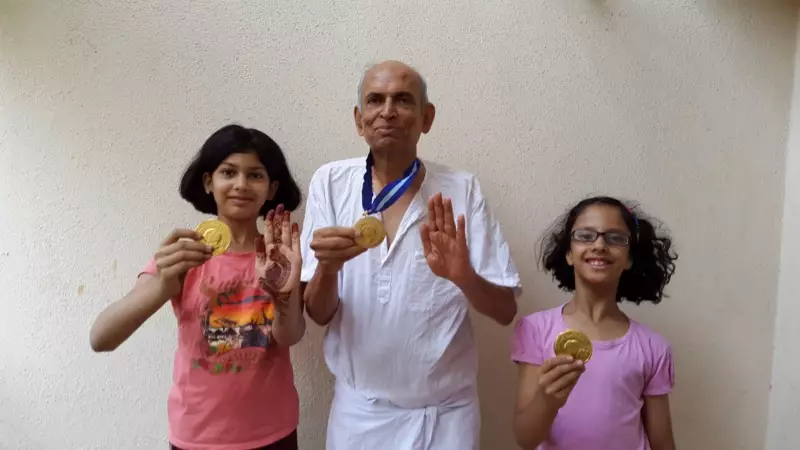
While celebrated globally for his environmental work, within his family, Madhav Gadgil was remembered as an exceptionally loving grandfather. His daughter, Gauri, shared heartfelt memories of his playful spirit with his granddaughters. "He would do anything for my daughters, stand on his head just to make them laugh. He also used to make the most amazing fruit platters," she recalled.
This playful nature had roots in his own youth, where he was an accomplished athlete. The lanky Gadgil was the junior state high jump champion, a feat he often narrated to his granddaughters. One of them, Tara Shah, has followed in his sporting footsteps as a professional badminton player.

The Towering Legacy of a Pioneering Ecologist
Madhav Gadgil's professional contributions have left an indelible mark on India's environmental policy. He is most renowned for chairing the committee that produced the seminal Gadgil Committee Report on the Western Ghats. This report has become the foundational document for demarcating ecologically sensitive areas in this fragile and biodiverse mountain range, aiming to balance conservation with sustainable development.
His son, Siddhartha, noted his father's unwavering integrity, stating he was "equally honest and liberal with us as he was at work." Gadgil's intellectual pursuits spanned mathematics, natural and social sciences, history, and public policy, and he was known for encouraging colleagues, friends, and students alike.
His memoir, 'A Walk Up The Hill: Living with People and Nature', published about a year and a half ago, chronicles his lifelong journey through India's landscapes, from watching peacocks dance to living with tribal communities, all while engaging with the scientific world.
Tributes Pour In for a Compassionate Scientist
The news of his demise drew profound grief from across the scientific and academic spectrum. Dr. Soumya Swaminathan, former chief scientist at the WHO, expressed deep sorrow, calling him an "exemplary scientist, a dedicated and passionate ecologist and a wonderful human being." She emphasized the unique perspective in his book, which argues for balancing wildlife conservation with the needs of local communities.
Historian Ramchandra Guha described Gadgil as a friend and mentor for over 40 years, saying he was devastated by the loss. Prof. Gurudas Nulkar of the Gokhale Institute highlighted Gadgil's crucial relevance today, noting his ability to connect natural resources with livelihood and development in an age of intense economic competition.
The final rites were performed at Pune's Vaikunth crematorium. Gadgil is survived by his wife Sulochana, children, and grandchildren. He had been recovering from a hip fracture but later developed a throat infection and aspiration pneumonia. He was admitted to Prayag Hospital in Pune, where he succumbed to complications including a brain hemorrhage and septic shock.