

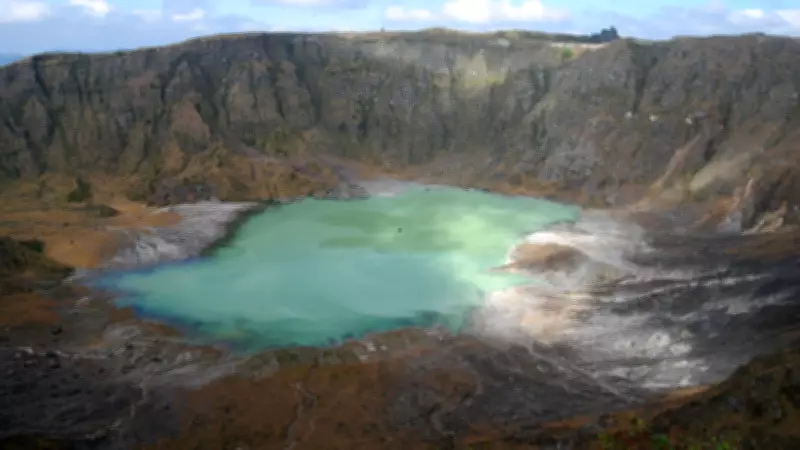
El Chichón Volcano Shows Signs of Activity, Scientists Monitor Changes
El Chichón volcano in Mexico warrants attention from the scientific community, though not immediate alarm, according to recent monitoring data. Between June and December 2025, researchers from the National Autonomous University of Mexico (UNAM) documented several physical and chemical shifts within the volcano's crater system. These findings come decades after the catastrophic 1982 eruption that claimed at least 1,900 lives and completely destroyed nine villages.
Historical Context of El Chichón
Volcanologist Erik Klemetti has previously described the 1982 blast as "one of the most important volcanic events of the 20th century." He noted that the eruption of El Chichón is often overlooked in comparison to other historic eruptions like Mount St Helens in 1980 or the Pinatubo eruption in 1991. "Yet it teaches us a number of important lessons about how we can be better prepared for volcanic disasters and the potential influence of volcanoes on the Earth's climate," Klemetti emphasized.
What Researchers Observed in 2025
According to UNAM's comprehensive monitoring team, the most visible transformation occurred in the crater lake. Typically green and rich in algae, the water has turned a distinct grayish hue. Scientists indicate this color change may reflect higher concentrations of sulfate and silica linked to evolving underground fluid circulation patterns.

Thermal readings revealed elevated temperatures along the lake bed and specific sections of the crater floor, rising significantly above background levels normally recorded at the site. Gas measurements detected notable accumulations of hydrogen sulfide and carbon dioxide near the crater. While both gases can pose risks in high concentrations, researchers emphasized that such emissions are common in hydrothermal systems. What drew particular attention this time was the measurable increase compared to previous readings.
Another unusual feature observed by the scientific team was the formation of small sulfur spheres in liquid sulfur pools close to the crater, an anomaly now under continuous observation and analysis.
Is an Eruption Imminent?
Despite these documented changes, UNAM volcanologist Dr. Patricia Jácome Paz clarified that the data do not point to magma rising toward the surface. Rather than indicating "fresh magma," she explained that "the observed behavior is consistent with hydrothermal processes or minor steam-driven explosions." She added that the activity is likely linked to superheated groundwater interacting with hot rock beneath the crater.
In other words, the shifts appear tied to the volcano's hydrothermal system, not necessarily to an impending eruption. UNAM's detailed report noted that the Chiapas Civil Protection Secretariat remains in regular contact with nearby communities, including local tour guides, to reinforce safety protocols and provide clear, accurate information about volcanic hazards.
For now, experts describe the situation as one that requires vigilance and continued monitoring, not panic. But given El Chichón's violent history and the scale of devastation in 1982, even subtle internal changes are enough to keep scientists watching closely and maintaining their comprehensive observation protocols.






