Severely Injured Bonnet Macaque Recovers After Electrocution Trauma
In a heartening wildlife rescue story from Karnataka, an adult bonnet macaque that sustained severe electrocution injuries to its face and limbs has made a full recovery and was recently released back into its natural habitat. The dramatic rescue and rehabilitation effort showcases the dedication of wildlife conservationists and veterinarians.
Discovery and Initial Rescue Efforts
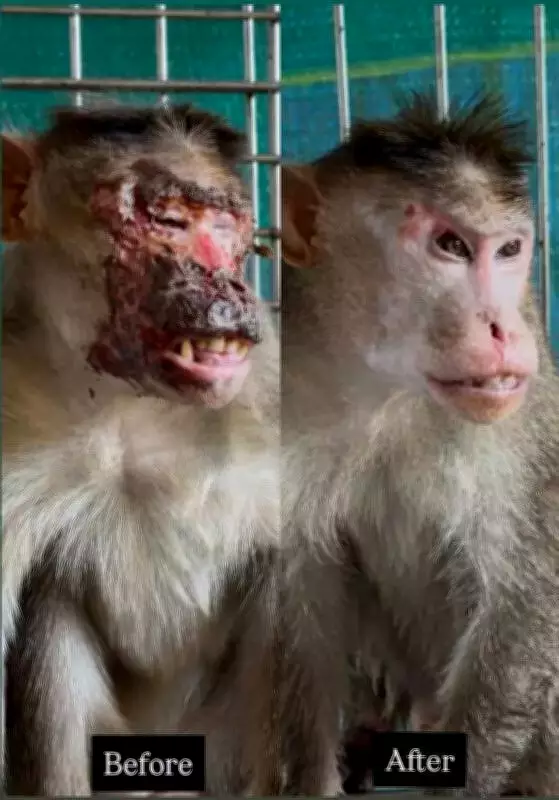
The injured primate was first discovered during the first week of January when a painter in Moodubelle, Udupi district, noticed the distressed animal inside a residential property. The macaque presented with alarming injuries: its face was severely burnt, its nostrils were completely blocked with dead tissue, and its hands appeared charred from the electrical shock.
Akshay N Shet, founder of Uchhu Trust (Udupi Snake in the City), described the challenging rescue operation. "The monkey was badly injured and couldn't see properly due to the facial burns. It was disoriented and attempted to flee whenever we approached," Shet explained. "It took our team approximately 45 minutes to safely capture the animal. At that point, we weren't even certain it would survive given the severity of its condition."

Specialized Veterinary Treatment and Diagnosis
The rescued macaque was immediately transferred to the CARE Wildlife Wing for emergency medical attention. While initial assessments suggested burn injuries, veterinarians later confirmed through examination that the damage resulted from electrocution.
Dr. Meghana Pemmaiah of CARE Wildlife Wing detailed the specific injury patterns. "The severe burns concentrated on the face, hands, and legs indicated that electrical current had passed through these specific body parts. When electricity travels through tissue, it causes cellular death in that area," she explained.
The veterinary team faced multiple challenges. "The nostrils were completely obstructed by necrotic tissue, forcing the macaque to breathe through its mouth," Dr. Pemmaiah noted. "We had to sedate the animal and surgically remove all dead skin to allow new tissue regeneration. Without this debridement procedure, proper healing would have been impossible."
Innovative Treatment Approach and Recovery Process
The medical team employed a specialized squeeze cage to administer antibiotics and necessary injections without repeatedly sedating the primate. This innovative approach minimized stress and reduced risks associated with frequent anesthesia.
"Electrocution cases can be particularly life-threatening because high-voltage shocks may damage internal organs," Dr. Pemmaiah emphasized. "Fortunately, in this instance, the injuries remained superficial rather than affecting vital internal systems."
Within weeks of treatment, remarkable progress became evident. Fresh skin gradually replaced the damaged areas, and the macaque's breathing normalized as new tissue formed in its nasal passages. Its overall condition improved significantly throughout the rehabilitation period.
Successful Release Back to Natural Habitat
After nearly one month of intensive care and monitoring, veterinary professionals declared the bonnet macaque fully recovered and fit for release. Wildlife rehabilitators Rahul J and Mayur G from CARE Wildlife Wing provided continuous care throughout the recovery process.
The release operation involved coordinated efforts between rescuer Akshay Shet and local forest department officials. The macaque was returned to the same general area where it was originally found, ensuring it could reintegrate into its familiar territory and social group.
This successful rescue story highlights the importance of specialized wildlife rehabilitation facilities and the dedication of conservation professionals working to protect India's diverse primate populations. The bonnet macaque's recovery from such severe injuries demonstrates both the resilience of wildlife and the effectiveness of proper veterinary intervention.