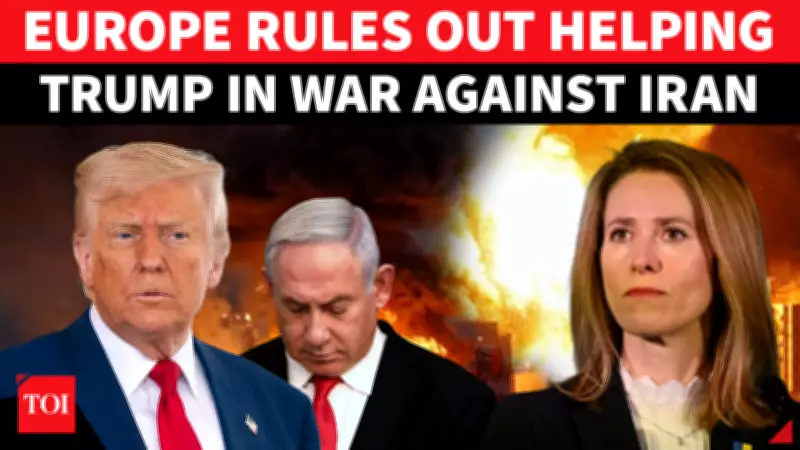
European Union Rejects U.S. Call for Military Support in Iran Conflict
In a significant diplomatic move, the European Union has explicitly refused to provide military assistance to the United States amid escalating tensions with Iran in the Strait of Hormuz. EU Vice President Kaja Kallas delivered a clear message, emphasizing that "Iran war is not our war" and that Europe has no intention of expanding its military operations in the region.
EU Stance on Operation ASPIDES and Regional Stability
Kallas highlighted that there is no appetite within the bloc to escalate Operation ASPIDES, a mission focused on maritime security. Instead, the EU remains deeply concerned about disruptions to critical shipments, including food, fertiliser, and energy supplies, which are vital for global trade stability. This decision marks a deliberate distancing from the U.S.-Iran conflict, as the EU prioritizes avoiding direct military involvement.
Focus on Trade Security Amid Rising Gulf Tensions
As hostilities intensify in the Gulf, the European Union is concentrating its efforts on safeguarding trade routes without engaging in combat. The bloc's strategy underscores a commitment to diplomatic solutions and economic security, rather than military escalation. This approach reflects broader European concerns about the potential impacts of the conflict on international markets and regional stability.

Implications for U.S.-EU Relations and Global Geopolitics
The EU's refusal to align militarily with the United States in the Hormuz crisis could strain transatlantic relations, while also signaling a shift in how European nations address Middle Eastern conflicts. By asserting its independence, the EU aims to maintain a neutral stance, focusing on humanitarian and economic issues rather than becoming entangled in warfare.