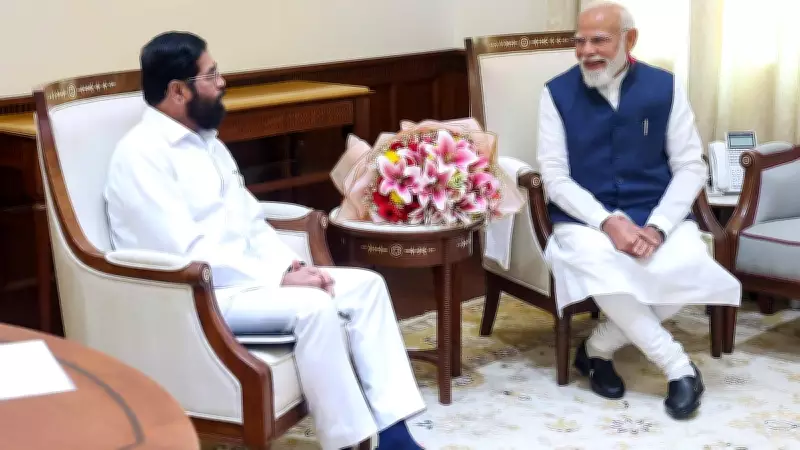
Maharashtra CM Eknath Shinde Pledges Support to PM Modi Amid West Asia Tensions
In a significant political development, Maharashtra Chief Minister Eknath Shinde has publicly backed Prime Minister Narendra Modi's approach to the escalating crisis in West Asia, while launching a sharp critique against Congress leader Rahul Gandhi for what he termed as creating a "misleading narrative" on the issue. The statements came during Shinde's meetings with top central leadership in New Delhi on March 17, 2026.
Shinde's Firm Stance on National Security and Foreign Policy
During a goodwill meeting with Prime Minister Modi in the national capital, Chief Minister Shinde assured that the Shiv Sena party stands firmly with the central government amidst the volatile situation arising from the conflict between Iran and the US-Israel alliance. Shinde emphasized the importance of national unity during such international crises, stating that his party's support is unwavering as India navigates complex geopolitical challenges.
The Maharashtra leader specifically addressed what he described as "irresponsible statements" from opposition figures, directly targeting Rahul Gandhi for allegedly spreading misinformation about the government's handling of the West Asia situation. Shinde accused Gandhi of attempting to create confusion and undermine public confidence in India's diplomatic and security apparatus during a sensitive period.

Discussions on Maharashtra's Development Agenda
Beyond the geopolitical discussions, Chief Minister Shinde also held substantive talks with Union Home Minister Amit Shah, focusing on various developmental and administrative matters concerning Maharashtra. The meetings covered:
- Infrastructure projects and central funding allocations
- Law and order coordination between state and central agencies
- Economic initiatives and industrial growth plans
- Welfare schemes and their implementation mechanisms
These parallel discussions underscore the dual focus of Shinde's Delhi visit – both expressing solidarity on national security matters and advancing state-specific interests through constructive engagement with the central government.
Political Implications and Broader Context
The public declaration of support comes at a critical juncture when India faces diplomatic challenges in the Middle East region, with potential implications for energy security and regional stability. Shinde's alignment with the central government's position reinforces political cohesion within the ruling alliance while creating clear differentiation from opposition viewpoints.
Political observers note that Shinde's criticism of Rahul Gandhi represents a continuation of the ongoing political discourse where the ruling party and its allies frequently challenge the opposition's narrative on foreign policy and national security matters. The Maharashtra chief minister's statements carry particular weight given his position leading one of India's most economically significant states.
As the West Asia situation continues to evolve, with potential impacts on global oil prices and regional security dynamics, Shinde's endorsement of the government's approach provides political reinforcement to New Delhi's diplomatic maneuvers while attempting to counter what he perceives as opposition attempts to politicize sensitive international developments.