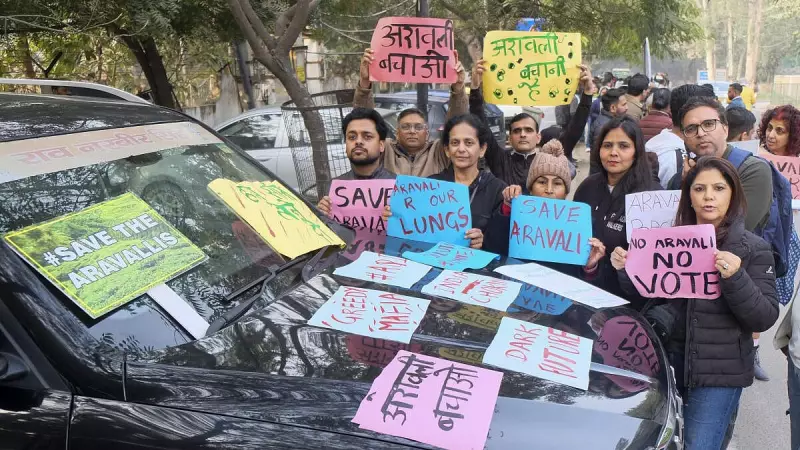
A major environmental and legal controversy has erupted in North India, centering on the very definition and protection of the ancient Aravalli Range. The Supreme Court of India has stepped into a heated dispute, questioning the Haryana government's stance on what constitutes the Aravalli hills. This row has profound implications for land use, mining activities, and the ecological security of the entire National Capital Region.
The Core of the Controversy: Defining a Natural Fortress
The heart of the dispute lies in the interpretation of the Natural Conservation Zone (NCZ) as outlined in the regional plan for the National Capital Region. The Supreme Court, in a significant hearing on July 26, 2024, directly challenged the Haryana government's argument. The state had claimed that the Aravalli Range only includes areas specifically notified as forest under the Indian Forest Act, 1927, or the Punjab Land Preservation Act (PLPA), 1900.
This narrow interpretation was contested by the court-appointed Central Empowered Committee (CEC) and environmentalists. They argue that the Aravalli range includes all hills, hillocks, and rocky outcrops as per the NCZ definition, regardless of their official forest notification status. The Supreme Court has now sought a clear report from the CEC on this critical definition, putting a temporary hold on any construction or mining in these disputed areas.

Historical Context and the Mining Menace
The Aravalli Range, one of the world's oldest fold mountain systems, acts as a crucial natural barrier against desertification, protecting the fertile plains of North India. For decades, it has been under severe threat from rampant, often illegal, mining for minerals like quartzite and sandstone. The Supreme Court had imposed a blanket ban on mining in the Aravalli ranges of Haryana back in 2009, and later in 2018, extended this ban to include areas in Rajasthan.
However, the recent legal tussle stems from attempts to circumvent these protections. The Haryana government's stand, if accepted, would potentially open up vast stretches of the Aravallis that are hills but not officially 'notified forest' for development and mining. Environmentalists warn this would be catastrophic, leading to irreversible ecological damage, loss of groundwater recharge zones, and increased air pollution in the already choked NCR.
Implications and the Road Ahead
The Supreme Court's intervention has brought national focus back to the fragile ecology of the Aravallis. The court's skepticism towards the state's interpretation signals a strong inclination towards a broader, more protective definition. The consequences of this case are far-reaching:
- Environmental Protection: A ruling in favor of the broader definition would safeguard thousands of hectares of biodiversity-rich land from destruction.
- Legal Precedent: It would set a powerful precedent for interpreting environmental laws and conservation zone mandates across India.
- Urban Planning: It would severely restrict unchecked urban sprawl and real estate projects in ecologically sensitive zones of the NCR.
- Accountability: The case puts state governments under scrutiny for their role in either protecting or exploiting natural resources.
The next steps involve the detailed report from the Central Empowered Committee. All eyes are now on the Supreme Court's final verdict, which will determine the fate of this ancient mountain range and define the balance between conservation and development in one of India's most critical ecological zones.