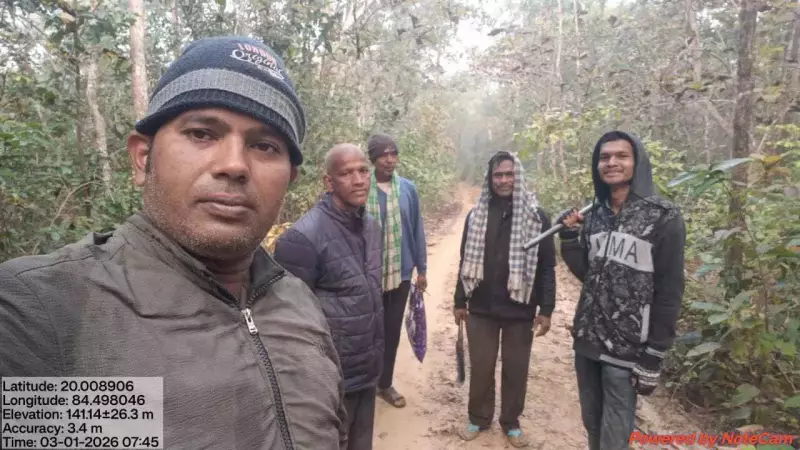
The crucial first phase of the nationwide tiger census for 2026 kicked off on Friday across the expansive forest areas under the Berhampur forest circle in Odisha. This extensive field exercise, which forms the foundation of the All India Tiger Estimation (AITE)-2026, is scheduled to continue until January 15. The quadrennial survey is spearheaded by the National Tiger Conservation Authority (NTCA) and the Wildlife Institute of India (WII).
A Holistic Count: Beyond Just Tigers
This census is far more than a simple headcount of the iconic big cat. The ambitious initiative aims to deliver a comprehensive ecological assessment of the forest habitats. Officials confirmed that the survey will also meticulously track co-predators like leopards, wild dogs, and hyenas. Simultaneously, it will estimate the population of mega herbivores that form the prey base, including species such as gaur, sambar deer, spotted deer, and barking deer.
The methodology is scientifically rigorous, integrating multiple techniques for accuracy. "The estimation survey was conducted for the first time using an online method, while an app was developed to upload the data by the enumerators," stated Vishwanath Neelannavar, the regional chief conservator of forests for Berhampur, on Saturday.

Massive Manpower and Digital Tools Deployed
For the initial phase, forest authorities have mobilized a small army of around 1,500 personnel. They are deployed across 545 survey units spanning seven critical forest divisions: Berhampur, Boudh, Ghumusar North, Ghumusar South, Phulbani, Baliguda, and Paralakhemundi.
The teams are leveraging technology for real-time data collection. "Using the MSTrIPES mobile app, teams will log direct and indirect signs of wildlife — pugmarks, scat, claw marks, calls, and vegetation patterns," explained Himansu Sekhar Mohanty, the divisional forest officer (DFO) of Ghumusar North. This digital logging captures evidence of a wide array of species, from tigers and leopards to wolves, jackals, hyenas, foxes, elephants, and various deer species.
The current phase involves intensive sign surveys and line transects, which are targeted for completion by the January 15 deadline.
Next Phases: Camera Traps and Detailed Analysis
The scale of the operation will expand significantly in the subsequent phase. Starting after the initial surveys, an extensive camera-trapping exercise will be rolled out and is expected to continue until March. Hundreds of camera traps will be strategically placed to capture images of elusive wildlife.
"The camera-trap exercise will run for 45 to 60 days, while the overall census process is expected to take five to six months before data is submitted to central authorities," DFO Mohanty added. The images captured will undergo sophisticated analysis in specialized laboratories. Advanced software systems will match the unique stripe patterns of tigers to identify and distinguish individual animals, ensuring an accurate count.
The entire national process is a marathon effort. The consolidated report for All India Tiger Estimation-2026 is anticipated to be ready by March 2027. Sources indicate that the final report is expected to be released by Prime Minister Narendra Modi, highlighting the national importance of this wildlife conservation milestone.