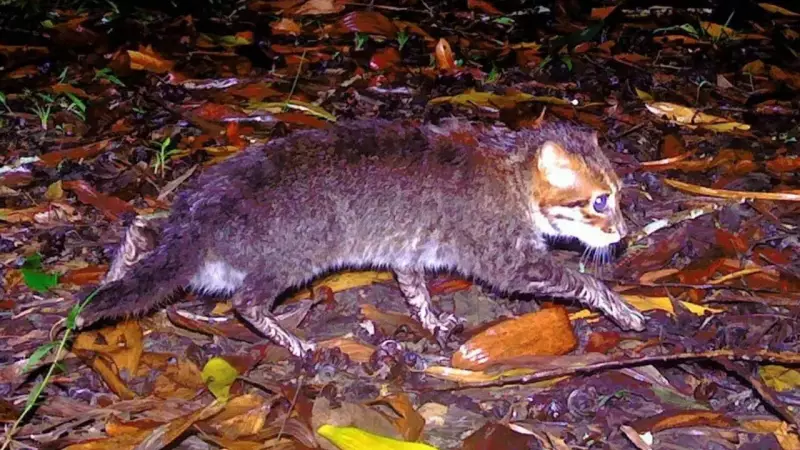
In a remarkable turn of events for wildlife conservation, the elusive flat-headed cat, unseen in Thailand for nearly three decades, has been definitively rediscovered. This cryptic feline, last officially recorded in 1995, was gradually considered "possibly extinct" in its native land, a silent victim of widespread Southeast Asian habitat loss. However, persistent efforts have now revealed not just fleeting glimpses, but evidence of a hidden, breeding population thriving in the southern peat swamps.
Camera Traps Reveal a Hidden Population
The breakthrough came from an extensive camera trap survey initiated in the wetland habitats of southern Thailand. Spearheaded by the Department of National Parks in collaboration with Panthera Thailand, the project aimed to solve the mystery of the species' disappearance. The results were astounding. In 2024 alone, cameras documented the flat-headed cat thirteen times. As monitoring continued into 2025, sightings increased to sixteen, confirming the animal's persistent presence.
The most significant discovery, however, was visual proof of successful reproduction: camera traps captured images of a female flat-headed cat accompanied by her offspring. Conservation scientists emphasize this is a crucial indicator. It confirms the existence of a small but viable breeding population, not just a few solitary survivors. The flat-headed cat is notoriously difficult to study. As the mainland Southeast Asia's smallest wild cat, it is mostly nocturnal and rarely strays from its specialized wetland homes, making remote cameras essential for its detection.

A Specialist Facing Critical Threats
The flat-headed cat is uniquely adapted to an aquatic life. Its elongated head, flattened forehead, and partially webbed toes make it an expert hunter of fish, frogs, and other aquatic prey. Yet, this very specialization is its greatest vulnerability. Its survival is intrinsically linked to the health of Southeast Asia's wetlands, which are rapidly being destroyed or drained for agriculture, aquaculture, and development.
Additional pressures include pollution, depletion of fish stocks, and diseases transmitted from domestic animals. These cumulative threats have pushed the species to the brink globally. The International Union for Conservation of Nature (IUCN) estimates that fewer than 2,500 mature individuals survive in the wild worldwide, highlighting the immense importance of the Thai population.
Conservation Success: A Blueprint for the Future
Thai conservation authorities have hailed this rediscovery as a momentous achievement. Athapol Charoenshunsa, Director General of the Department of National Parks, credited the success to long-term habitat protection efforts and community involvement. In some areas, local communities, including those whose practices limit hunting, have played a supportive role in conservation.
The path forward focuses on strengthening this foundation. Efforts are now directed towards enhancing patrol training, surveillance, and reporting systems to safeguard the remaining wetland habitats. Experts agree that continued monitoring is vital. The return of the flat-headed cat serves as a powerful testament: when ecosystems are conserved and protected, even the most endangered species can persevere and reclaim their place in the wild.