

Conservation Genomics: A Race Against Time to Save Ecosystems from Climate Change
Evolution unfolds over millennia, but climate change is accelerating at a pace that far outstrips nature's ability to adapt. This critical mismatch is now pushing some of Earth's most vital ecosystems toward collapse, from the majestic redwood forests of California to the delicate seagrass meadows along its coastline. These ecosystems are not only biodiversity hotspots but also crucial carbon sinks, storing vast amounts of atmospheric carbon and supporting intricate webs of life.
The Urgent Threat to Global Biodiversity
Marine heat waves, unprecedented wildfires, and rampant coastal development are driving these natural systems beyond their breaking points. The rapid acceleration of climate change, fueled by emissions from fossil fuels like oil and gas, is creating conditions that many species cannot withstand. According to a landmark 2019 report by a United Nations-affiliated intergovernmental scientific body, an estimated one million species face extinction, with many potentially disappearing within decades. This crisis is largely attributed to human activities, including habitat destruction, pervasive pollution, and the overexploitation of natural resources.
The Emergence of Conservation Genomics
In response, scientists are pioneering a new discipline known as conservation genomics to bridge the evolutionary gap. This approach involves sequencing an organism's complete genetic blueprint to identify individuals possessing traits that confer resilience to drought, disease, and other extreme climate conditions. The resulting genetic data is then used to inform and guide targeted restoration efforts, offering a lifeline to struggling species.

Coral Reefs: A Frontline for Genomic Intervention
Coral reefs are among the first ecosystems where these advanced genomic tools are being deployed. Repeated marine heat waves have triggered mass bleaching events, devastating reefs on a global scale. By sequencing the genomes of corals and their symbiotic algae, researchers have successfully identified colonies that naturally exhibit higher thermal tolerance. Scientists are now beginning to test whether selectively breeding and cultivating these more resilient corals can aid in the recovery and restoration of degraded reef systems.
Seagrass Struggles in Southern California
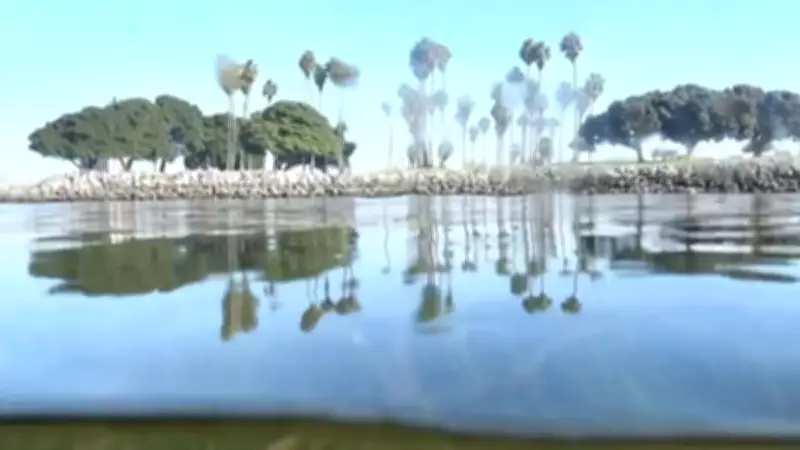
In Southern California, researchers are applying conservation genomics to eelgrass, a type of seagrass, as traditional restoration methods increasingly fail. Eelgrass meadows provide essential habitat for fish, crabs, and plankton, serve as a food source for migratory birds, and sequester significant amounts of carbon and methane—both potent greenhouse gases—within coastal sediments.
Conditions in San Diego's bays are deteriorating rapidly. Waters are warming, and king tides—the year's highest tides, which are becoming more frequent and severe due to climate change—stir up sediment, reducing the light that reaches the seafloor. Urban development further exacerbates the problem by increasing runoff into the bays, clouding the water. Consequently, efforts to replant lost eelgrass fail approximately half the time.
"Conservation genomics is becoming particularly important because right now, the climate is changing—a plant that was growing great in San Diego Bay might now find San Diego Bay too hot for it," explained Todd Michael, a research professor at the Salk Institute for Biological Studies.
In Mission Bay, Michael and his colleagues discovered a promising clue: a naturally occurring hybrid eelgrass that outperformed its parent species. This hybrid, a cross between the shallow-water Zostera marina and the deeper-water Zostera pacifica, thrived in conditions where both parent species struggled. By sequencing its genome, the team identified genes associated with the plant's circadian clock that remained active longer under low-light conditions. Scientists believe this genetic adaptation may enable the hybrid to photosynthesize more efficiently in murky water.

These findings suggest that restoration success could be significantly improved by selecting or breeding eelgrass varieties better suited to future environmental conditions. However, this work remains largely experimental and has not yet been implemented at a large scale in the field. The researchers have partnered with ecologists at the Scripps Institution of Oceanography to explore practical applications of these insights in future restoration projects.
Genomic Hope for Northern California's Redwoods
Redwoods are among the tallest and oldest trees on Earth, and their forests store more carbon per acre than any other ecosystem, according to a 2020 study by Save the Redwoods League and Humboldt State University. While these giants evolved alongside frequent, low-intensity fires, today's hotter and more destructive wildfires, combined with prolonged drought, are taking an increasing toll. Logging has had an even more devastating impact, with approximately 95% of old-growth redwoods cut down, drastically reducing the genetic diversity of the species.
Scientists have already accomplished the monumental task of sequencing the redwood genome, which is nearly nine times larger than the human genome. However, researchers emphasize that the goal is not merely to restore past conditions but to prepare forests for a climate that no longer resembles historical norms.
"Where one organism was adapted to a certain location at one moment in time, it may no longer be," said David Neale, a forest geneticist and distinguished professor emeritus at the University of California, Davis. "It might require different genetic variation to adapt to the new environment."
Preliminary analyses have begun to link specific genes to traits such as drought tolerance and temperature adaptation. Yet, researchers caution that more rigorous work is necessary to confirm these genetic links before they can reliably guide restoration efforts. This critical research has stalled due to limited funding.
The Limits of Genomic Solutions
While conservation genomics offers a powerful tool, it is not a panacea for climate change. "It can be helpful, but it's not a solution unto itself," stated Karen Holl, a distinguished professor of environmental studies at the University of California, Santa Cruz. "What should be prioritized is reducing greenhouse gas emissions."
Genomic tools may assist certain species, particularly long-lived ones like redwoods that cannot adapt quickly enough on their own, but they come with inherent limitations. Ecosystems are built on complex, interdependent relationships among plants, animals, microbes, and fungi. Engineering or selecting for climate-resilient traits in one species does not guarantee the survival of the many other organisms that depend on it.
"Can you genetically engineer a few species that would be more tolerant? Absolutely. But that's not an ecosystem," Holl emphasized. "We're not going to engineer our way out of climate change."





