From the bustling streets of New York to the chic cafes of Paris, a vivid purple hue is captivating food lovers worldwide. This colour comes from ube, the Philippine purple yam, whose global popularity has exploded. However, this international craze is placing immense pressure on the very farmers in the Philippines who cultivate it, as they battle climate change, critical shortages of planting material, and dwindling government support.
The World's New Purple Obsession
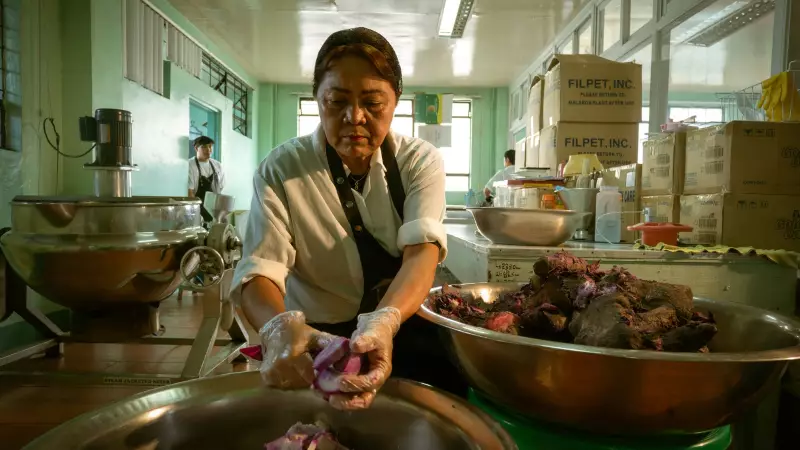
Scenes of culinary excitement are now common in global metropolises. In New York City, eager customers queue for purple-glazed brioche doughnuts. In Paris, lattes are tinted with ube's mellow, nutty flavour. In Melbourne, Australia, traditional hot cross buns get a sweet, purple makeover. The star ingredient in all these creations is ube, a tuber native to the Philippines. The country is considered the world's top producer, growing more than 14,000 tons annually. Yet, this new-found global hunger is straining the agricultural backbone of the industry.
Cheryl Natividad-Caballero, an undersecretary of the Philippine Department of Agriculture, likened the trend to another global phenomenon. "It's the new matcha," she said. "Given the increasing requirement from the increasing demand, we have to now improve the system." While the Philippines has a long tradition of using ube in local sweets like jams, ice creams, and the iconic shaved-ice dessert halo-halo, its photogenic colour and subtle taste have now propelled it to viral status internationally.

Farmers on the Frontline of Scarcity
In the mountainous province of Benguet in northern Philippines, the reality of farming ube is far removed from its glamorous global image. Teresita Emilio, 62, carefully digs into the soil with a metal rod and gloved hands to extract a single tuber. "I need to be careful. I might injure it," she says. For farmers like Emilio, who learned to farm ube as a girl, the current demand is unprecedented. "I had so much ube then. I would even throw them away," she recalls. "Now, they're on the way to being gone."
The shortage is driven by a critical lack of "planting material"—the pieces of ube that farmers bury to grow new crops. With market prices high, farmers are selling almost their entire yield, leaving little to cut up and replant. Jenelyn Bañares, a grower in Quezon province, faces the same problem: "I've tried to buy from other farmers, but they also don't have planting material." Compounding this is the disruptive force of climate change. Ube, once resilient to the Philippines' distinct dry and wet seasons, now suffers from unpredictable weather patterns.
Grace Backian, a leading ube researcher at Benguet State University, explains that the crop needs dry soil to root and rain to swell the tubers. However, stronger typhoons and unseasonal rains are devastating harvests. "Now, you never know when it's going to rain and when it's going to be sunny," says Bañares. Excessive rain suffocates the tubers, causing rot, while strong winds damage leaves, stunting growth.
Shrinking Support and Cultural Concerns
As challenges mount, government support is waning. The agriculture department's budget dedicated to ube has been trimmed by about 10% to 10 million pesos (roughly $170,000) for 2026, according to Undersecretary Natividad-Caballero. These limited funds are now earmarked for producing planting material for distribution. The department's focus remains on staple crops like rice and corn, a priority given that national health data shows nearly one-third of children under five are physically stunted due to malnutrition.
The decline in support raises alarms about preserving cultural heritage. Ube is central to Filipino festive foods, especially during Christmas. Jam Melchor, founder of the Philippine Culinary Heritage Movement, voiced his concern: "Can you imagine a Philippine Christmas without ube? It feels like there's something missing. And it feels like there's something wrong." The Philippines, which once had a surplus, has even been forced to import ube from Vietnam to meet local demand, with exports quadrupling in recent years to over 200 tons annually, more than half bound for the United States.

Back in Benguet, Teresita Emilio washes a freshly harvested yam, contemplating its future. For her, ube farming is more than a livelihood; it's a connection to her mother's legacy and her community. Holding the cleaned tuber, she makes a decision reflective of the current crisis: "I think I will plant this." In that simple statement lies the hope and the immense challenge facing the guardians of the world's beloved purple yam.