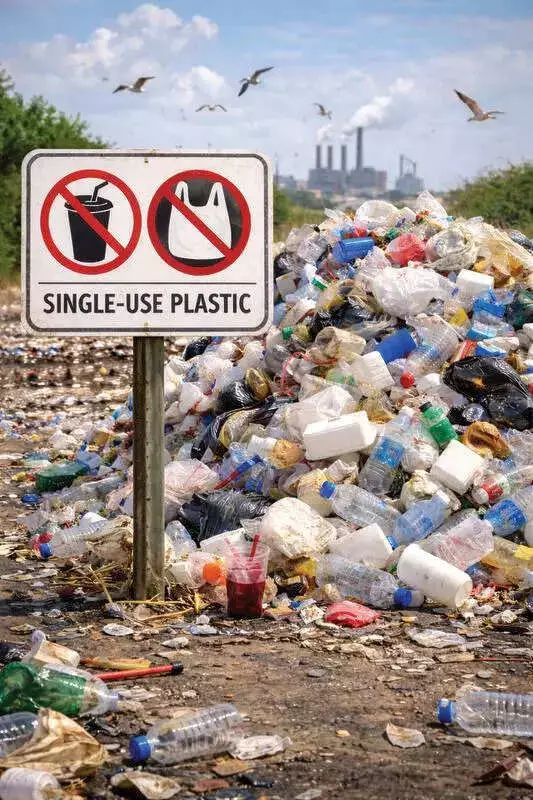
In a startling revelation, official data shows that the state of Goa failed to conduct a single inspection or recover any fines related to the ban on single-use plastics for a period of over two and a half years. According to information from the Central Pollution Control Board (CPCB), this enforcement gap persisted from May 2023 until December 1, 2025.
Zero Action Despite Public Complaints
This complete lack of on-ground inspections and penalty collection occurred even as the state officially received and recorded 45 public complaints regarding the illegal use of banned plastic items. The data highlights a significant failure in implementing the nationwide prohibition on specific single-use plastic products, which has been in effect for years.
In response to this inaction, the CPCB has issued fresh, strict directives to the Goa State Pollution Control Board (GSPCB). The central board has instructed all state bodies, including Goa's, to immediately launch a dedicated enforcement drive.

CPCB's Mandate for Strict Enforcement
The CPCB has ordered the formation of special teams that will work jointly with the state's urban development department. These teams must follow Standard Operating Procedures (SoPs) prepared by the central authority. The directive mandates that an enforcement drive be carried out for at least four days every month during the period from December 2025 to February 28, 2026.
"The inspection is to be completed by the 25th of every month. Police force may be deployed during the inspection drive as per requirement," the CPCB order states. Furthermore, Goa has been instructed to establish a state-level control room specifically to monitor and coordinate this campaign.
Focus Areas and Banned Items
The inspections must concentrate on key locations where plastic use is rampant. The focus will be on:
- Street vendors and local shops
- Wholesale markets and interstate borders
- Industries manufacturing banned SUP items and thin carry bags (below 120 microns)
- Bus depots, railway stations, airports, and other crowded spots
The list of prohibited items is comprehensive and includes:
- Plastic bags with thickness below 75 microns
- Earbuds with plastic sticks, plastic sticks for balloons and flags
- Candy sticks, ice-cream sticks
- Polystyrene (Thermocol) for decoration
- Plastic plates, cups, glasses, and cutlery like forks, spoons, knives, and straws
Digital Monitoring and Public Grievance Redressal
The central board has emphasized a tech-driven approach. Inspections must be conducted using a field inspection app, and detailed reports must be filed on the central single-use plastic compliance monitoring portal. The reports must contain specific information, including details on suppliers of SUP items, raw material suppliers for banned SUP producers, and SUP producers themselves.
Critically, the action taken against violators must be clearly reported. Goa has also been directed to actively promote the use of the SUP public grievance app among citizens and ensure that complaints received through it are acted upon within seven days.
Alongside enforcement, the state must undertake comprehensive awareness activities. This includes social media campaigns and interactive meetings with industries, colleges, schools, and other institutions. A weekly report detailing the number of inspections, challans issued, quantity of SUP seized, fines imposed, and the mode of disposal of confiscated items must be submitted to the CPCB.
The CPCB's intervention underscores a pressing need for Goa to transition from a period of documented inaction to a phase of rigorous, transparent, and accountable enforcement of the plastic ban, aligning with national environmental goals.