The Goa government is charting an ambitious path towards sustainable development by planning to transform three distinct villages into models of energy self-sufficiency. This initiative, known as the Net-Positive Panchayat model, aims to tailor solutions based on each village's unique character—rural, developing, and urban.
Tailored Green Blueprints for Three Villages
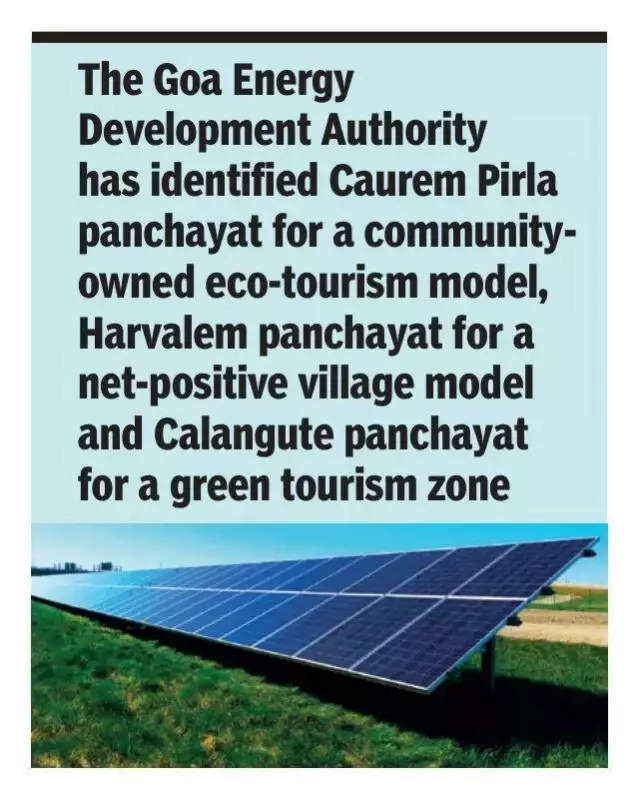
The Goa Energy Development Authority (GEDA) has identified the three pilot villages and proposed customized models for each. The rural and ecologically sensitive Caurem Pirla is slated for a community-owned eco-tourism model. Harvalem, with its growing development, will test a net-positive village model. Meanwhile, the bustling tourist hotspot of Calangute is being considered for a green tourism zone transformation.
Caurem Pirla: A Low-Impact Eco-Tourism Haven
For Caurem Pirla, the state is exploring a holistic low-impact development plan integrated with clean energy and livelihood creation. Key interventions under consideration include promoting solar-powered eco-homestays using existing homes, potentially supported by central schemes.

The plan also envisages setting up biogas plants using organic waste from these homestays and implementing the KUSUM B scheme for solarising irrigation pumps. To enhance the tourist experience, the government may develop guided trails to forests and waterfalls, demonstrations of traditional agriculture and cashew processing, and local cuisine and cultural programs.
Internal mobility for tourists could shift to non-fossil fuel options like e-cycles or electric buggies, operated by local youth and Self-Help Groups (SHGs). Furthermore, the development of solar-powered community infrastructure like cold storage and solar dryers for farm produce is on the table. A circular economy approach with mandatory waste segregation, conversion of organic waste into biogas and compost, and using that compost for local farming is also being considered.
Harvalem: A Pilot for Net-Positive Development
Addressing Harvalem's rising residential and commercial energy demand, the pilot here focuses on creating a net-positive energy footprint. Proposed components include the solarisation of public buildings like the panchayat office, schools, and health facilities.
The model also aims to facilitate the adoption of rooftop solar systems for households and small businesses under existing schemes and implement broader energy efficiency measures across the village.
Calangute: Pioneering a Green Tourism Zone
To tackle Calangute's issues of seasonal overcrowding and traffic congestion, a green tourism approach may be piloted in selected areas. Potential measures include creating restricted or no-vehicle zones in core tourist spots, developing green parking hubs, and deploying electric shuttle services and e-bikes for tourist transport, again operated by locals and SHGs.
The government is considering encouraging tourism establishments—hotels, guesthouses, restaurants, and beach shacks—to adopt green compliance. This would involve installing rooftop solar panels, using energy-efficient appliances, segregating and processing waste, eliminating single-use plastic, and setting up a deposit return mechanism for recycled waste.
An overarching goal is to position Calangute as Goa's model green tourism destination. To oversee this transformation, the establishment of a green tourism zone monitoring cell is being contemplated. This cell would include the district collector and representatives from the departments of panchayat, tourism, electricity, and transport, along with GEDA and local community groups.
A Model for Sustainable Future
This three-pronged initiative by the Goa government represents a significant step towards decentralised, sustainable energy planning. By customising strategies for rural, developing, and urban contexts, the Net-Positive Panchayat model seeks not only to achieve energy independence but also to boost local economies, create jobs, and preserve ecological balance. If successful, these villages could serve as a replicable blueprint for other regions across India.