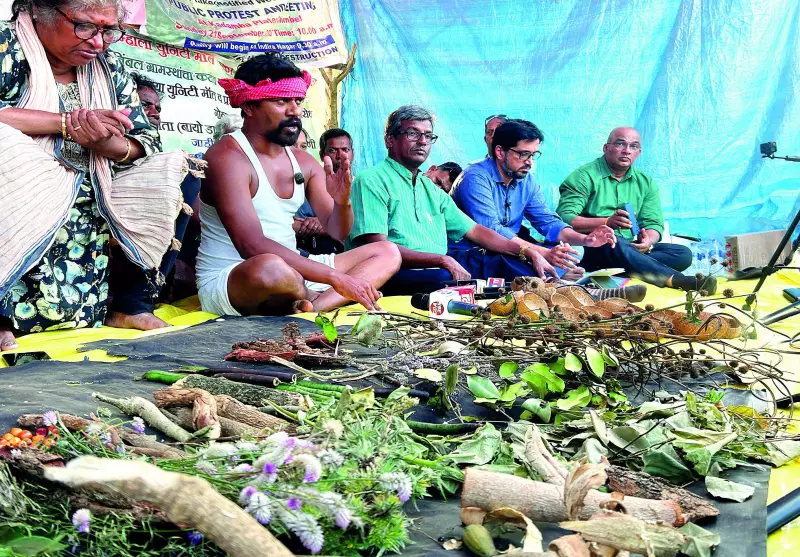
Chimbel Residents Allege Government Disregard for Wetlands in Development Project
Residents of Chimbel in Panaji, Goa, have raised serious allegations against the state government, accusing it of ignoring crucial environmental sensitivities in a proposed development project on government land. The villagers claim that construction activities planned over an area exceeding 25,000 square meters would lead to the destruction of vital wetlands in the region, posing a significant threat to the local ecosystem.
Contradictions in Official Statements Revealed
The protesting villagers highlighted a stark contradiction between official claims and documented plans. They stated that while Chief Minister Pramod Sawant assured them only 20,000 square meters of land was required for the project, a response obtained under the Right to Information (RTI) Act revealed more extensive plans. According to the RTI reply, the project involves a nine-floor structure, which directly contradicts earlier official assertions of a four-floor building.
This discrepancy has fueled skepticism and anger among the local community, who question the transparency and true intentions behind the development initiative.

Impact on Indigenous Communities and Wetlands
The villagers have expressed deep concern about the project's potential impact on local communities, particularly indigenous groups. They rhetorically asked whether this development represents the "reward" being given to the Adivasi and Bhandari communities, whose livelihoods and cultural heritage are intertwined with the land.
One resident articulated the gravity of the situation, stating, "If the government acquires 25,000 square meters for the Unity Mall and an additional 25,000 square meters for the Prashasan Stambh, it is effectively devouring 50,000 square meters of wetland area. During the monsoon season, the reclaimed wetlands will suffer immensely, and the lake's aquifers will be severely disrupted. This land does not belong to anyone's father; it is the land of the tribals and the poor."
Ecological and Financial Concerns Amplified
The protesting residents emphasized that the project will have a direct and detrimental impact on the notified wetland, known as Toyyar Lake or Chimbel Lake. This water body serves as a critical ecological catchment and historic water source, essential for:
- Groundwater recharge
- Biodiversity conservation
- Livelihoods of local residents, especially indigenous and tribal communities
Financial aspects of the project have also come under scrutiny. The villagers questioned how the steel structure for the building alone could be valued at Rs 25 crore, demanding accountability for what they perceive as exorbitant expenditures.
Political Reactions and Demands for Accountability
These statements emerged just a day after Chief Minister Sawant met with the villagers, indicating ongoing tensions and unresolved issues. The protesters asserted, "The Chief Minister is answerable for the scams and the environmental destruction meted out under the guise of this project."
Adding to the criticism, GFP president Vijai Sardesai questioned the over Rs 20 crore expenditure on the project, noting that there was no visible evidence of such significant spending at the site. Sardesai remarked, "Until fifteen days ago, the Chief Minister was defending the Prashasan Stambh, and now he has changed his mind. For all you know, he may change his mind about the Unity Mall as well."
The collective outcry from Chimbel residents underscores a growing demand for greater transparency, environmental stewardship, and respect for indigenous rights in government-led development projects. As the controversy unfolds, the community continues to advocate for the protection of their wetlands and the preservation of their ecological and cultural heritage.