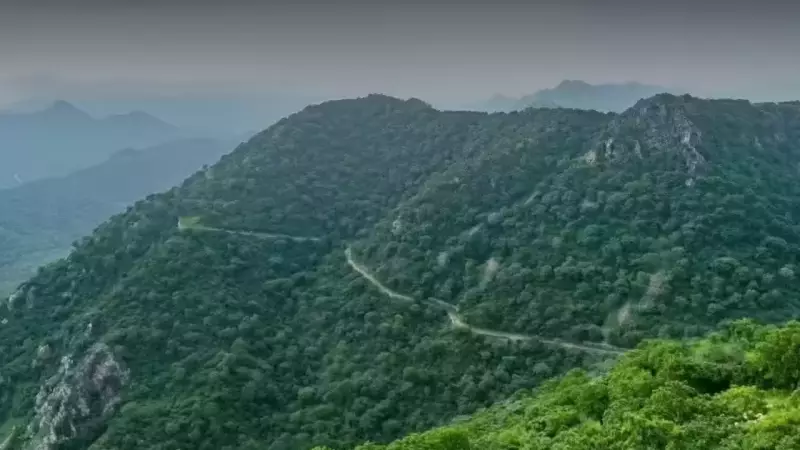
In a significant move aimed at defusing widespread protests, the Union Ministry of Environment, Forest and Climate Change on Wednesday decided to further expand the areas in the Aravali hills where mining is prohibited. The decision comes in the wake of public outcry following the Supreme Court's acceptance of a uniform definition for the ecologically sensitive mountain range.
New Directions to Protect the Aravali Landscape
The ministry has directed the Indian Council of Forestry Research and Education (ICFRE) to identify additional zones across the entire Aravali range where mining should be banned. This exercise is intended to go over and above the areas already designated as off-limits for extraction activities. "This exercise by the Centre would further enlarge the coverage of areas protected and prohibited from mining in the entire Aravalis, keeping in mind the local topography, ecology and biodiversity," the ministry stated.
Currently, only 0.2% of the total 1.4 lakh square kilometre area of the Aravalis is legally eligible for mining. The new directive implies that even within this minuscule permissible area, the prohibited zones could be extended further, drastically limiting mining footprints.

Reiteration of Supreme Court Mandate and State Directives
The ministry's direction serves as a formal reiteration of the Supreme Court's order from November 20. The apex court had clearly stated that "no new mining leases shall be granted till the finalisation of the Management Plan for Sustainable Mining (MPSM)" for the Aravalis. To bring clarity amidst protests, the Centre has now formally communicated this to the states.
Besides tasking ICFRE, the ministry has also directed the Aravali-range states—Haryana, Rajasthan, and Gujarat—to impose a ban on granting any fresh mining leases in the region. For mines already operational, the respective state governments must ensure strict compliance with all environmental safeguards and the Supreme Court's order. "Ongoing mining activities are to be regulated stringently, with additional restrictions, to ensure environmental protection and adherence to sustainable mining practices," the ministry emphasized.
In a letter to the chief secretaries of the three states, the ministry instructed ICFRE to consider the Aravalis as a continuous geological ridge extending from Gujarat to Delhi while preparing the MPSM. The council is to identify all landforms and zones requiring a mining ban to conserve and protect the range's integrity.
Clarification on Expert Views and the 100-Metre Definition
The ministry also addressed confusion regarding media reports about the Supreme Court's Central Empowered Committee (CEC). Official sources clarified that an expert view, which purportedly disapproved of a new 100-metre definition threshold for mining prohibition, was an individual member's comment and not the CEC's formal stance.
The official explained that while CEC member J R Bhatt attended deliberations on October 3, the committee as a whole had not examined the ministry's report on the matter. "Hence, the views attributed to the CEC in the affidavit filed by the ministry are, in fact, those of Bhatt and not of the CEC," the official said, stressing that the CEC supports the 100-metre definition to ensure the protection and conservation of the Aravali Hills' ecology.
This series of actions underscores the government's intent to safeguard the fragile Aravali ecosystem while navigating legal mandates and public sentiment. The focus remains on preserving the range as a vital natural barrier and biodiversity hotspot for North India.