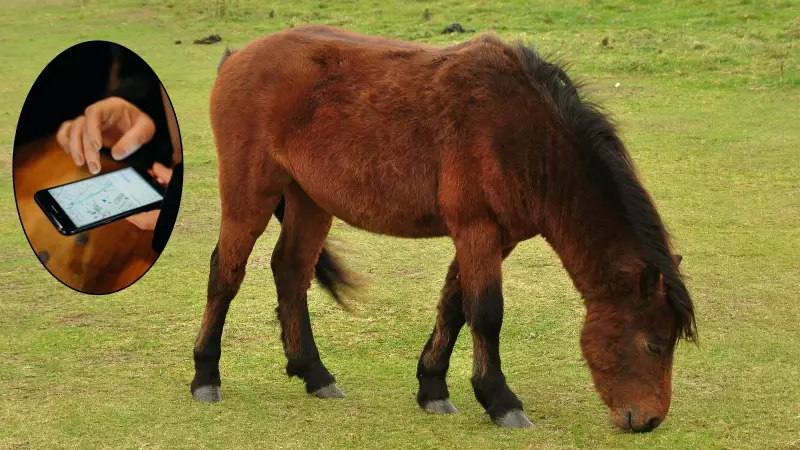
In a novel move blending technology with tradition, Europe's largest conservation charity, the National Trust, has started fitting GPS tracking collars on Dartmoor ponies in England. This initiative, akin to using an AirTag for luggage, allows staff to monitor the location of these endangered miniature ponies in real-time as they roam freely across a vast 1,482-acre countryside.
How the GPS Tracking Programme Works
The high-tech collars are currently being used on a selective basis. Ash Pearson, the National Trust's countryside manager, explained to the BBC that only the lead animal in each herd is tagged. Since the rest of the ponies in a group tend to follow their leader, tracking one collar effectively reveals the whereabouts of the entire herd. The location data is transmitted directly to a staff member's phone or computer, enabling remote monitoring without disturbing the animals.
These collars have been thoughtfully designed with the ponies' safety in mind. They feature a breakaway mechanism that allows the collar to detach safely if a pony gets snagged on rocks or bushes. Interestingly, staff sometimes find themselves tracking a detached collar rather than the pony, but the technology still provides invaluable insights.

Why Tracking These Ponies is Crucial
The Dartmoor pony is more than just a charming resident of the English countryside; it plays a vital role in the local ecosystem. Their grazing habits are essential for maintaining the health and biodiversity of the landscape. By nibbling on grasses and new shoots, they prevent the unchecked growth of dense brambles and scrub. Their movement also helps trample bracken, an invasive weed.
This activity creates a mosaic of habitats—grasslands interspersed with wildflowers, bracken, and scrub—which in turn supports pollinators like bees and other wildlife. "We want a mix of habitats, grassland with wildflowers alongside bracken and scrub, and ponies help create that," notes Pearson. The ponies share about half of the grazing land with cattle and practice rotational grazing, moving to new areas once they have finished grazing a particular spot.
A Cost-Effective Model for Future Conservation
For now, the National Trust is using a modest fleet of six GPS trackers, which authorities believe is sufficient to cover the pony herds in the area. Given the expensive nature of this technology, starting with a smaller number to assess efficiency is seen as a prudent financial decision.
This programme is significant not only for the direct conservation of the endangered Dartmoor pony breed but also as a pioneering example of how modern technology can be leveraged for effective wildlife and land management. It paves the way for developing more sophisticated tools to protect native species and their habitats across the globe.