

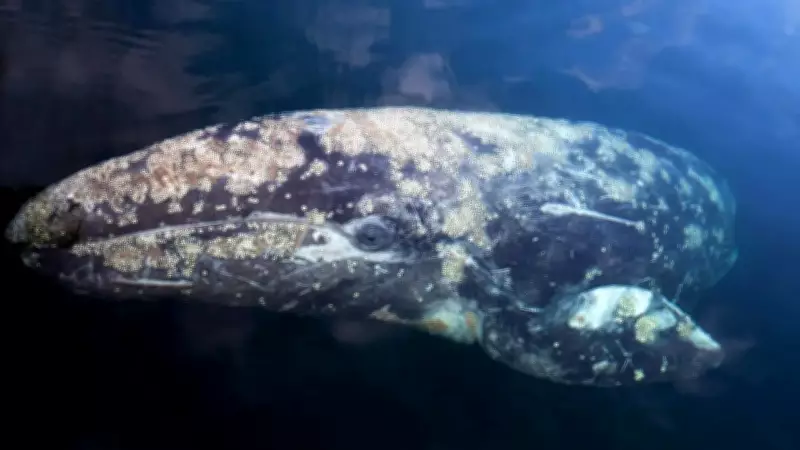
Gray Whales Face Rising Mortality in San Francisco Bay Amid Climate Shifts
The majestic gray whale, known for its epic annual migration spanning thousands of miles from the frigid waters of Alaska to the warm breeding grounds of Baja California, is confronting a new and severe threat in the unexpected environs of San Francisco Bay. A sudden and distressing surge in whale fatalities within this region has emerged as a critical concern, casting a shadow over the overall health and stability of marine ecosystems. This troubling development underscores a deeper, systemic disturbance within oceanic environments, where the compounding effects of human activity and rapidly altering climate conditions are forcing marine species into unfamiliar and perilous territories.
Unusual Bay Visits Linked to Arctic Food Scarcity
Historically, gray whales have adhered to a well-defined migratory corridor between Arctic feeding sites and Mexican breeding waters, rarely venturing in significant numbers into bays like San Francisco. However, recent observations indicate a marked increase in their appearances within this part of the Pacific Ocean. The driving force behind this behavioral shift appears to be a critical shortage of food in their traditional Arctic habitats, a direct consequence of global warming. The population of tiny crustaceans, a primary food source for gray whales, has been declining in the Arctic region. This nutritional deficit is compelling the whales to embark on desperate searches for alternative feeding grounds, leading them into areas like San Francisco Bay.
A Correlated Rise in Whale Deaths Presents Grave Concerns
This increased frequency of sightings has been tragically correlated with a sharp rise in gray whale mortality. Reports confirm a substantial number of whales perish after entering the bay, with the actual death toll likely being even higher due to unreported incidents. A pivotal study published in the scientific journal Frontiers in Marine Science reveals that gray whales entering San Francisco Bay face a significantly elevated mortality risk, with a notable proportion later found dead. Adding to the alarm is the observation that few whales are seen returning to the bay in subsequent years, hinting at severe survival challenges for those that do enter, although comprehensive long-term tracking data remains limited.

Primary Causes: Ship Strikes and Starvation
The leading causes of death for these gray whales are twofold and deeply interconnected. First, collisions with ships pose a major threat. San Francisco Bay is a bustling hub for commercial shipping, with numerous vessels transporting goods through its confined waterways. These congested routes make it exceptionally difficult for the large, slow-moving whales to navigate safely. Whales can be difficult for ship operators to detect, especially when they surface unexpectedly, leading to fatal encounters.
Second, and perhaps more fundamentally, many of the whales arriving in the bay are already in poor physical condition, suffering from nutritional stress and starvation. The very climate change that disrupts their Arctic food supply is forcing them to migrate away from their traditional feeding grounds in a weakened state, making them more vulnerable to other threats.
Altered Migration as an Ecological Trap
The increasing presence of gray whales in San Francisco Bay signifies a profound change in their migratory behavior, driven by environmental shifts. While these whales demonstrate a remarkable capacity to adapt by seeking new feeding areas, these alternative habitats can function as ecological traps. Although the bay may offer some food resources, it simultaneously exposes the whales to heightened dangers like ship traffic, creating a perilous trade-off for survival.
Proposed Measures to Mitigate the Crisis
To address this escalating crisis, marine experts advocate for a multi-pronged approach:

- Implementing Speed Restrictions: Reducing vessel speeds in known whale aggregation zones within the bay to give ships more time to detect and avoid collisions.
- Rerouting Shipping Lanes: Altering ship traffic patterns to minimize overlap with critical whale pathways and feeding areas.
- Enhanced Monitoring and Alert Systems: Increasing surveillance of whale movements and behavior to provide real-time alerts to mariners about whale presence in specific areas.
The Broader Significance of the Gray Whale Plight
The plight of the gray whale in San Francisco Bay is not an isolated issue concerning a single species. Gray whales have long been considered an indicator species, a barometer for the health of ocean ecosystems. The current crisis, therefore, signals larger, systemic environmental problems. The transformation of a once-rare event into a recurring pattern of mortality is a stark warning. Addressing this problem is imperative not only for the conservation of gray whales but also for maintaining the delicate ecological balance of our oceans for future generations.





