

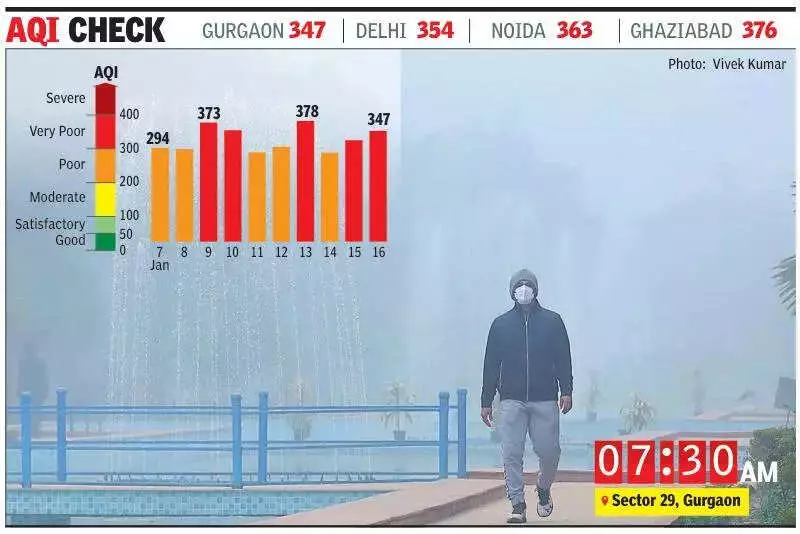
Gurgaon's Air Quality Takes a Sharp Turn for the Worse
Residents of Gurgaon woke up to thicker, dirtier air on Friday as the city's air quality deteriorated significantly. The air quality index climbed to 347, up from 318 recorded the previous day. This placed Gurgaon firmly in the 'very poor' category, raising serious health concerns across the metropolitan area.
Monitoring Stations Paint a Grim Picture
All four air quality monitoring stations in Gurgaon reported consistently poor readings throughout the day. Vikas Sadan recorded the highest pollution levels with an AQI of 387, followed closely by Sector 51 at 377. Teri Gram registered 333 while Gwal Pahari showed slightly better but still concerning levels at 321. Each station confirmed the widespread nature of the pollution problem affecting different parts of the city.
Health Experts Sound the Alarm
Medical professionals expressed immediate concern about the health implications of such poor air quality. At these elevated pollution levels, prolonged exposure outdoors can trigger breathing difficulties and exacerbate respiratory conditions. Children, elderly citizens, and individuals with pre-existing heart or lung problems face particular risks. Doctors strongly advised vulnerable groups to limit their time outside during peak pollution hours.

Weather Conditions Trap Pollutants
Officials from pollution control authorities pointed to winter weather patterns as the primary culprit behind the deteriorating air quality. Cold temperatures create atmospheric conditions that trap pollutants close to ground level, preventing their natural dispersal. The National Capital Region experienced mist, haze, and dense fog in several areas, with visibility dropping to just 150 meters at Safdarjung and Palam during early morning hours. Low wind speeds throughout the day further compounded the problem by failing to clear the accumulated pollutants.
Forecast Predicts Further Deterioration
The outlook for Gurgaon's air quality remains concerning in the coming days. Meteorological predictions suggest the AQI could enter the 'severe' range between January 17 and 18. While some improvement to 'very poor' levels might occur by January 19, overall conditions are expected to remain unfavorable. A low ventilation index combined with average wind speeds below 10 kilometers per hour will likely continue restricting pollutant movement and allowing concentrations to build up.
Practical Recommendations for Residents
Health authorities offered specific guidance to help residents cope with the pollution crisis:
- Avoid morning walks and outdoor exercise routines, especially in areas reporting 'severe' pollution levels
- Keep windows and doors closed during peak pollution hours
- Limit outdoor exposure for children, senior citizens, and those with respiratory conditions
- Monitor official air quality updates regularly
Understanding AQI Categories
The Central Pollution Control Board classifies air quality using specific index ranges:
- 0-50: Good
- 51-100: Satisfactory
- 101-200: Moderate
- 201-300: Poor
- 301-400: Very Poor
- 401-500: Severe
Gurgaon's current reading of 347 falls squarely within the 'very poor' category, indicating significant health risks for the general population.
Local Emission Sources Compound the Problem
Haryana State Pollution Control Board officials emphasized that local pollution sources continue to contribute substantially to Gurgaon's air quality problems throughout the year. Key factors include road dust stirred up by vehicle movement, ongoing construction activities across the city, and occasional waste burning incidents. These local emissions become particularly problematic when weather conditions prevent their proper dispersion, creating dangerous pollution concentrations.
The combination of unfavorable meteorological conditions and persistent local emissions has created a challenging situation for Gurgaon residents. Authorities continue to monitor the situation closely while urging citizens to take necessary precautions until air quality improves significantly.






