

Gurgaon's Air Quality Shows Significant Improvement After Rainfall
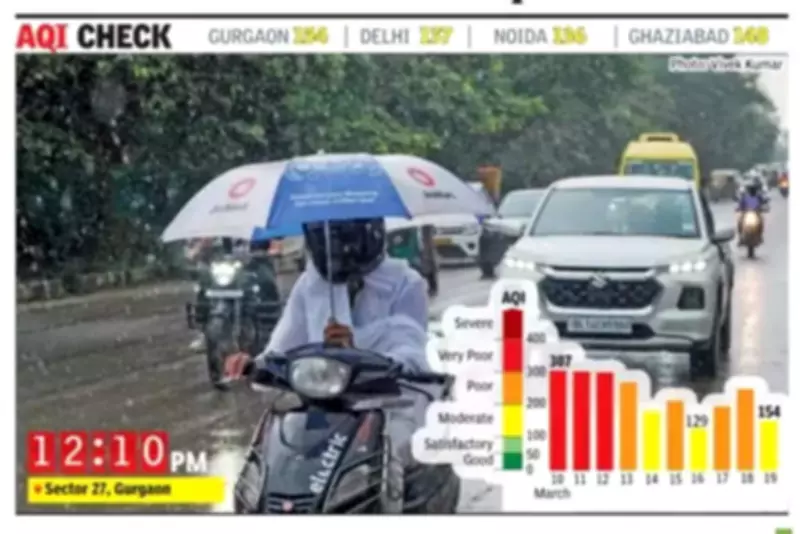
Gurgaon experienced a notable shift in air quality on Thursday, moving from the 'poor' category to 'moderate' as rain and gusty winds swept through the city, effectively clearing accumulated pollutants. The overall Air Quality Index (AQI) registered at 157, marking a substantial decline from the 251 recorded on March 18. This improvement comes as a welcome relief following a period of persistently high pollution levels in early March.
Monitoring Stations Report Varied but Improving Trends
Data from various monitoring stations across Gurgaon revealed variations in air quality, though all indicated an overall positive trend. The Gwal Pahari station recorded an AQI of 126, while Sector 51 and Vikas Sadan reported readings of 196 and 150, respectively. The enhancement in air quality is directly attributed to light rainfall accompanied by strong surface winds during the afternoon hours. Such meteorological conditions facilitate both vertical and horizontal dispersion of pollutants, leading to reduced concentrations of particulate matter, particularly PM2.5 and PM10, which had remained elevated in recent days.
Context of Recent High Pollution Episodes
Throughout early March, Gurgaon faced multiple days of severe air pollution, with AQI levels exceeding 300 on March 7, 10, and 11, categorizing the city's air as 'very poor.' Several other days also recorded 'poor' air quality, with PM2.5 emerging as the dominant pollutant during these episodes. The recent improvement, therefore, represents a significant departure from this troubling pattern, though authorities remain cautious about its sustainability.

Official Warnings and Health Advisories
Officials from the Haryana State Pollution Control Board (HSPCB) have emphasized that the current relief may be temporary, heavily dependent on upcoming weather conditions. They noted that calm winds and dry atmospheric conditions typically lead to the accumulation of pollutants, whereas intermittent rain and wind events help cleanse the air. Despite the improvement, health advisories remain in effect, as air quality at current levels may still cause breathing discomfort for individuals with respiratory illnesses, asthma, and heart conditions.
Particulate Matter Levels and Monitoring Efforts
Detailed analysis of particulate matter levels showed that on Wednesday, PM2.5 concentrations were highest at Gwal Pahari (142 µg/m³), followed by Vikas Sadan (120 µg/m³) and Sector 51 (112 µg/m³). For PM10, the highest level was recorded at Sector 51 (198 µg/m³), with Gwal Pahari at 118 µg/m³; Vikas Sadan does not monitor PM10 data. Authorities continue to vigilantly monitor these trends, recognizing that pre-summer dust and local emission sources remain key contributors to Gurgaon's ongoing air pollution challenges.
Broader Implications and Future Outlook
The temporary improvement in Gurgaon's air quality underscores the critical role of weather patterns in urban pollution dynamics. While natural events like rain and wind provide immediate respite, long-term solutions require sustained efforts to address emission sources and implement effective environmental policies. Residents are advised to stay informed about air quality updates and adhere to health guidelines, especially those in vulnerable groups, as conditions may fluctuate in the coming days.






