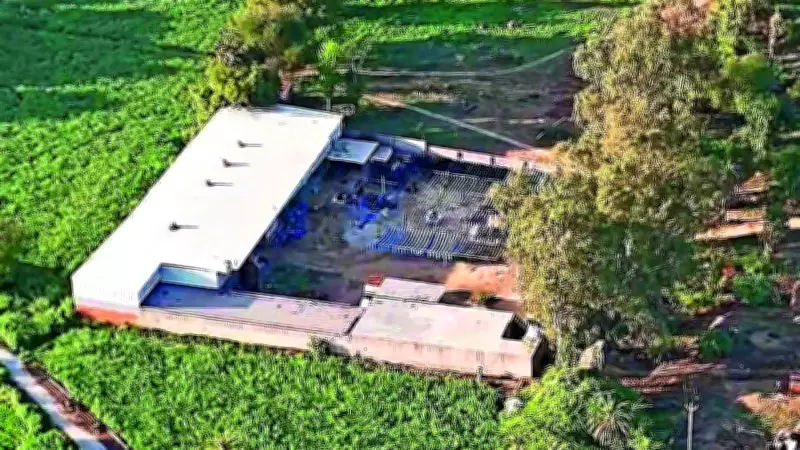
Gurgaon Dyeing Unit Continues Operations Despite Pollution Board Closure Notice
In a significant environmental compliance failure, a dyeing unit in Gurgaon has been found continuing its operations despite receiving a formal show-cause notice from the Haryana State Pollution Control Board (HSPCB) proposing both closure and prosecution. The industrial facility, identified as M/s Trilok Dyeing, specializes in washing jeans and operates near the Gurgaon canal in the Rahaka area, raising serious concerns about potential water contamination.
Investigation Reveals Multiple Regulatory Violations
A thorough investigation has uncovered that the unit has been functioning without the mandatory environmental clearances required under Indian pollution control legislation. Dyeing operations are classified as 'red' category industries due to their substantial pollution load, meaning they are strictly permitted only within designated industrial zones and absolutely prohibited in residential localities.
An RTI response obtained by Gurgaon resident Varun Gulati from HSPCB's Gurgaon (north) regional office revealed that the pollution control board initially received a formal complaint about the illegal industrial operation on April 3, 2025. Following this complaint, board officials conducted an on-site inspection on June 10, 2025, meticulously documenting their findings in an official inspection report.

Critical Environmental Permissions Missing
The inspection report explicitly noted that the dyeing unit was operating without two crucial environmental permissions: the Consent to Establish (CTE) and the Consent to Operate (CTO). These are fundamental requirements under both the Water (Prevention and Control of Pollution) Act, 1974 and the Air (Prevention and Control of Pollution) Act, 1981, designed to regulate industrial activities with significant environmental impact.
Based on these documented violations, HSPCB issued a formal notice to the unit under the provisions of both environmental protection acts. The notice clearly outlined the proposed actions of closure and prosecution against the industrial establishment for its non-compliance with statutory environmental regulations.
Enforcement Action Remains Incomplete
Despite the issuance of the notice, enforcement measures appear to have stalled. In its RTI response dated July 3, 2025, HSPCB indicated that environmental compensation would only be imposed after a formal closure order is issued. Similarly, directions to the Dakshin Haryana Bijli Vitran Nigam (DHBVN) for electricity disconnection would be issued exclusively after closure directions are formally passed by the regulatory authority.
A subsequent spot-check revealed that operations were continuing unabated at the unit, suggesting that potential discharge and pollution risks near the Gurgaon canal might persist despite the pollution control board's regulatory intervention. This situation highlights a concerning gap between regulatory action and actual enforcement on the ground.
Broader Environmental Implications
Environmental experts emphasize that according to established norms, only treated industrial waste can be legally discharged into water bodies like the Najafgarh drain system. However, investigations suggest that none of these critical environmental regulations were being followed at the illegal industrial unit, which appeared to be operating from what seemed like abandoned plots or warehouses.
As discussions about cleaning the Yamuna river waters gain momentum, environmental specialists point out that river restoration cannot be achieved through measures implemented solely in Delhi. Other districts in the National Capital Region, including Gurgaon, which contribute substantially to the river's pollution load, must actively participate in pollution control efforts for meaningful environmental improvement.
Environmental activist Varun Gulati commented, "There are several such illegal units operating in Gurgaon that have been consistently polluting the Yamuna river system, yet decisive action against these violators remains pending. This represents a systemic failure in environmental governance that requires urgent attention."

An HSPCB official, when questioned about the ongoing operations, stated, "We will investigate this specific issue thoroughly and take appropriate action in accordance with established environmental regulations and procedures." The statement underscores the regulatory body's commitment to addressing the violation while highlighting the procedural complexities involved in environmental enforcement.