Gurgaon Residents Sound Alarm Over Pipeline Diverting Treated Sewage to Aravali Forest Waterbody
Residents of Baliyawas village in Gurgaon are raising serious ecological and legal concerns over a newly laid pipeline that channels treated wastewater from a municipal sewage treatment plant (STP) into a waterbody within the Aravali plantation area. The pipeline, which terminates near a small check dam in the forest patch, has sparked fears of contamination to groundwater and wildlife habitats.
Pipeline Details and Location
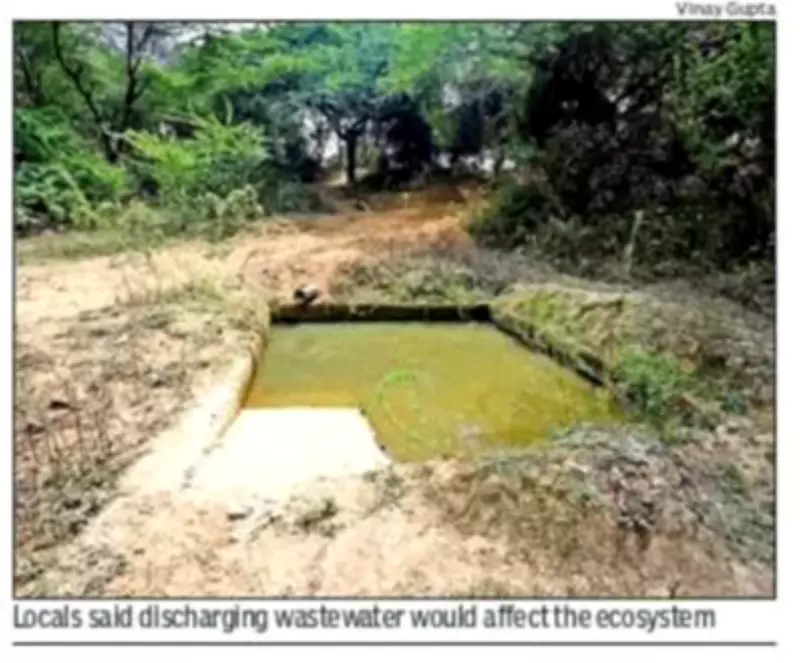
The pipeline originates from the Municipal Corporation of Gurgaon (MCG)-operated STP in Baliyawas and runs through the plantation area, ending at a structure designed for groundwater recharge and wildlife use. The site is located barely 10 minutes from Golf Course Extension Road. A recent visit by The Times of India confirmed the pipeline's presence, with residents reporting it was laid approximately four days ago, though wastewater flow has not yet commenced.
Ecological and Legal Concerns
In a complaint submitted to the forest department, residents warned that discharging STP water into or near the water source could contaminate water meant for animals and disrupt the surrounding ecosystem. The complaint, dated March 17 and addressed to the divisional forest officer (territorial), alleges that laying the pipeline to discharge STP water into a forest waterhole "could amount to an illegal activity within an ecologically sensitive Aravali corridor connected to the Asola Bhatti Wildlife Sanctuary."
The letter emphasizes that the site already contains a waterhole maintained by the forest department and regularly filled with safe drinking water for wildlife. It further notes that even treated STP water may contain residual pollutants, pathogens, chemical contaminants, heavy metals, and microplastics, which could degrade soil quality, contaminate groundwater, and harm wildlife.
Resident Perspectives and Groundwater Risks
Vishal Singh, a resident who accompanied TOI to the site, expressed concerns that diverting STP water into check dams meant for rainwater harvesting and groundwater recharge could defeat their ecological purpose. "Even treated STP water may contain residual contaminants and chemicals. These check dams were meant for rainwater harvesting and groundwater recharge. If sewage water is discharged here, it may alter water quality and affect wildlife that depend on these sources," he said.
Locals highlighted that the water structure was created by the forest department as part of conservation efforts in the Aravali hills. TOI observed three check dams designed to slow rainwater runoff, allowing percolation into the ground to recharge groundwater and support vegetation and wildlife in the semi-arid landscape.
Rajat Shukla, another resident, pointed out broader implications for groundwater safety. "Villages around this area rely heavily on tubewell water for drinking and irrigation. If treated wastewater eventually enters the ground through these structures, it could contaminate the aquifer over time," he explained.
Official Responses and Regulatory Gaps
A senior MCG official stated, "We are seeking a status update on the STP pipeline laid inside the Aravali plantation area to ascertain whether prior permission was taken and if such approval was required. If permission is found to be necessary, we will obtain it."
Meanwhile, a forest department official confirmed that no request had been received from MCG regarding the pipeline. "We will take action as it is not permissible to carry out any non-forest work in the Aravalis plantation area. Also, dumping of wastewater is not allowed," the official asserted.
The situation underscores ongoing tensions between urban development and environmental conservation in ecologically sensitive regions like the Aravalis. Residents continue to monitor the pipeline closely, urging authorities to intervene before potential ecological damage occurs.