

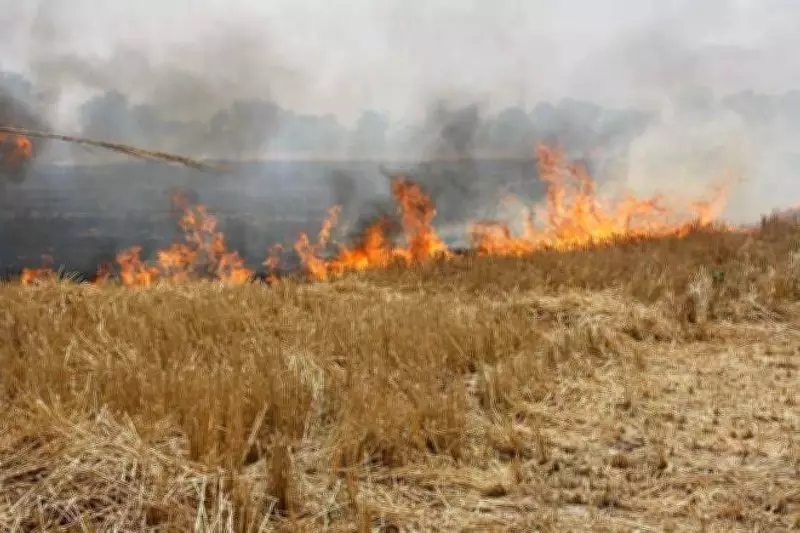
Haryana has witnessed a sharp 92 per cent increase in farm fire cases in 2026, according to official data released by the state government. The alarming rise highlights the persistent challenge of stubble burning despite various government initiatives and legal measures.
Rising Numbers
In 2026, the state reported over 15,000 farm fire incidents, compared to around 7,800 in 2025. The districts of Kaithal, Fatehabad, and Sirsa accounted for the highest number of cases, contributing nearly 40 per cent of the total. The spike comes even as the Haryana government has intensified efforts to curb the practice through awareness campaigns and financial incentives for alternative crop residue management.
Environmental and Health Impact
The surge in stubble burning has led to a significant deterioration in air quality across the National Capital Region (NCR), with the Air Quality Index (AQI) frequently crossing the 'severe' category in November. Health experts have warned that prolonged exposure to such pollution can lead to respiratory diseases, eye irritation, and other chronic conditions.

Farmers, however, cite a lack of affordable alternatives and short window between harvesting and sowing as primary reasons for continuing the practice. The state government has allocated funds for subsidized machinery like happy seeders and super straw management systems, but adoption remains limited.
Government Response
In response to the rising numbers, the Haryana Pollution Control Board (HPCB) has issued directives to district authorities to strictly enforce the ban on stubble burning. Violators face fines and potential legal action under the Air (Prevention and Control of Pollution) Act, 1981. The state has also set up flying squads and increased surveillance using satellite imagery to detect farm fires in real-time.
Chief Minister Manohar Lal Khattar has urged farmers to adopt eco-friendly methods and assured them of continued government support. He emphasized that the long-term goal is to achieve zero stubble burning by 2030 through a combination of technology, awareness, and financial incentives.
Way Forward
Experts suggest that a multi-pronged approach is needed to address the issue effectively. This includes promoting crop diversification, providing timely access to machinery, and ensuring proper disposal of crop residue. The Punjab and Haryana High Court has also taken suo motu cognizance of the matter, directing the state to submit an action plan within four weeks.
The 92 per cent spike in farm fires serves as a stark reminder of the challenges ahead in tackling agricultural pollution. While the government has taken steps, the pace of change needs to accelerate to prevent further environmental degradation and protect public health.






