Haryana Forest Department Launches First Wildlife Research Center in Southern Aravalis
In a significant move to bolster wildlife conservation efforts in the southern Aravalis, the Haryana forest department is establishing a dedicated wildlife monitoring and research center in Dauj village of Faridabad district. This facility marks the first of its kind in the region, designed to conduct systematic research, habitat monitoring, and species tracking across the expansive Aravali landscape.
Strategic Location and Purpose
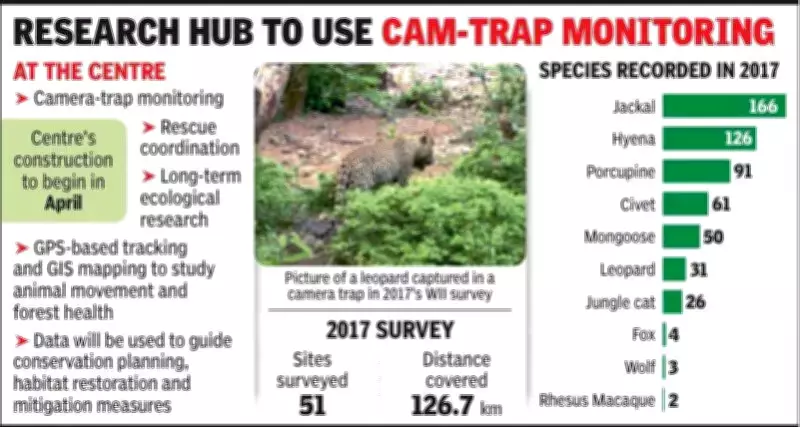
The center is proposed near the forested tracts of Dauj, which form an integral part of the Aravali hill system. It is strategically positioned to serve as a central hub for comprehensive wildlife studies, camera-trap monitoring, rescue coordination, and long-term ecological research. Divisional Forest Officer (Wildlife) R K Jangra emphasized the center's critical role, stating, "The facility will help improve understanding of wildlife movement, population trends, and human-animal interactions in Faridabad and adjoining districts."
Officials highlighted that the location was chosen due to Dauj's proximity to key forest corridors and protected patches within the Aravalis. This positioning enables the center to function as a nodal point for coordination during wildlife rescue operations and conflict situations, facilitating faster response times and enhanced documentation.

Modern Tools and Research Capabilities
The research center will be equipped with state-of-the-art technology to advance conservation efforts. It will house field staff, researchers, and technical teams engaged in wildlife surveys and monitoring activities. The facility is expected to support the utilization of modern tools, including:
- Camera traps for non-invasive wildlife observation
- GPS-based tracking systems for precise animal movement studies
- GIS mapping to analyze forest health and habitat changes
Data generated from these initiatives will be instrumental in guiding conservation planning, habitat restoration projects, and mitigation measures, particularly in areas experiencing increasing human-wildlife interactions.
Addressing Conservation Challenges
The establishment of this center comes at a crucial time when conservationists have been advocating for dedicated research and monitoring infrastructure in the National Capital Region's Aravali region. This area spans multiple districts and faces mounting development pressures from urbanization and infrastructure projects.
Sunil Harsana, a wildlife expert and ecologist, underscored the importance of this initiative, noting, "Sustained scientific monitoring is essential to assess the impact of urbanization, road networks, and changing land use on wildlife movement and biodiversity."
The southern Aravalis in Haryana have recorded frequent wildlife sightings in recent years, including leopards, hyenas, jackals, nilgai, and various avian species. However, since the last comprehensive survey conducted by the Wildlife Institute of India in 2017, which documented species such as leopards, striped hyenas, jackals, nilgai, porcupines, and birds, no consolidated data has been collected. Reports of leopards being killed on roads and hyenas sighted near villages highlight the increasing fragmentation of habitats and the urgent need for enhanced monitoring.
Collaborative Efforts and Future Prospects
Officials revealed that the research center could foster collaborations with academic institutions and research organizations, potentially supporting training programs for frontline forest staff. This collaborative approach aims to build local capacity and ensure the long-term sustainability of conservation efforts in the region.
The initiative represents a proactive step by the Haryana forest department to address the ecological challenges facing the Aravalis, leveraging scientific research to inform policy decisions and on-ground conservation actions. By integrating advanced technology with field expertise, the center is poised to become a cornerstone of wildlife conservation in southern Haryana, contributing to the preservation of biodiversity and the mitigation of human-wildlife conflicts.