Haryana Experiences Sharp Temperature Rise with Unseasonal Warmth
Residents of Haryana witnessed a significant spike in temperatures on Sunday, marking an unusually warm February day across the state. Gurgaon recorded a maximum temperature nearing 27 degrees Celsius, highlighting a clear departure from typical winter conditions.
Record Highs Across Multiple Districts
Palwal emerged as the hottest location in Haryana, with the mercury soaring to 30.2 degrees Celsius. This was closely followed by Nuh at 29.5 degrees Celsius and Bhiwani at 29 degrees Celsius. Hisar and Faridabad also reported daytime temperatures approaching 29 degrees Celsius, indicating widespread warmth.
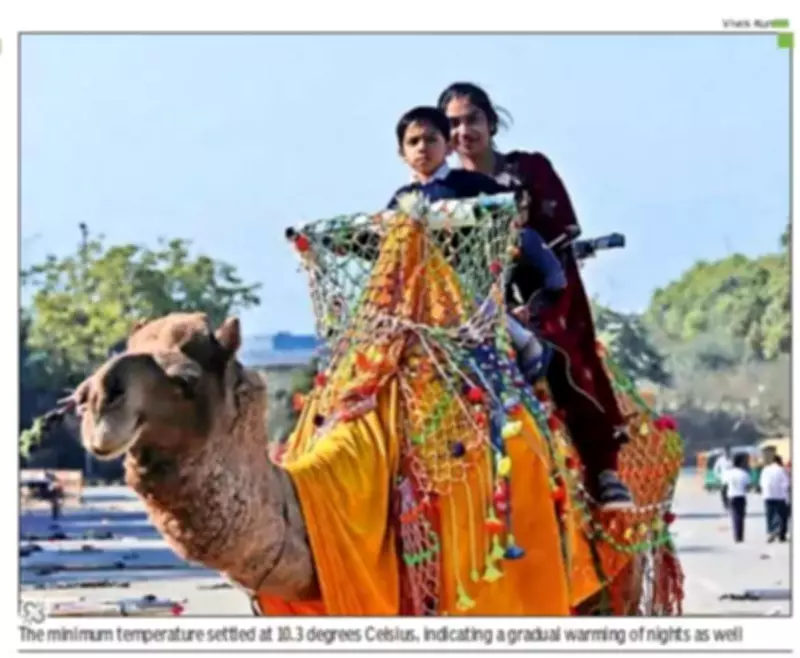
According to data from the India Meteorological Department (IMD), Gurgaon's maximum temperature on Saturday was 25.4 degrees Celsius, though the minimum temperature reading was unavailable. On Sunday, the city's minimum temperature settled at 10.3 degrees Celsius, suggesting nights are gradually warming as well, albeit remaining within normal ranges for this period.

Statewide Warming Trend Documented by IMD
The IMD's analysis reveals that average maximum temperatures across Haryana increased by approximately 1.2 degrees Celsius. More notably, temperatures were appreciably above normal by over three degrees Celsius in several districts. Minimum temperatures showed a milder rise of about 1.3 degrees Celsius on average, largely staying near normal levels.
Mahendragarh AWS recorded the lowest night temperature in the state at 8.9 degrees Celsius. Importantly, no rainfall was reported anywhere in Haryana during the past 24 hours, contributing to the dry, warm conditions.
Meteorological Insights and Forecast Predictions
Meteorological officials have identified a clear warming trend as winter approaches its end. Warmer days are becoming increasingly frequent, particularly in southern Haryana regions including Gurgaon and neighboring districts. With daytime temperatures consistently above normal through early February, traditional winter conditions have nearly disappeared from Delhi as well.
IMD scientist Krishna Mishra explained, "The maximum temperature has been staying three to six degrees above normal over Rajasthan, Punjab, Delhi, parts of Haryana and the Himalayan region."
Data from the IMD shows that between February 1 and 15, temperatures dipped below 20°C only once—on February 2, when a weak western disturbance pushed it down to 17.5°C. The month's highest maximum so far, 28.6°C, was recorded on February 10, with daytime temperatures remaining above 25°C since then.
Detailed Temperature Patterns and Future Outlook
On Sunday, Gurgaon's maximum temperature settled at 28.5°C, which is four degrees above normal. This compares to 27°C recorded the previous day, demonstrating the accelerating warmth.
Looking ahead, IMD forecasts indicate maximum temperatures are likely to remain 1.6°C to 5°C above normal over the coming week. While a western disturbance is expected to influence parts of north India from February 17 and may trigger very light rain or drizzle in isolated pockets of Delhi on February 18, significant cooling is unlikely.
Mishra added, "It may dip by one to three degrees under the influence of a western disturbance. In Delhi, the maximum may fall by one to two degrees on Feb 17–18, but it is likely to rise again from Feb 19. No major change in minimum temperature is expected."
Meteorologists predict the remainder of February will stay warmer than usual, with only a slight, short-lived temperature dip around February 17–18 when the weak western disturbance brings increased cloudiness and the possibility of minimal precipitation.
This persistent warmth represents a significant climatic shift, with maximum temperatures largely staying above normal as winter conditions fade across northern India. The pattern underscores broader environmental changes affecting regional weather systems.