

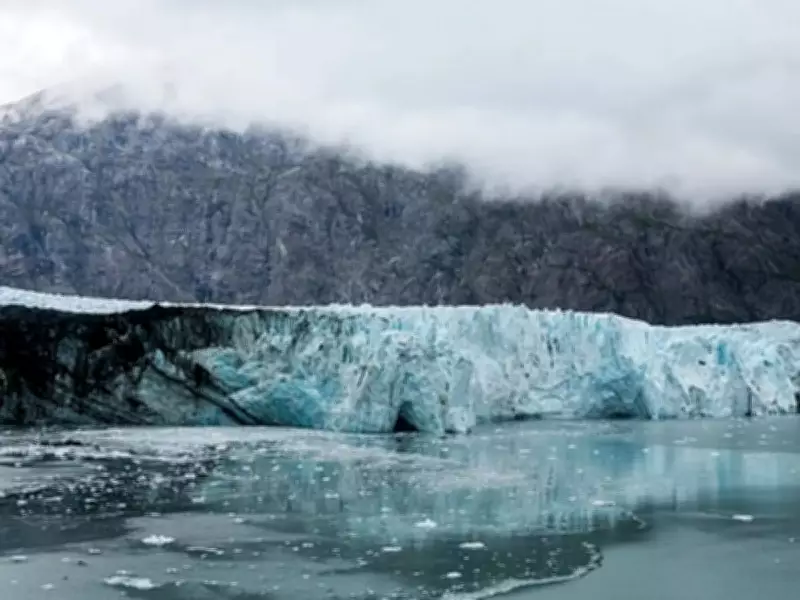
The enormous and stationary Totten Glacier in East Antarctica may appear unremarkable from the surface, but scientists have discovered that critical processes occur far beneath its frozen facade. Studies using sonar measurements and radar imaging reveal that warm water can penetrate undersea valleys, accessing the cavity at the base of Totten's ice shelf. This finding has reshaped the understanding of Antarctica's largest glacial complex, showing that Totten is connected to the ocean via secret routes that transport warm waters toward the glacier.
Hidden Pathways Threaten Ice Stability
The significance of these hidden paths lies in their connection to the Aurora Subglacial Basin, a vast region of East Antarctica drained by Totten Glacier. Popular summaries of scientific data emphasize that the glacier holds enough ice to raise global sea levels by more than 3.5 meters if fully melted. The critical processes take place beneath the ice layer, where warm seawater reaches the glacier cavity through seafloor troughs. A study published in Nature Geoscience used ice-penetrating radar and bathymetry to uncover these previously hidden underwater features. The results were crucial because East Antarctica was once considered more stable than West Antarctica, but Totten Glacier proved otherwise. The glacier lies below sea level, making it vulnerable to warm oceanic currents that flow through underwater channels.
Mapping the Warm Water Path
Further studies have mapped these pathways more accurately. Warm ocean waters flow into the glacier cavity via deep shelf depressions and troughs. Rather than a flat sea floor that would impede heat flow, channels running deep beneath the ocean surface assist in moving warm water further inland. The researchers wrote that the seabed structure is critically important for controlling how ocean heat reaches Antarctic glaciers. This means the glacier's fate depends not only on air temperature and snowfall but also on the seabed geometry kilometers below both ice and ocean water.

The Role of the Under-Ice Cavity
The cavity beneath Totten Glacier serves as a contact point between ocean waters and the glacier. When warm water penetrates this cavity, the bottom side of the ice shelf melts. Ice shelves act as natural supports, slowing the flow of grounded glacier ice toward the sea. Nature Geoscience noted that Totten has become a prominent example of oceanic melting in Antarctica, elevating its significance beyond the continent itself. The invisible channel beneath the glacier is now part of the broader conversation about ice stability and future sea-level rise.
Why Totten Glacier Matters
Its sheer size explains the intense scientific focus. According to the Australian Antarctic Program and the National Snow and Ice Data Center, Totten Glacier drains one of the largest ice catchments in East Antarctica. The potential 3.5-meter sea-level rise refers to the larger ice basin connected to the glacier, not a prediction. However, its size explains the interest in how the ocean affects Totten. This is a tale of hidden geography: the most critical evidence cannot be seen by satellites but lies in deep troughs and underwater channels below and ahead of the glacier.
Remaining Questions
Scientists are now investigating how much warm water enters Totten and what changes may occur in future ocean conditions. They are also studying the effects of climate and oceanic circulation on the glacier. One key conclusion is that Totten is not cut off from the ocean. Channels under East Antarctic ice allow warm currents to pass directly beneath the glacier. This insight has changed ideas about one of Earth's most expansive ice formations, showing that what happens under the ice matters as much as what happens on top.






